THE ADVENTURE COLLECTIVE® · Independent discovery and booking for outdoor travel

A single long day from Alice Springs turns into a lifetime of stories at Uluru: guided Mala and Mutitjulu walks, an Aboriginal Cultural Centre visit, and a sunset BBQ with sparkling wine. Here’s what to expect and how to be prepared.
A single long day from Alice Springs turns into a lifetime of stories at Uluru: guided Mala and Mutitjulu walks, an Aboriginal Cultural Centre visit, and a sunset BBQ with sparkling wine. Here’s what to expect and how to be prepared.
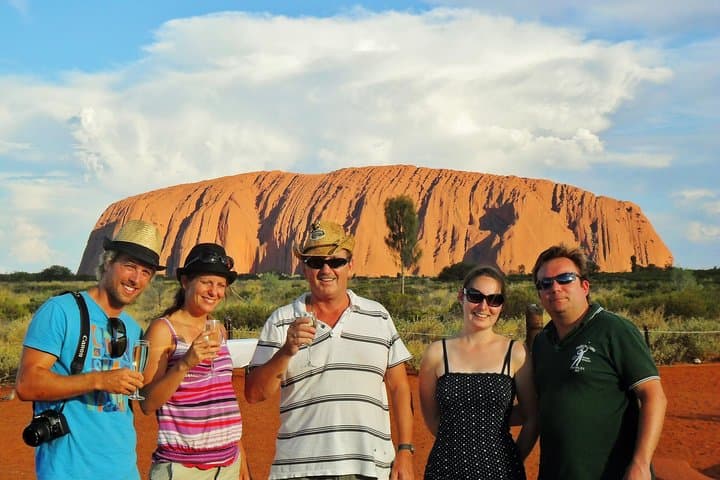
The bus pulls off the Stuart Highway while the sky is still a pale promise; by the time the scrub loosens and Uluru first appears, the rock has already begun to claim the light. On this full-day run from Alice Springs you spend most of your waking hours traveling across central Australia’s red plain, then trade miles for minutes at a place that seems to compress time itself—Uluru. You watch the stone cool and warm as the sun slides behind it, a glass of sparkling wine in hand and a smoky outback barbecue set behind you.
Verified experiences and guided adventures in the surrounding area.
Operated by Emu Run Experience · Yulara, Northern Territory
The bus pulls off the Stuart Highway while the sky is still a pale promise; by the time the scrub loosens and Uluru first appears, the rock has already begun to claim the light. On this full-day run from Alice Springs you spend most of your waking hours traveling across central Australia’s red plain, then trade miles for minutes at a place that seems to compress time itself—Uluru. You watch the stone cool and warm as the sun slides behind it, a glass of sparkling wine in hand and a smoky outback barbecue set behind you.
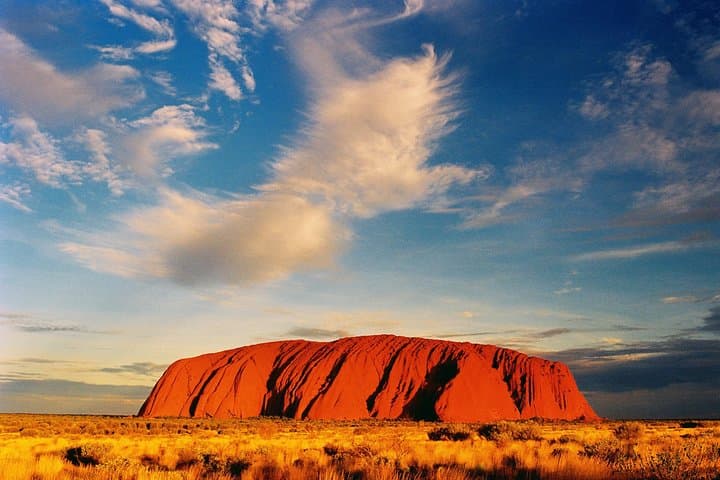
Uluru is more than a photogenic monolith. Geologically it’s arkose sandstone, tilted and eroded over roughly 550 million years, its vertical faces showing bands of mineral-rich strata and ancient watercourses. Culturally it’s living country for the Anangu people; many of the walks on this tour—the guided Mala Walk and the Mutitjulu Waterhole route—are led with stories and sites that are still part of active tradition. The Aboriginal Cultural Centre, built with locally fired mud bricks, provides context: object-making, songlines, and the laws that still govern how visitors move through sacred places.
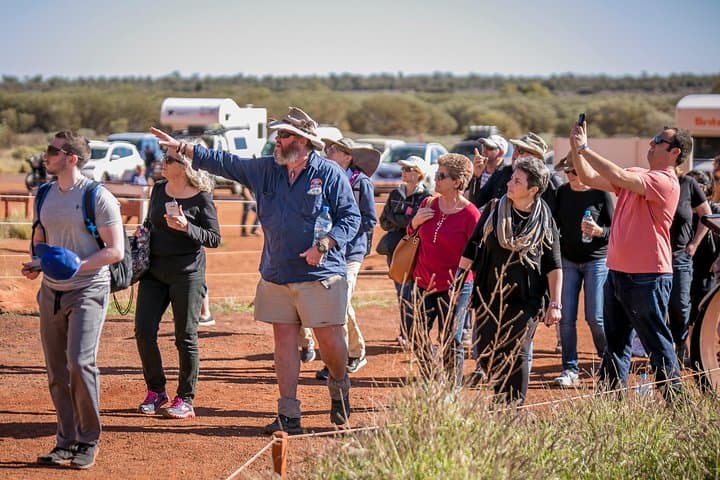
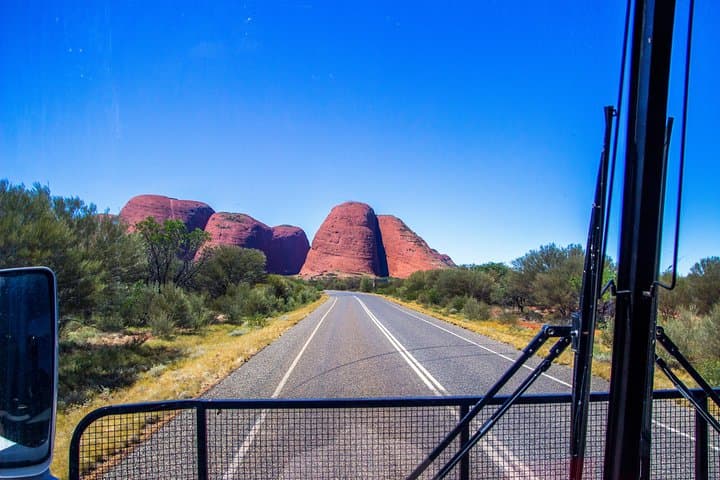
Practicalities shape the rhythm of the day. Expect about 4.5–5 hours each way by air-conditioned coach from Alice Springs with short stops at Erldunda and a Mount Connor lookout on the way. On arrival you’ll join guided walks—Mala is typically 60–90 minutes, with interpretive stops at rock art panels; Mutitjulu is a shorter, 20–30 minute waterhole walk where you’ll hear Dreaming stories tied to the landscape. The day culminates at an allocated sunset viewing area where sparkling wine and a BBQ are served as the rock dramatizes the end of daylight.
Tips matter: bring at least 1.5 liters of water, sun protection, and sturdy non-slip walking shoes; temperatures swing wildly between day and night. From 1 April 2026 you must purchase the Uluru-Kata Tjuta National Park Pass before travel—carry a digital copy. Respect restricted areas, follow your guide’s directions, and note climbing Uluru is permanently closed.
For photographers, sunset is the obvious high point but early-morning light and close-up details—rock art panels, the waterhole’s reflections, small desert plants—reward those who linger. The tour is designed for minimal fitness, but the long coach time makes it a long day: come prepared, keep your expectations realistic, and you’ll leave with the rare experience of watching a massive stone tell its story as the desert cools around you.
easy.
Approximately 18 hours (full‑day).
Suitable for people with basic mobility—short guided walks; be prepared for long periods on a coach.
No—climbing Uluru is permanently closed. The tour focuses on guided walks and cultural interpretation at the base and waterhole.
Pickup is from Alice Springs hotels (confirm time by phone); plan to be ready roughly 30 minutes before your scheduled pick‑up and expect an early departure.
Yes—starting 1 April 2026 you must purchase the Uluru‑Kata Tjuta National Park Pass prior to the tour and carry proof (digital accepted).
A sunset BBQ with sparkling wine is provided; notify the operator in advance for dietary restrictions so they can accommodate requests.
The coach and main visitor facilities are accessible, but some short walking sections and viewing areas have uneven surfaces—check with the operator about mobility needs before booking.
No—drones are prohibited in Uluru‑Kata Tjuta National Park. Always follow park rules and your guide’s instructions.
Uluru is central to Anangu law and Dreaming; the Cultural Centre explains how songlines and art link stories to specific places around the rock.
Park fees and passes support rangers and cultural programs—stay on marked tracks, don’t take stones or artifacts, and pack out any litter.
Emu Run Experience operates guided outdoor trips and adventures with an emphasis on safety, stewardship, and memorable experiences.
The bus pulls off the Stuart Highway while the sky is still a pale promise; by the time the scrub loosens and Uluru first appears, the rock has already begun to claim the light. On this full-day run from Alice Springs you spend most of your waking hours traveling across central Australia’s red plain, then trade miles for minutes at a place that seems to compress time itself—Uluru. You watch the stone cool and warm as the sun slides behind it, a glass of sparkling wine in hand and a smoky outback barbecue set behind you.
The bus pulls off the Stuart Highway while the sky is still a pale promise; by the time the scrub loosens and Uluru first appears, the rock has already begun to claim the light. On this full-day run from Alice Springs you spend most of your waking hours traveling across central Australia’s red plain, then trade miles for minutes at a place that seems to compress time itself—Uluru. You watch the stone cool and warm as the sun slides behind it, a glass of sparkling wine in hand and a smoky outback barbecue set behind you.
Uluru is more than a photogenic monolith. Geologically it’s arkose sandstone, tilted and eroded over roughly 550 million years, its vertical faces showing bands of mineral-rich strata and ancient watercourses. Culturally it’s living country for the Anangu people; many of the walks on this tour—the guided Mala Walk and the Mutitjulu Waterhole route—are led with stories and sites that are still part of active tradition. The Aboriginal Cultural Centre, built with locally fired mud bricks, provides context: object-making, songlines, and the laws that still govern how visitors move through sacred places.
Practicalities shape the rhythm of the day. Expect about 4.5–5 hours each way by air-conditioned coach from Alice Springs with short stops at Erldunda and a Mount Connor lookout on the way. On arrival you’ll join guided walks—Mala is typically 60–90 minutes, with interpretive stops at rock art panels; Mutitjulu is a shorter, 20–30 minute waterhole walk where you’ll hear Dreaming stories tied to the landscape. The day culminates at an allocated sunset viewing area where sparkling wine and a BBQ are served as the rock dramatizes the end of daylight.
Tips matter: bring at least 1.5 liters of water, sun protection, and sturdy non-slip walking shoes; temperatures swing wildly between day and night. From 1 April 2026 you must purchase the Uluru-Kata Tjuta National Park Pass before travel—carry a digital copy. Respect restricted areas, follow your guide’s directions, and note climbing Uluru is permanently closed.
For photographers, sunset is the obvious high point but early-morning light and close-up details—rock art panels, the waterhole’s reflections, small desert plants—reward those who linger. The tour is designed for minimal fitness, but the long coach time makes it a long day: come prepared, keep your expectations realistic, and you’ll leave with the rare experience of watching a massive stone tell its story as the desert cools around you.