THE ADVENTURE COLLECTIVE® · Independent discovery and booking for outdoor travel

Watch the Taj Mahal change color as the sun sets on a full-day private drive from Delhi. This itinerary pairs a sunset visit with Agra Fort and Sikandra, giving two hours at the mausoleum and guided context on Mughal history.
Watch the Taj Mahal change color as the sun sets on a full-day private drive from Delhi. This itinerary pairs a sunset visit with Agra Fort and Sikandra, giving two hours at the mausoleum and guided context on Mughal history.
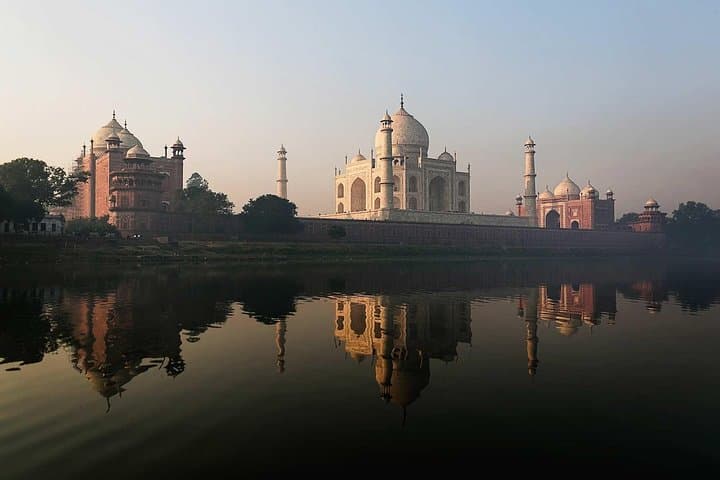
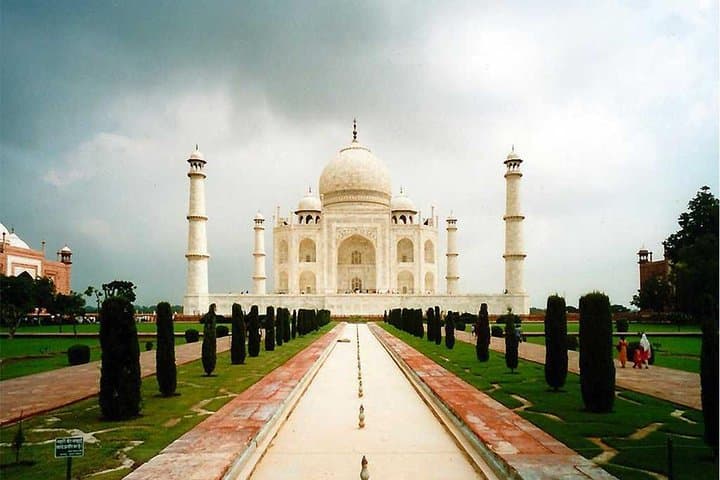
Late afternoon on the Yamuna's bank the Taj Mahal shifts color like a slow-breathing thing — ivory moving toward honey as the sun leans west. On this same-day private drive from Delhi, travelers arrive in time to watch that light soften the marble and throw long shadows across the reflecting pool, then step close enough to read the calligraphy that rings the mausoleum.
Verified experiences and guided adventures in the surrounding area.
Operated by Exquisite Xperiences · Agra, Uttar Pradesh
Late afternoon on the Yamuna's bank the Taj Mahal shifts color like a slow-breathing thing — ivory moving toward honey as the sun leans west. On this same-day private drive from Delhi, travelers arrive in time to watch that light soften the marble and throw long shadows across the reflecting pool, then step close enough to read the calligraphy that rings the mausoleum.
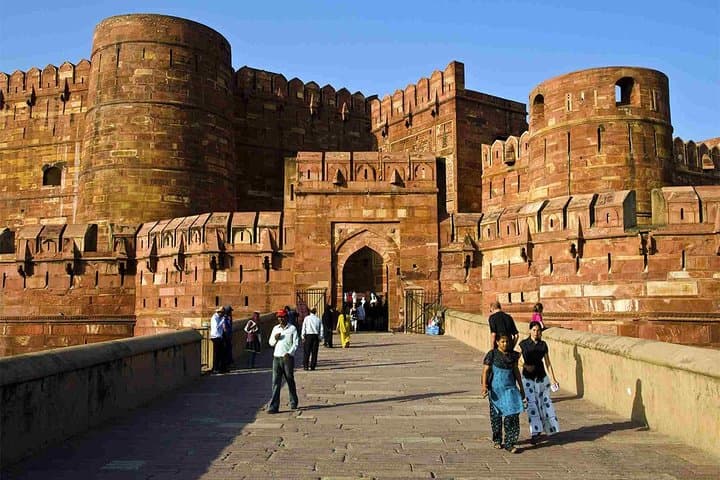
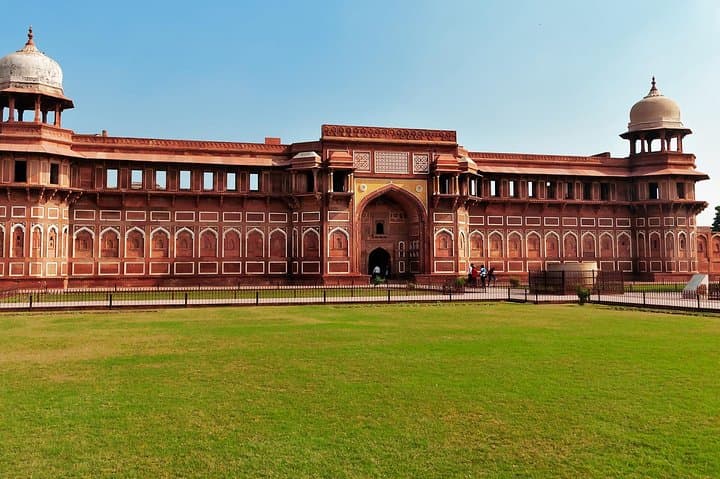
The monument itself began in 1632 under Shah Jahan as a mausoleum for Mumtaz Mahal; the surrounding complex, gardens and the Mughal Red Fort reflect layers of 16th–17th century imperial architecture. Geologically the white Makrana marble is sedimentary in origin and ages visibly under air and water — which is one reason conservation is a constant local concern. Culture here is tactile: vendors, rickshaws and horse-drawn tangas still shape the arrival experience, while Sikandra’s Akbar tomb and the Red Fort tell the region’s political story.
Practically, expect a 230 km drive from Delhi each way (roughly 3.5–4 hours depending on traffic) as part of a roughly 13-hour day. The tour schedule typically allows about 2 hours at the Taj, an hour at Agra Fort and an hour at Sikandra. Entry fees and bottled water are usually included, and transport is in an air-conditioned car; permits and ID/passport details are required at booking. Wear comfortable walking shoes, carry sun protection, and plan to pass through security and bag checks — time your arrival to capture the soft light an hour before sunset.
easy.
12–14 hours.
Suitable for most fitness levels; requires walking on paved and sometimes uneven surfaces and standing through security lines.
Most packaged tours list monument entrance fees as included; check your booking confirmation — this itinerary specifies entrance fees are covered.
The Taj is open until sunset (and closed on Fridays); arriving an hour or so before sunset gives time to walk the gardens and view the mausoleum in changing light before gates close.
Typical timings are about 90–120 minutes at the Taj Mahal, 60 minutes at Agra Fort (Red Fort) and roughly 60 minutes at Sikandra for Akbar’s tomb, depending on traffic and group pace.
The tour notes wheelchair accessibility and minimal fitness requirements, but there are steps and distance to cover at sites; contact the operator in advance for specific assistance needs.
The Taj Mahal was commissioned by Shah Jahan in 1632 for Mumtaz Mahal; Akbar’s Sikandra tomb and the Red Fort preceded and framed Mughal power in the region.
High visitor numbers and air pollution affect marble; follow site rules, avoid touching inlaid surfaces, and support local guides who practice responsible touring.
Exquisite Xperiences operates guided outdoor trips and adventures with an emphasis on safety, stewardship, and memorable experiences.
Late afternoon on the Yamuna's bank the Taj Mahal shifts color like a slow-breathing thing — ivory moving toward honey as the sun leans west. On this same-day private drive from Delhi, travelers arrive in time to watch that light soften the marble and throw long shadows across the reflecting pool, then step close enough to read the calligraphy that rings the mausoleum.
Late afternoon on the Yamuna's bank the Taj Mahal shifts color like a slow-breathing thing — ivory moving toward honey as the sun leans west. On this same-day private drive from Delhi, travelers arrive in time to watch that light soften the marble and throw long shadows across the reflecting pool, then step close enough to read the calligraphy that rings the mausoleum.
The monument itself began in 1632 under Shah Jahan as a mausoleum for Mumtaz Mahal; the surrounding complex, gardens and the Mughal Red Fort reflect layers of 16th–17th century imperial architecture. Geologically the white Makrana marble is sedimentary in origin and ages visibly under air and water — which is one reason conservation is a constant local concern. Culture here is tactile: vendors, rickshaws and horse-drawn tangas still shape the arrival experience, while Sikandra’s Akbar tomb and the Red Fort tell the region’s political story.
Practically, expect a 230 km drive from Delhi each way (roughly 3.5–4 hours depending on traffic) as part of a roughly 13-hour day. The tour schedule typically allows about 2 hours at the Taj, an hour at Agra Fort and an hour at Sikandra. Entry fees and bottled water are usually included, and transport is in an air-conditioned car; permits and ID/passport details are required at booking. Wear comfortable walking shoes, carry sun protection, and plan to pass through security and bag checks — time your arrival to capture the soft light an hour before sunset.