THE ADVENTURE COLLECTIVE® · Independent discovery and booking for outdoor travel

Watch sunset spill across Rio from the summit of Sugarloaf on a private 3½-hour tour. This late-afternoon itinerary pairs short walks, two cable-car rides and sweeping coastal views—ideal for photographers and first-time visitors.
Watch sunset spill across Rio from the summit of Sugarloaf on a private 3½-hour tour. This late-afternoon itinerary pairs short walks, two cable-car rides and sweeping coastal views—ideal for photographers and first-time visitors.
You step out of an air-conditioned car into Urca’s warm late-afternoon light, the harbor humming below and Sugarloaf’s granite flank rising like a polished wall above the bay.
Verified experiences and guided adventures in the surrounding area.
Operated by Luis Darin Private Tour Guide · Rio de Janeiro, Rio de Janeiro
You step out of an air-conditioned car into Urca’s warm late-afternoon light, the harbor humming below and Sugarloaf’s granite flank rising like a polished wall above the bay.
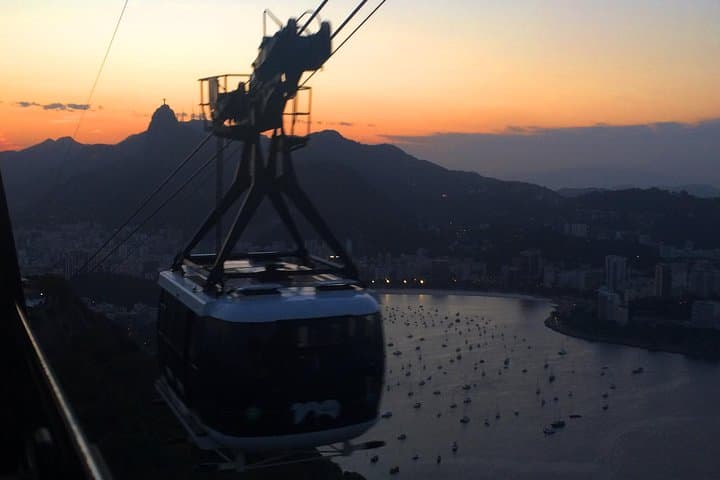
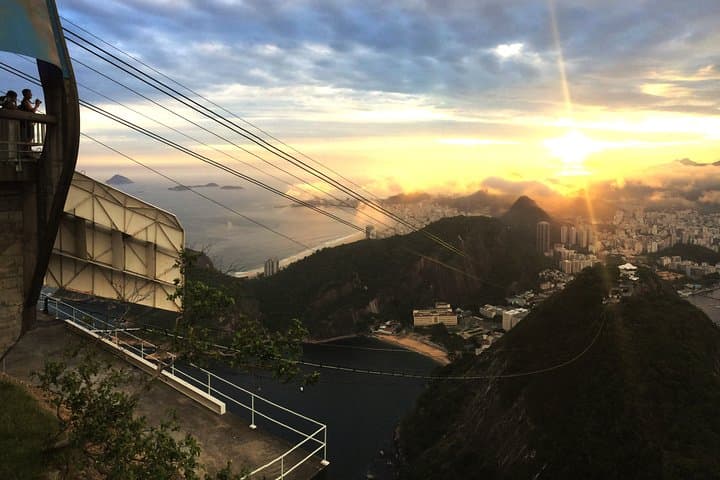
The ride to Morro da Urca and then to Sugarloaf’s summit is a ritual as much as transport: two Swiss-made cable cars sliding over Guanabara Bay while the city’s coastline slides into a widening panorama. Morro da Urca (≈220 m) gives a first, wide-angle look — then the second lift takes you to Sugarloaf, a solid granite monolith that tops out at roughly 396 m above sea level. Geology here is blunt and honest: exposed granite carved by sea and wind, offering broad ledges and paved platforms instead of forested ridgelines.
History threads through the view. The first cable car began carrying passengers in the early 20th century, and today the climb is as much about Rio’s civic pride and maritime entrance as it is about sunset. Culture arrives in the details: fishermen’s boats in the bay, favela silhouettes on distant slopes, and vendors at the base selling fresh snacks.
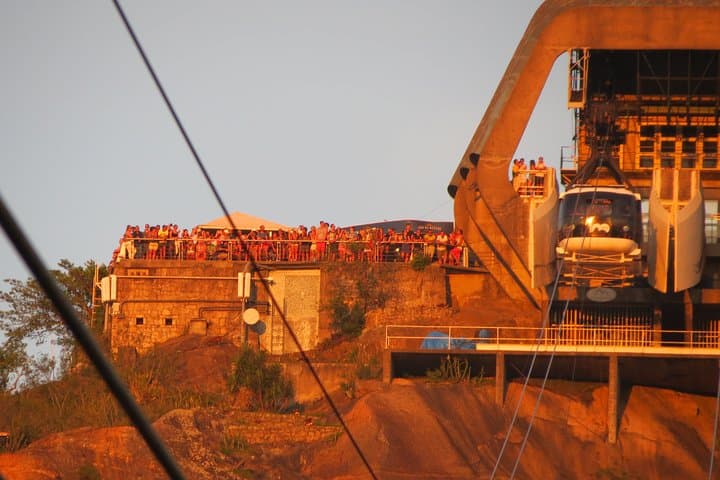
Practically, expect short, mostly paved walks, stair sections at viewpoints, and crowds at prime light. The tour is private and driven from South Zone hotels, with time to watch the sun slip behind Corcovado and Pedra da Gávea. Bring a wind layer, a charged camera, and plan to pay entrance at the cable car station. If you want dinner after, most guides can drop you near a restaurant in the South Zone — the evening is long, and the city below keeps glowing.
easy.
3–4 hours.
Suitable for most fitness levels—minimal walking with some stairs at viewpoints.
No—cable car tickets and any attraction admissions are paid directly at the station and are not included in the tour price.
Yes—the tour notes wheelchair-accessible transportation and paths, but confirm specifics at booking so guides can assist.
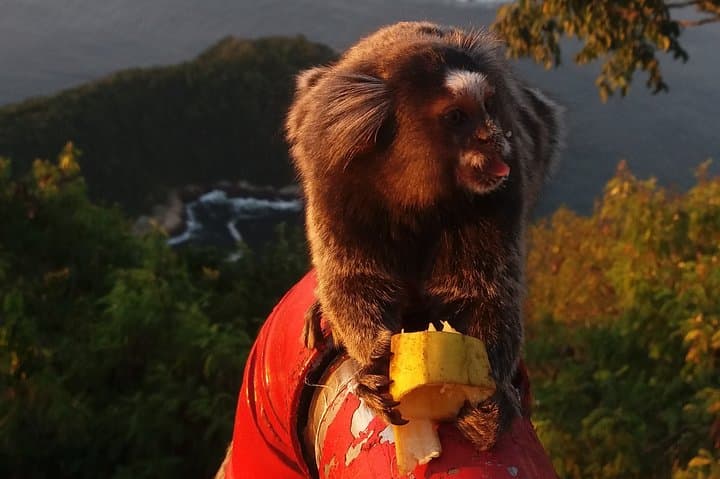
You may spot small marmoset monkeys near the base trails and seabirds over Guanabara Bay, but wildlife sightings aren’t guaranteed.
Pickup and drop-off are restricted to the South Zone and Downtown (Copacabana, Ipanema, Leblon, Botafogo, Flamengo, Catete, Gloria, Centro). Confirm your hotel is within those neighborhoods.
Sugarloaf’s cable car began operations in the early 1900s; the ascent helped cement the mountain as one of Rio’s earliest and most enduring public attractions.
Sugarloaf sits at the edge of Atlantic Forest remnants—stay on paved paths, don’t feed wildlife, and avoid single-use plastics to reduce visitor impact.
Luis Darin Private Tour Guide operates guided outdoor trips and adventures with an emphasis on safety, stewardship, and memorable experiences.
You step out of an air-conditioned car into Urca’s warm late-afternoon light, the harbor humming below and Sugarloaf’s granite flank rising like a polished wall above the bay.
You step out of an air-conditioned car into Urca’s warm late-afternoon light, the harbor humming below and Sugarloaf’s granite flank rising like a polished wall above the bay.
The ride to Morro da Urca and then to Sugarloaf’s summit is a ritual as much as transport: two Swiss-made cable cars sliding over Guanabara Bay while the city’s coastline slides into a widening panorama. Morro da Urca (≈220 m) gives a first, wide-angle look — then the second lift takes you to Sugarloaf, a solid granite monolith that tops out at roughly 396 m above sea level. Geology here is blunt and honest: exposed granite carved by sea and wind, offering broad ledges and paved platforms instead of forested ridgelines.
History threads through the view. The first cable car began carrying passengers in the early 20th century, and today the climb is as much about Rio’s civic pride and maritime entrance as it is about sunset. Culture arrives in the details: fishermen’s boats in the bay, favela silhouettes on distant slopes, and vendors at the base selling fresh snacks.
Practically, expect short, mostly paved walks, stair sections at viewpoints, and crowds at prime light. The tour is private and driven from South Zone hotels, with time to watch the sun slip behind Corcovado and Pedra da Gávea. Bring a wind layer, a charged camera, and plan to pay entrance at the cable car station. If you want dinner after, most guides can drop you near a restaurant in the South Zone — the evening is long, and the city below keeps glowing.