THE ADVENTURE COLLECTIVE® · Independent discovery and booking for outdoor travel

Drive an historic logging road to Signal Peak for a sunset watched from a fire lookout, then relax by a small campfire beneath Sierra stars. This three-hour 4x4 tour offers close-up views of Yosemite-range geology, a chance to meet a ranger, and a quick, accessible taste of backcountry night sky.
Drive an historic logging road to Signal Peak for a sunset watched from a fire lookout, then relax by a small campfire beneath Sierra stars. This three-hour 4x4 tour offers close-up views of Yosemite-range geology, a chance to meet a ranger, and a quick, accessible taste of backcountry night sky.
You crest a rutted logging road and the forest opens: bristlecone pines and mixed conifers shoulder a view that throws the high Sierra into hard light. The Jeep settles as the guide points to a lone wooden lookout tower on Signal Peak (often called Devils Peak), 6,900 ft above sea level—its silhouette a quiet human punctuation against the sun sliding behind serrated ridgelines.
Verified experiences and guided adventures in the surrounding area.
You crest a rutted logging road and the forest opens: bristlecone pines and mixed conifers shoulder a view that throws the high Sierra into hard light. The Jeep settles as the guide points to a lone wooden lookout tower on Signal Peak (often called Devils Peak), 6,900 ft above sea level—its silhouette a quiet human punctuation against the sun sliding behind serrated ridgelines.
The road you’ve followed dates back to the 1800s, first cut for logging and later used for fire patrols; the lookout itself is part of California’s century-old network of fire towers still staffed in summer months. Geologically, the view is dominated by granite outcrops and glacially carved valleys that feed into Yosemite’s watershed; the sparse soils and elevation create an open, sun-scrubbed profile dotted with Jeffrey pines.
Culturally this ride sits at the edge of Yosemite National Park and Sierra National Forest life—ranching, forest management and fire prevention are visible parts of the landscape and local conversation. Your crew sets up a low camp, you meet the ranger if present, then the mountain trades late sun for stars. The dark-sky above the tower is wide and immediate.
Practical guidance: the trip runs about three hours, operates seasonally (mid-May–Oct), and follows unpaved roads—expect bumpy travel, brief walks at altitude, and rapid temperature drops after sunset. Bring layers, a headlamp for the return, sturdy shoes for rocky footing, and water. Be prepared for limited cell reception and to follow ranger guidance around the lookout. The tour is vehicle-accessible and suitable for most fitness levels, but those with serious back or heart conditions should consider alternatives.
easy.
3 hours.
Minimal fitness required—mostly vehicle-based with short, uneven walking at the summit; not recommended for those with serious medical conditions.
The tour is about three hours total and generally operates seasonally from mid-May through October 1st, weather permitting.
Signal Peak is one of the few manned lookouts in the region during fire season; you may have the opportunity to meet the ranger if their schedule allows.
The Jeep can accommodate most passengers and the trip is labeled suitable for all fitness levels, but the summit area has uneven terrain; those with severe mobility challenges should check with the operator ahead of booking.
The operator may cancel for bad weather; cancel at least 24 hours for a full refund according to the tour’s standard policy.
The access road was originally an 1800s logging route; the lookout continues a long regional tradition of staffed fire observation towers.
This area is managed for fire resilience; follow Leave No Trace, avoid open flames outside designated sites, and heed ranger fire-safety advice.
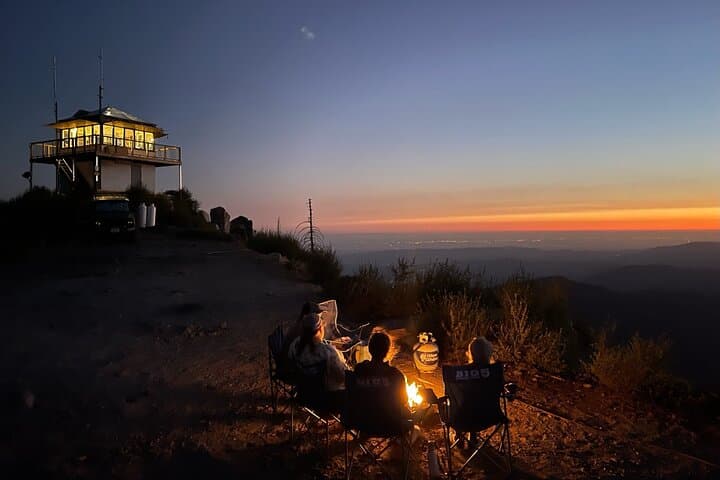
You crest a rutted logging road and the forest opens: bristlecone pines and mixed conifers shoulder a view that throws the high Sierra into hard light. The Jeep settles as the guide points to a lone wooden lookout tower on Signal Peak (often called Devils Peak), 6,900 ft above sea level—its silhouette a quiet human punctuation against the sun sliding behind serrated ridgelines.
You crest a rutted logging road and the forest opens: bristlecone pines and mixed conifers shoulder a view that throws the high Sierra into hard light. The Jeep settles as the guide points to a lone wooden lookout tower on Signal Peak (often called Devils Peak), 6,900 ft above sea level—its silhouette a quiet human punctuation against the sun sliding behind serrated ridgelines.
The road you’ve followed dates back to the 1800s, first cut for logging and later used for fire patrols; the lookout itself is part of California’s century-old network of fire towers still staffed in summer months. Geologically, the view is dominated by granite outcrops and glacially carved valleys that feed into Yosemite’s watershed; the sparse soils and elevation create an open, sun-scrubbed profile dotted with Jeffrey pines.
Culturally this ride sits at the edge of Yosemite National Park and Sierra National Forest life—ranching, forest management and fire prevention are visible parts of the landscape and local conversation. Your crew sets up a low camp, you meet the ranger if present, then the mountain trades late sun for stars. The dark-sky above the tower is wide and immediate.
Practical guidance: the trip runs about three hours, operates seasonally (mid-May–Oct), and follows unpaved roads—expect bumpy travel, brief walks at altitude, and rapid temperature drops after sunset. Bring layers, a headlamp for the return, sturdy shoes for rocky footing, and water. Be prepared for limited cell reception and to follow ranger guidance around the lookout. The tour is vehicle-accessible and suitable for most fitness levels, but those with serious back or heart conditions should consider alternatives.