THE ADVENTURE COLLECTIVE® · Independent discovery and booking for outdoor travel

Watch golden light crawl across papyrus columns and Ramses II’s colossi on a private sunset walk through Luxor Temple. This two‑hour tour pairs expert archaeology commentary with seamless hotel pickup and evening comfort.
Watch golden light crawl across papyrus columns and Ramses II’s colossi on a private sunset walk through Luxor Temple. This two‑hour tour pairs expert archaeology commentary with seamless hotel pickup and evening comfort.
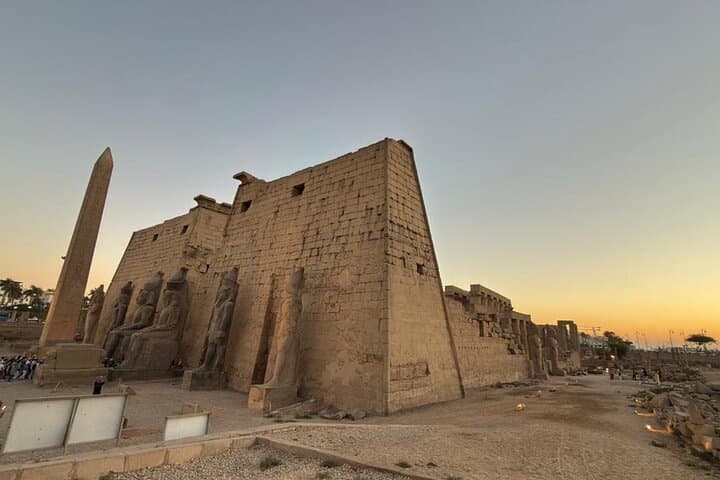
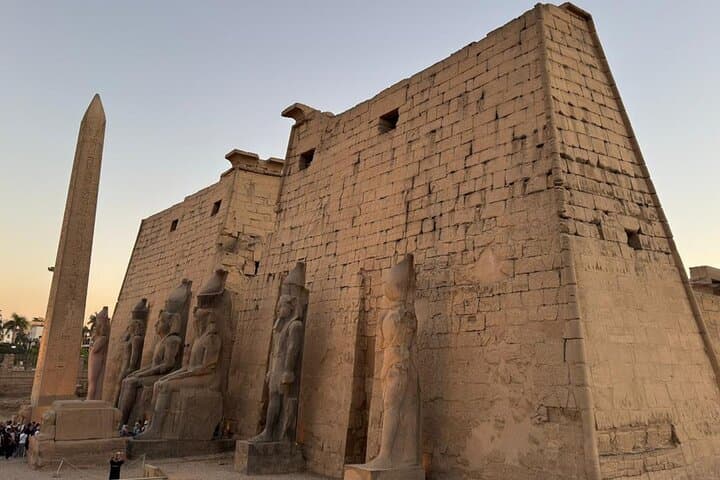
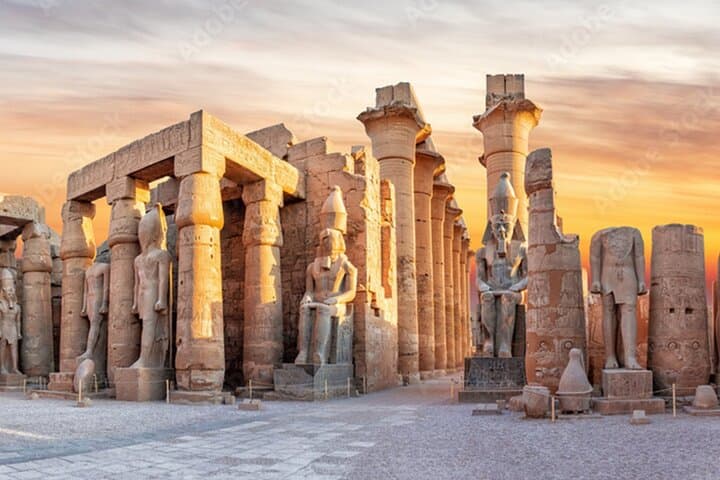
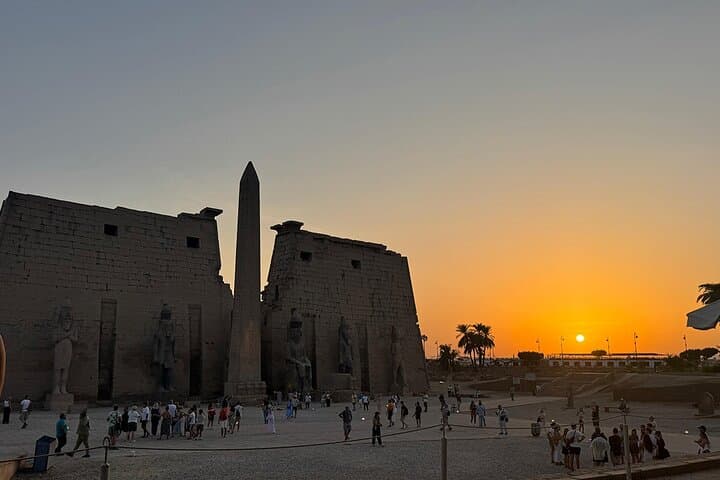
You arrive as the heat loosens its hold and the Nile’s late light gilds the temple’s stone—shadows lengthen between papyrus‑shaft columns and the colossal statues of Ramses II stand like old guards shifting into silhouette.
Verified experiences and guided adventures in the surrounding area.
Operated by Sun Pyramids Tours · Luxor, Luxor Governorate
You arrive as the heat loosens its hold and the Nile’s late light gilds the temple’s stone—shadows lengthen between papyrus‑shaft columns and the colossal statues of Ramses II stand like old guards shifting into silhouette.
This private, two‑hour evening walk traces layers of history: built by Amenhotep III and enlarged by Ramses II, Luxor Temple later saw Alexander the Great and early Christians repurpose its spaces. The architecture is largely sandstone set on a compact archaeological mound beside the river; you’ll notice fine relief work, deep hypostyle halls, and the worn smoothing where centuries of visitors have touched the stone.
Culturally the temple anchors modern Luxor’s nighttime life—street vendors, lamp‑lit cafés, and the occasional call to prayer frame the ruins. Geology is simple but visible: Nile silt and desert stone met here, and the temple’s state reflects both human reuse and centuries of wind‑and‑sand abrasion.
Practically, a sunset booking is about timing: arrive 15 minutes early, expect uneven flagstones and some steps, and plan for cooler temperatures after dusk. The guide will handle entrance tickets and transfers; photography is common but avoid flash on delicate reliefs. Wear sturdy shoes, bring a light layer and a refillable water bottle—the air can go from warm to brisk in a single hour.
For first‑time visitors the reward is immediate: colors deepen as lights come on and the place reads like a living museum—textured, direct, and easy to explore with a skilled guide who connects stones to stories.
easy.
2 hours.
Light walking on mostly flat but uneven ground; suitable for most fitness levels
Yes—this tour includes entrance fees to Luxor Temple; your guide handles tickets as part of the package.
The provider lists the tour as wheelchair accessible, but expect some uneven surfaces and steps—contact the operator if you require specialized assistance.
Photography is generally allowed; avoid using flash on delicate reliefs and follow your guide’s directions at sensitive areas.
Round‑trip private transfers from Luxor hotels are included; confirm your pickup point when booking and allow the driver several minutes leeway for traffic.
Luxor Temple began under Amenhotep III and was significantly expanded by Ramses II; the site later hosted Roman and Christian activity, creating a layered archaeological record.
Conservation focuses on managing visitor impact and stabilizing sandstone reliefs; visitors are asked not to touch fragile carvings and to stick to marked paths.
Sun Pyramids Tours operates guided outdoor trips and adventures with an emphasis on safety, stewardship, and memorable experiences.
You arrive as the heat loosens its hold and the Nile’s late light gilds the temple’s stone—shadows lengthen between papyrus‑shaft columns and the colossal statues of Ramses II stand like old guards shifting into silhouette.
You arrive as the heat loosens its hold and the Nile’s late light gilds the temple’s stone—shadows lengthen between papyrus‑shaft columns and the colossal statues of Ramses II stand like old guards shifting into silhouette.
This private, two‑hour evening walk traces layers of history: built by Amenhotep III and enlarged by Ramses II, Luxor Temple later saw Alexander the Great and early Christians repurpose its spaces. The architecture is largely sandstone set on a compact archaeological mound beside the river; you’ll notice fine relief work, deep hypostyle halls, and the worn smoothing where centuries of visitors have touched the stone.
Culturally the temple anchors modern Luxor’s nighttime life—street vendors, lamp‑lit cafés, and the occasional call to prayer frame the ruins. Geology is simple but visible: Nile silt and desert stone met here, and the temple’s state reflects both human reuse and centuries of wind‑and‑sand abrasion.
Practically, a sunset booking is about timing: arrive 15 minutes early, expect uneven flagstones and some steps, and plan for cooler temperatures after dusk. The guide will handle entrance tickets and transfers; photography is common but avoid flash on delicate reliefs. Wear sturdy shoes, bring a light layer and a refillable water bottle—the air can go from warm to brisk in a single hour.
For first‑time visitors the reward is immediate: colors deepen as lights come on and the place reads like a living museum—textured, direct, and easy to explore with a skilled guide who connects stones to stories.