THE ADVENTURE COLLECTIVE® · Independent discovery and booking for outdoor travel

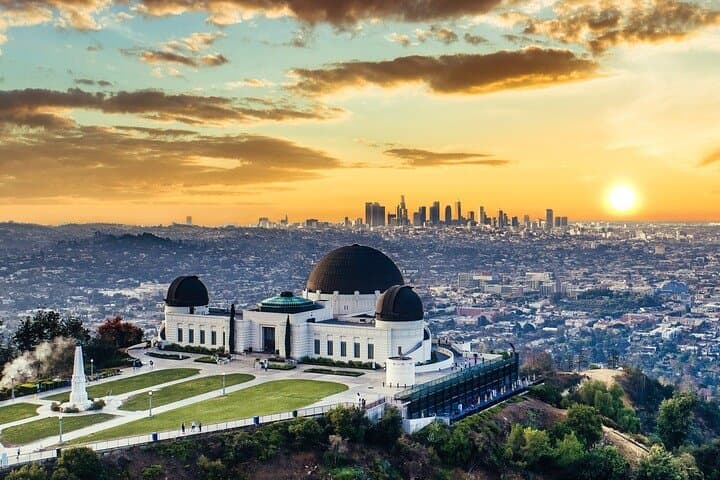
Ride an open-top minibus from Hollywood to the Griffith Observatory for a 90-minute panoramic sunset tour. Enjoy 30 minutes to explore the domes and terraces, with sweeping views of the Hollywood Sign, downtown L.A., and the Pacific as the city lights come on.
Ride an open-top minibus from Hollywood to the Griffith Observatory for a 90-minute panoramic sunset tour. Enjoy 30 minutes to explore the domes and terraces, with sweeping views of the Hollywood Sign, downtown L.A., and the Pacific as the city lights come on.
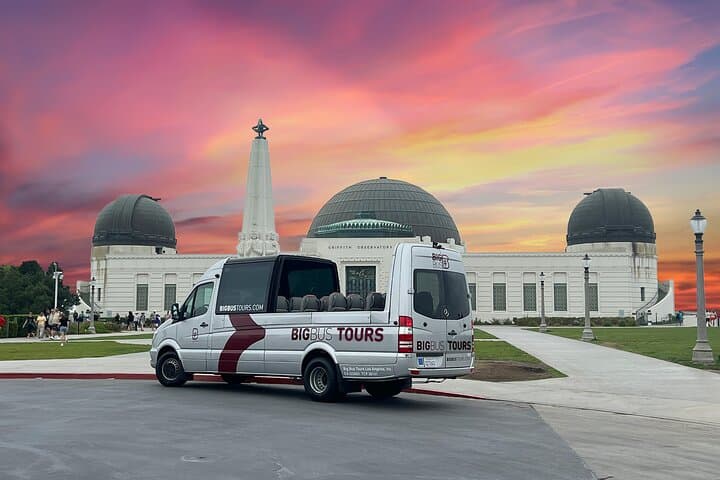
The Mercedes minibus hums through Hollywood Boulevard, the city’s light grid sliding past your windows as the sky begins to cool. You crest into the ridgeline and Los Angeles opens below—glass towers, the Pacific’s late glint, and the Hollywood Sign cut like a silhouette against an orange horizon. The guide counts down as the sun leans away; for thirty minutes you disembark into an elevated cityscape where air thins and the observatory’s domes keep watch.
Verified experiences and guided adventures in the surrounding area.
Operated by Big Bus Tours - USA · Los Angeles, California
The Mercedes minibus hums through Hollywood Boulevard, the city’s light grid sliding past your windows as the sky begins to cool. You crest into the ridgeline and Los Angeles opens below—glass towers, the Pacific’s late glint, and the Hollywood Sign cut like a silhouette against an orange horizon. The guide counts down as the sun leans away; for thirty minutes you disembark into an elevated cityscape where air thins and the observatory’s domes keep watch.
Griffith Observatory, opened in 1935, sits on the southern slopes of Mount Hollywood and has for decades linked Angelenos to the sky. Geologically the site perches on the western edge of the Transverse Ranges, where uplifted hills give sweeping views across the Los Angeles Basin to the San Gabriel Mountains and the Pacific. The hill’s scrub and eucalyptus stand in for the more rugged chaparral higher on park trails; coyotes and raptors patrol the ridges after dusk.
Culturally, the observatory is both scientific outpost and cinematic backdrop—its terraces have been photographed for generations and appear in classic films and modern music videos.
Practical guide: the tour runs about 90 minutes with 30 minutes at the observatory. Arrive at the Big Bus Visitor Center at least 15 minutes early for priority seating; bring a warm layer (coastal evenings get chilly), closed-toe shoes for the short walk up to viewpoints, and a camera with a zoom for distant skyline shots. Public transit options exist but late-evening return options vary—confirm your plan. If skies are clear, use the time at the dome to scan the first stars and let the city lights slide into place below.
easy.
1–2 hours.
Suitable for most fitness levels; requires short, easy walks at viewpoints and some standing time.
The full experience is approximately 90 minutes, which includes about 30 minutes of free time to walk the observatory terraces and exhibits.
The tour departs from Stop #1 (Big Bus Visitor Center, 6763 Hollywood Boulevard); arrive at least 15 minutes early to secure seats on the open-top minibus.
Observatory admission and telescope programs may have separate fees; this tour provides time to explore the grounds and public exhibits but does not include paid planetarium shows.
Yes—physical demands are low, with mostly paved surfaces; however, some viewpoints require short steps and standing, and infants must sit on an adult’s lap.
Opened in 1935 with a mission to make astronomy accessible, Griffith Observatory has been both a scientific resource and a film location for decades.
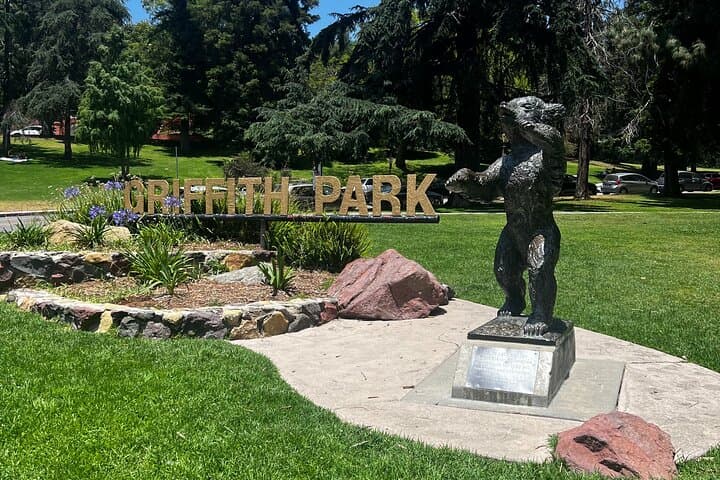
Griffith Park sustains heavy visitor use—stick to paved areas after dark, pack out trash, and avoid shining bright lights that disturb wildlife and other visitors.
Big Bus Tours - USA operates guided outdoor trips and adventures with an emphasis on safety, stewardship, and memorable experiences.
The Mercedes minibus hums through Hollywood Boulevard, the city’s light grid sliding past your windows as the sky begins to cool. You crest into the ridgeline and Los Angeles opens below—glass towers, the Pacific’s late glint, and the Hollywood Sign cut like a silhouette against an orange horizon. The guide counts down as the sun leans away; for thirty minutes you disembark into an elevated cityscape where air thins and the observatory’s domes keep watch.
The Mercedes minibus hums through Hollywood Boulevard, the city’s light grid sliding past your windows as the sky begins to cool. You crest into the ridgeline and Los Angeles opens below—glass towers, the Pacific’s late glint, and the Hollywood Sign cut like a silhouette against an orange horizon. The guide counts down as the sun leans away; for thirty minutes you disembark into an elevated cityscape where air thins and the observatory’s domes keep watch.
Griffith Observatory, opened in 1935, sits on the southern slopes of Mount Hollywood and has for decades linked Angelenos to the sky. Geologically the site perches on the western edge of the Transverse Ranges, where uplifted hills give sweeping views across the Los Angeles Basin to the San Gabriel Mountains and the Pacific. The hill’s scrub and eucalyptus stand in for the more rugged chaparral higher on park trails; coyotes and raptors patrol the ridges after dusk.
Culturally, the observatory is both scientific outpost and cinematic backdrop—its terraces have been photographed for generations and appear in classic films and modern music videos.
Practical guide: the tour runs about 90 minutes with 30 minutes at the observatory. Arrive at the Big Bus Visitor Center at least 15 minutes early for priority seating; bring a warm layer (coastal evenings get chilly), closed-toe shoes for the short walk up to viewpoints, and a camera with a zoom for distant skyline shots. Public transit options exist but late-evening return options vary—confirm your plan. If skies are clear, use the time at the dome to scan the first stars and let the city lights slide into place below.