THE ADVENTURE COLLECTIVE® · Independent discovery and booking for outdoor travel

Drive the Athenian coast to Cape Sounion for a compact, private visit to the 5th-century Temple of Poseidon. This 3–4 hour tour pairs seaside panoramas, a thermal lake stop, and ideal sunset views—perfect for travelers short on time.
Drive the Athenian coast to Cape Sounion for a compact, private visit to the 5th-century Temple of Poseidon. This 3–4 hour tour pairs seaside panoramas, a thermal lake stop, and ideal sunset views—perfect for travelers short on time.
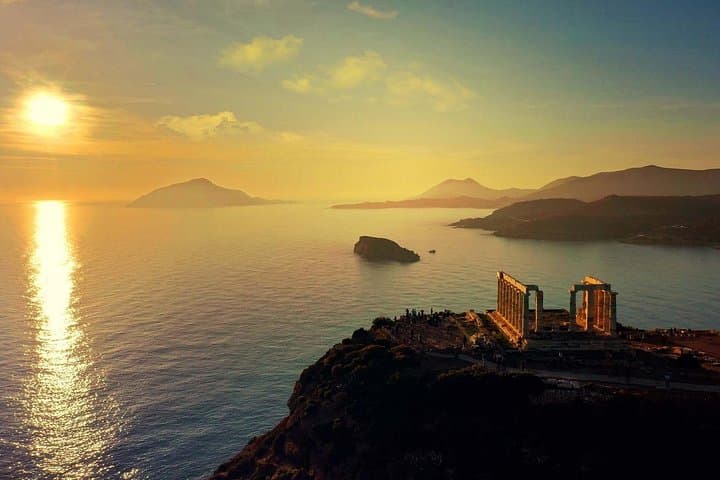
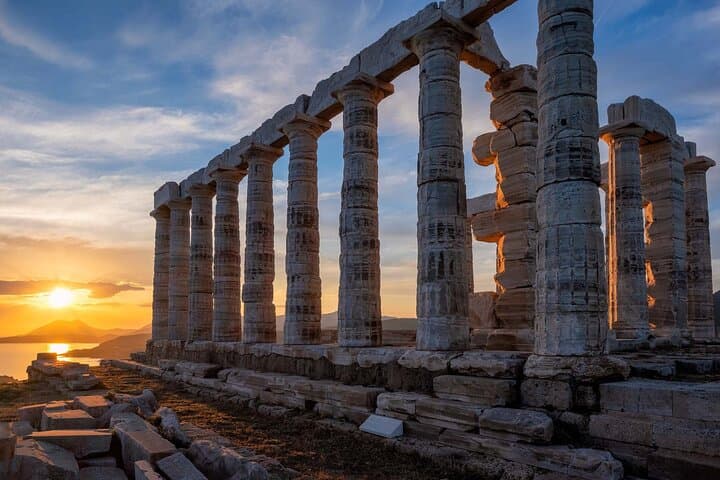
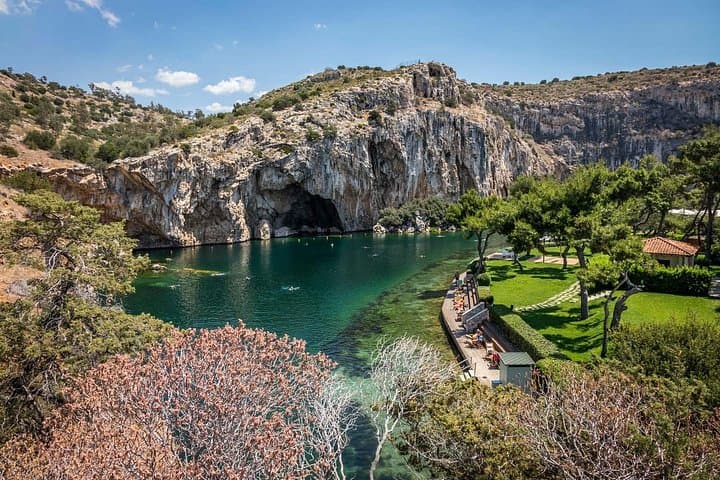
The road south from Athens tightens against the Aegean, the car hugging cliffs while the sea keeps time with a steady, low cadence. In late afternoon the Doric columns of the Temple of Poseidon rise like a pale gate over the water, their silhouettes sharpened by a wind that seems to push visitors toward the cliff edge. A private 3–4 hour tour compresses the coast into a compact loop: a lively stop at Flisvos Marina, a soak-in-sight at Lake Vouliagmeni, and the slow, ceremonial ascent to Sounion’s ruined temple.
Verified experiences and guided adventures in the surrounding area.
Operated by Best Tours In Greece · Cape Sounion, Attica
The road south from Athens tightens against the Aegean, the car hugging cliffs while the sea keeps time with a steady, low cadence. In late afternoon the Doric columns of the Temple of Poseidon rise like a pale gate over the water, their silhouettes sharpened by a wind that seems to push visitors toward the cliff edge. A private 3–4 hour tour compresses the coast into a compact loop: a lively stop at Flisvos Marina, a soak-in-sight at Lake Vouliagmeni, and the slow, ceremonial ascent to Sounion’s ruined temple.
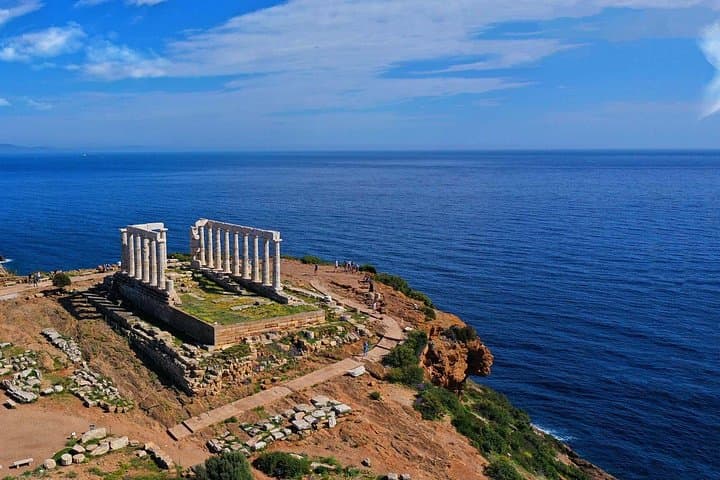
Cape Sounion’s temple dates to the 5th century B.C., built from local marble and set where sailors once left offerings to the god of the sea. Geologically the cape is a hard promontory of limestone and schist, its cliffs exposed to persistent Aegean weathering—which is why the view feels so raw and immediate. Culturally the site carries lines from Homer and the graffiti-studded fame of Lord Byron; modern Athenians still come for sunsets and quiet reflection.
Practically, plan for uneven stone underfoot and strong coastal wind; the site is exposed with limited shade. The best light arrives in the hour before sunset—book late afternoon to catch the sea change from blue to molten gold. Expect short walks between viewpoints, about 20–30 minutes at the temple to explore safely. Bring sun protection, a light layer for the breeze, and a camera with wide-angle capability for the cliff-and-sea panorama. This half-day run is compact, accessible, and rich—an outdoor cultural outing that pairs coastal scenery with deep history.
easy.
3–4 hours.
Suitable for most fitness levels; involves short, gentle walks on uneven terrain and some steps
Expect roughly 45–60 minutes depending on traffic; the route follows the coastal road (Athenian Riviera) to Cape Sounion.
This tour typically stops at viewpoints and allows time to explore the ruins, but verify whether admission fees are included when booking.
Access at the temple involves uneven stone and steps; while some viewpoints are reachable, full access is limited—contact the operator for specific accessibility options.
Late afternoon on weekdays is quieter; sunset draws the most visitors, so a private tour helps secure a less crowded experience.
The temple at Cape Sounion was rebuilt in the mid-5th century B.C. and dedicated to Poseidon; sailors used the promontory as a landmark for safe passage to Athens.
Erosion and visitor impact are managed by site rules—stay behind barriers, avoid climbing the ruins, and support local preservation efforts by following signage.
Best Tours In Greece operates guided outdoor trips and adventures with an emphasis on safety, stewardship, and memorable experiences.
The road south from Athens tightens against the Aegean, the car hugging cliffs while the sea keeps time with a steady, low cadence. In late afternoon the Doric columns of the Temple of Poseidon rise like a pale gate over the water, their silhouettes sharpened by a wind that seems to push visitors toward the cliff edge. A private 3–4 hour tour compresses the coast into a compact loop: a lively stop at Flisvos Marina, a soak-in-sight at Lake Vouliagmeni, and the slow, ceremonial ascent to Sounion’s ruined temple.
The road south from Athens tightens against the Aegean, the car hugging cliffs while the sea keeps time with a steady, low cadence. In late afternoon the Doric columns of the Temple of Poseidon rise like a pale gate over the water, their silhouettes sharpened by a wind that seems to push visitors toward the cliff edge. A private 3–4 hour tour compresses the coast into a compact loop: a lively stop at Flisvos Marina, a soak-in-sight at Lake Vouliagmeni, and the slow, ceremonial ascent to Sounion’s ruined temple.
Cape Sounion’s temple dates to the 5th century B.C., built from local marble and set where sailors once left offerings to the god of the sea. Geologically the cape is a hard promontory of limestone and schist, its cliffs exposed to persistent Aegean weathering—which is why the view feels so raw and immediate. Culturally the site carries lines from Homer and the graffiti-studded fame of Lord Byron; modern Athenians still come for sunsets and quiet reflection.
Practically, plan for uneven stone underfoot and strong coastal wind; the site is exposed with limited shade. The best light arrives in the hour before sunset—book late afternoon to catch the sea change from blue to molten gold. Expect short walks between viewpoints, about 20–30 minutes at the temple to explore safely. Bring sun protection, a light layer for the breeze, and a camera with wide-angle capability for the cliff-and-sea panorama. This half-day run is compact, accessible, and rich—an outdoor cultural outing that pairs coastal scenery with deep history.