THE ADVENTURE COLLECTIVE® · Independent discovery and booking for outdoor travel

Watch Angkor Wat’s towers shift from gold to shadow on a compact, 5–6 hour afternoon tour. Visit Angkor Wat, Angkor Thom, Bayon and climb Phnom Bakheng for sunset, all with hotel pickup and an English guide.
Watch Angkor Wat’s towers shift from gold to shadow on a compact, 5–6 hour afternoon tour. Visit Angkor Wat, Angkor Thom, Bayon and climb Phnom Bakheng for sunset, all with hotel pickup and an English guide.
You arrive in the late afternoon heat; a tuk‑tuk hums through rice paddies and the jungle leans closer as you approach the outer moat. Angkor Wat’s towers rise like a carved horizon, its reflection shivering in the still water as the sun drops toward the west.
Verified experiences and guided adventures in the surrounding area.
Operated by Angkor Wat Tour Services · Siem Reap, Siem Reap Province
You arrive in the late afternoon heat; a tuk‑tuk hums through rice paddies and the jungle leans closer as you approach the outer moat. Angkor Wat’s towers rise like a carved horizon, its reflection shivering in the still water as the sun drops toward the west.
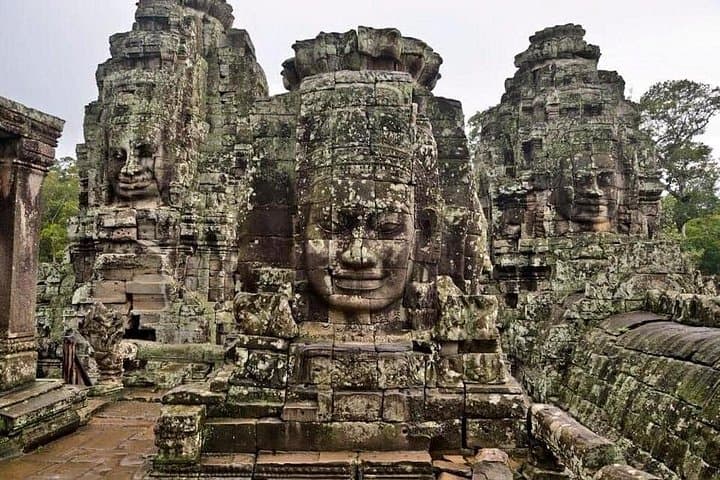
This half‑day tour moves deliberately: Angkor Wat first — the 12th‑century temple built by King Suryavarman II — where bas‑reliefs map myth and daily life across stone galleries. From there the route threads to Angkor Thom, entering through the sculpted South Gate and across the Terrace of the Elephants, then into the Bayon with its over 200 enigmatic faces. You pass the ceremonial platform and climb Phnom Bakheng, a steep but short ascent rewarded with a wide, unobstructed sunset over the temple plain.
Geology here is sandstone and laterite; centuries of monsoon wash and vegetation have softened edges, leaving a textured, lived‑in quality to the carvings. Culturally the complex shifts between Hindu and Buddhist iconography, reflecting Cambodia’s layered past.
Practical notes: the tour includes hotel pickup/dropoff, bottled water, and an English guide; Angkor Park tickets are purchased on site (bring cash). Expect uneven stone steps, warm temperatures, and crowds at sunset; plan light clothing, respectful dress (shoulders and knees covered), and a headlamp or phone light for the last descent.
The half‑day format is ideal if you want a compact introduction to Angkor with a dramatic finish — efficient, sensory, and anchored by history and hard stone that still holds the smell of incense and rain.
moderate.
5–6 hours.
Moderate fitness: able to walk on uneven stone, climb short steep sections, and stand during sunset crowds.
No; the tour stops at the ticket center so you can buy your Angkor Pass (cash accepted). Buying in advance is recommended to save time.
Very crowded during peak season; expect many visitors and limited space—arrive early to claim a viewing spot.
The tour includes uneven stone, steep short climbs and many steps; it is not recommended for travelers with significant mobility, spinal, or cardiovascular issues.
Hotel pickup and drop‑off in Siem Reap are included; transport is by tuk‑tuk for small groups and by air‑conditioned minivan for larger groups.
Angkor Wat was constructed in the early 12th century by King Suryavarman II and later transitioned from a Hindu temple to a major Buddhist site, reflecting Cambodia’s shifting religious landscape.
Visitor pressure is managed through the Angkor Park ticket system; stick to marked paths, avoid touching carvings, and support licensed local guides to help preserve the site.
Angkor Wat Tour Services operates guided outdoor trips and adventures with an emphasis on safety, stewardship, and memorable experiences.


You arrive in the late afternoon heat; a tuk‑tuk hums through rice paddies and the jungle leans closer as you approach the outer moat. Angkor Wat’s towers rise like a carved horizon, its reflection shivering in the still water as the sun drops toward the west.
You arrive in the late afternoon heat; a tuk‑tuk hums through rice paddies and the jungle leans closer as you approach the outer moat. Angkor Wat’s towers rise like a carved horizon, its reflection shivering in the still water as the sun drops toward the west.
This half‑day tour moves deliberately: Angkor Wat first — the 12th‑century temple built by King Suryavarman II — where bas‑reliefs map myth and daily life across stone galleries. From there the route threads to Angkor Thom, entering through the sculpted South Gate and across the Terrace of the Elephants, then into the Bayon with its over 200 enigmatic faces. You pass the ceremonial platform and climb Phnom Bakheng, a steep but short ascent rewarded with a wide, unobstructed sunset over the temple plain.
Geology here is sandstone and laterite; centuries of monsoon wash and vegetation have softened edges, leaving a textured, lived‑in quality to the carvings. Culturally the complex shifts between Hindu and Buddhist iconography, reflecting Cambodia’s layered past.
Practical notes: the tour includes hotel pickup/dropoff, bottled water, and an English guide; Angkor Park tickets are purchased on site (bring cash). Expect uneven stone steps, warm temperatures, and crowds at sunset; plan light clothing, respectful dress (shoulders and knees covered), and a headlamp or phone light for the last descent.
The half‑day format is ideal if you want a compact introduction to Angkor with a dramatic finish — efficient, sensory, and anchored by history and hard stone that still holds the smell of incense and rain.