THE ADVENTURE COLLECTIVE® · Independent discovery and booking for outdoor travel

Watch flamingos as the sky goes amber on the Trabucador spit in the Ebro Delta. This guided sunset walk combines accessible birdwatching with coastal geology and local rice-cultivation history.
Watch flamingos as the sky goes amber on the Trabucador spit in the Ebro Delta. This guided sunset walk combines accessible birdwatching with coastal geology and local rice-cultivation history.
The light along the Trabucador spit thins to gold and the flats begin to breathe — a shallow pulse of pink legs and slow bills working shallows. Visitors arrive with binoculars and low voices as the Mediterranean and the calm waters of the Alfacs Bay trade colors, and flamingos gather in long, elegant clusters that puncture the horizon.
Verified experiences and guided adventures in the surrounding area.
Operated by Viatges Némon · Sant Carles de la Ràpita, Catalonia
The light along the Trabucador spit thins to gold and the flats begin to breathe — a shallow pulse of pink legs and slow bills working shallows. Visitors arrive with binoculars and low voices as the Mediterranean and the calm waters of the Alfacs Bay trade colors, and flamingos gather in long, elegant clusters that puncture the horizon.
The Ebro Delta is a young landscape formed by millennia of sediment deposited by the Ebro River; its wide rice fields and salt pans are human imprints on recent geology. Rice cultivation has shaped local culture for generations, and the park’s lagoons and channels now host migratory birds, including the delta’s most visible resident: the greater flamingo.
On an organized sunset walk, a guide will explain feeding behavior, plumage changes, and how tidal patterns concentrate food for wading birds. The setting combines natural history with coastal geology — sandbars, mudflats, and shallow marine basins that push and pull with each tide.
Practicalities are straightforward: tours run about 2.5 hours at dusk, use flat, firm paths, and are suitable for most fitness levels. Bring a telephoto lens or binoculars, long sleeves against mosquitoes, and a wind layer for the open spit. Respect roped bird hides and keep noise low — flamingos are sensitive to disturbance, especially during feeding and preening.
Expect low light photography challenges; arrive early to set up gear and ask the guide for recommended viewing spots. The result is an accessible, sensory evening where geology, agriculture, and birdlife converge beneath a coastal sunset.
easy.
2–3 hours.
Suitable for most fitness levels; requires walking on flat, sometimes sandy or firm muddy paths for under 3 km total.
Guides position groups at observation points and hides that allow good views while keeping a respectful distance; expect birds to be tens to a few hundred meters away depending on tides.
The listing indicates wheelchair accessibility, but surfaces on the spit can be sandy — check with the operator about transfer assistance and exact meeting points.
Yes, infants are allowed but must sit on laps; the tour is family-friendly though insect protection is recommended for young kids.
Tours may be canceled for safety or visibility reasons; the operator typically refunds or reschedules if weather is unsuitable.
The delta grew from Ebro River sediments over the Holocene and has been shaped by rice agriculture for centuries; fields and channels are both cultural landscape and bird habitat.
The park balances rice production and bird habitat; visitors should avoid trampling nesting areas, respect seasonal closures, and follow guidance to reduce disturbance.
Viatges Némon operates guided outdoor trips and adventures with an emphasis on safety, stewardship, and memorable experiences.
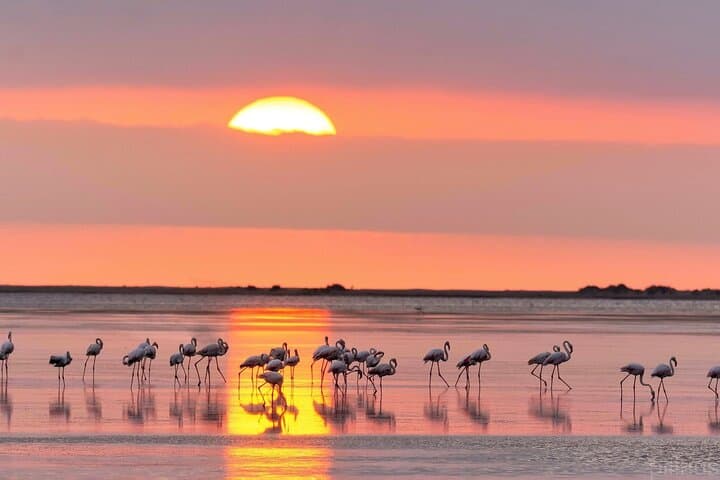
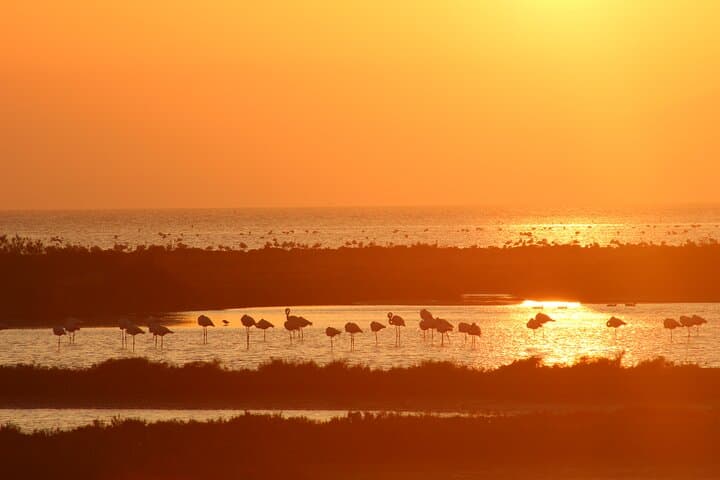
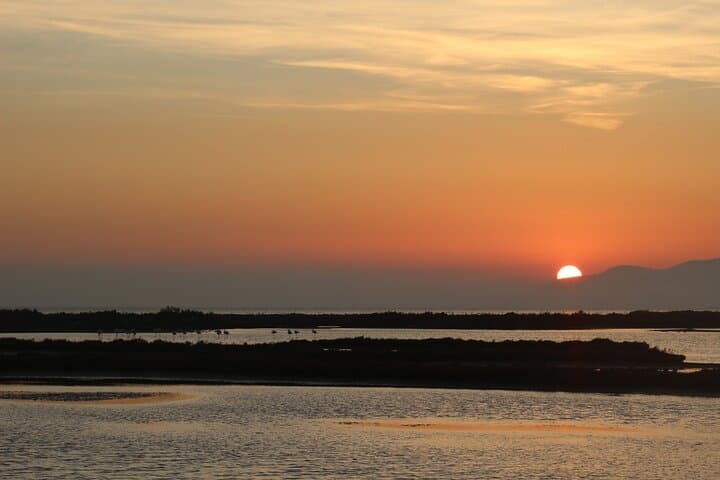
The light along the Trabucador spit thins to gold and the flats begin to breathe — a shallow pulse of pink legs and slow bills working shallows. Visitors arrive with binoculars and low voices as the Mediterranean and the calm waters of the Alfacs Bay trade colors, and flamingos gather in long, elegant clusters that puncture the horizon.
The light along the Trabucador spit thins to gold and the flats begin to breathe — a shallow pulse of pink legs and slow bills working shallows. Visitors arrive with binoculars and low voices as the Mediterranean and the calm waters of the Alfacs Bay trade colors, and flamingos gather in long, elegant clusters that puncture the horizon.
The Ebro Delta is a young landscape formed by millennia of sediment deposited by the Ebro River; its wide rice fields and salt pans are human imprints on recent geology. Rice cultivation has shaped local culture for generations, and the park’s lagoons and channels now host migratory birds, including the delta’s most visible resident: the greater flamingo.
On an organized sunset walk, a guide will explain feeding behavior, plumage changes, and how tidal patterns concentrate food for wading birds. The setting combines natural history with coastal geology — sandbars, mudflats, and shallow marine basins that push and pull with each tide.
Practicalities are straightforward: tours run about 2.5 hours at dusk, use flat, firm paths, and are suitable for most fitness levels. Bring a telephoto lens or binoculars, long sleeves against mosquitoes, and a wind layer for the open spit. Respect roped bird hides and keep noise low — flamingos are sensitive to disturbance, especially during feeding and preening.
Expect low light photography challenges; arrive early to set up gear and ask the guide for recommended viewing spots. The result is an accessible, sensory evening where geology, agriculture, and birdlife converge beneath a coastal sunset.