THE ADVENTURE COLLECTIVE® · Independent discovery and booking for outdoor travel

Practice an hour of guided yoga on a lawn facing the Taj Mahal. This sunrise session blends beginner-friendly asana and pranayama with uninterrupted views of one of India’s most iconic monuments.
Practice an hour of guided yoga on a lawn facing the Taj Mahal. This sunrise session blends beginner-friendly asana and pranayama with uninterrupted views of one of India’s most iconic monuments.
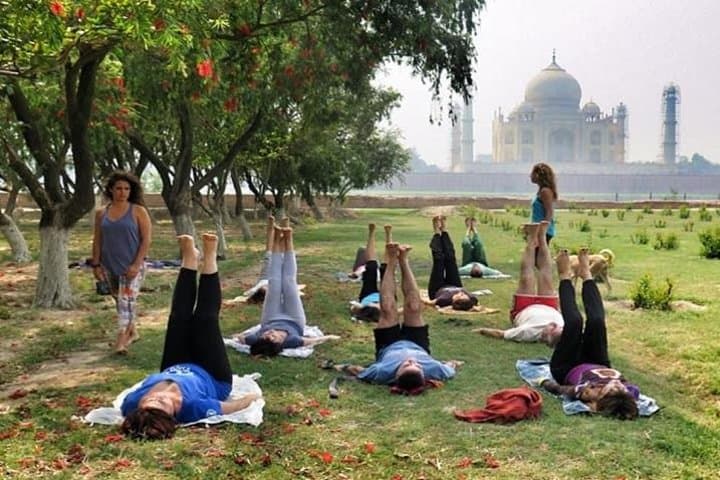
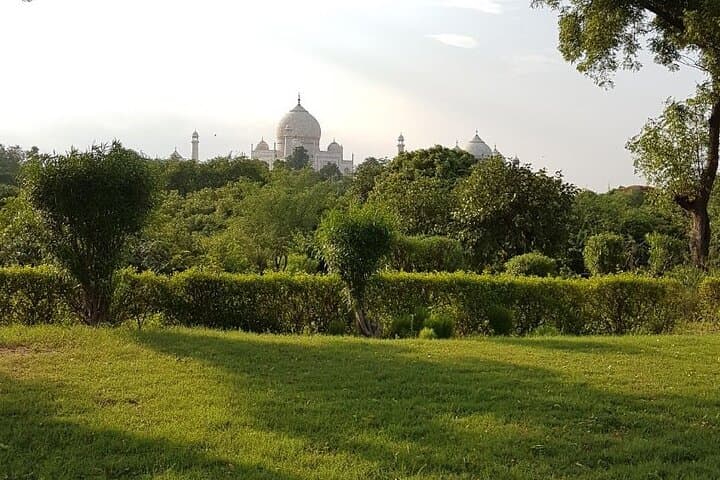
You unroll a mat on a stretch of green that opens toward the Taj Mahal—marble catching the first light while the morning air coolly presses against your skin. The hum of the city is distant; the Yamuna slips past like a patient audience. For one hour an instructor guides breath and posture with the mausoleum framed across the lawn, the monument’s geometry giving the practice a quiet, disciplined backdrop.
Verified experiences and guided adventures in the surrounding area.
Operated by SITA World Tours · Agra, Uttar Pradesh
You unroll a mat on a stretch of green that opens toward the Taj Mahal—marble catching the first light while the morning air coolly presses against your skin. The hum of the city is distant; the Yamuna slips past like a patient audience. For one hour an instructor guides breath and posture with the mausoleum framed across the lawn, the monument’s geometry giving the practice a quiet, disciplined backdrop.
The Taj Mahal, completed in 1653 by Mughal emperor Shah Jahan, occupies a very specific cultural and historical stage: a funerary complex of white marble and carved pietra dura that has drawn visitors for centuries. The site sits on the Yamuna floodplain, where alluvial soils and riverine vegetation shape the landscape; nearby public gardens and parks provide the open lawns commonly used for group activities. Local practice blends classical Hatha and breathing techniques with approachable cues, reflecting yoga’s long history in northern India and its contemporary role as a tourist-friendly discipline.
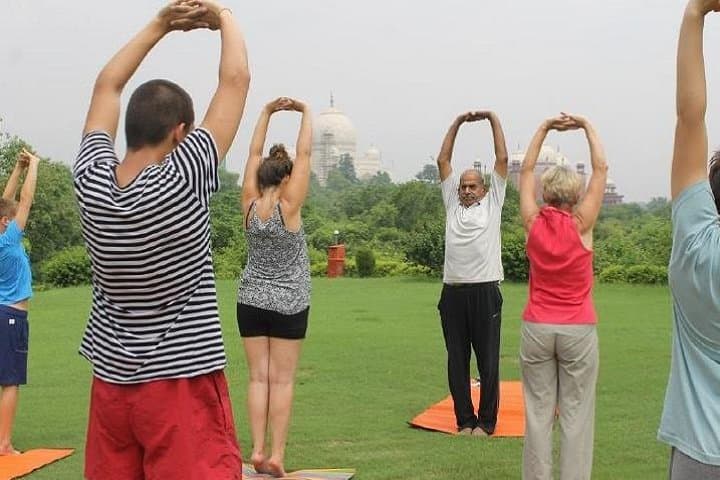
Expect a mostly gentle sequence—standing postures, simple balances and pranayama—designed for beginners yet paced for anyone who wants a mindful hour outdoors. You’ll be doing this in a public green space, so plan for other people, photographers and shifting light. Mats are supplied but bringing your own is fine. Modest clothing is advised out of respect for the setting; mornings can be chilly in winter and intensely hot in summer.
Practical: reconfirm your pickup, arrive 10–15 minutes early to settle, hydrate beforehand, and carry sunscreen and a light layer. This is a low-impact, culturally rich way to experience Agra’s landmark without entering the monument itself.
easy.
1 hour.
Participants should have a moderate level of fitness for basic standing poses and breathwork; this class is beginner-friendly.
The session takes place on a public green space near the Taj Mahal, not inside the mausoleum complex—your booking includes a hotel pickup and transfer to the practice area.
Yes, mats are provided, but you may prefer to bring your own for comfort and hygiene.
The class is suitable for beginners; minimum age is 10 and the instructor will offer modifications for different abilities.
You can cancel for a full refund if you cancel at least 24 hours before the scheduled time; check your booking confirmation for details.
The Taj Mahal was commissioned by Mughal emperor Shah Jahan in the 17th century as a mausoleum for his wife; its gardens follow the charbagh (four-part) Persian layout adapted to the Yamuna riverbank.
Visitor impact is monitored by the Archaeological Survey of India and local authorities; practice low-impact habits—no litter, respect restricted areas, and avoid loud music to protect the site’s ambience.
SITA World Tours operates guided outdoor trips and adventures with an emphasis on safety, stewardship, and memorable experiences.

You unroll a mat on a stretch of green that opens toward the Taj Mahal—marble catching the first light while the morning air coolly presses against your skin. The hum of the city is distant; the Yamuna slips past like a patient audience. For one hour an instructor guides breath and posture with the mausoleum framed across the lawn, the monument’s geometry giving the practice a quiet, disciplined backdrop.
You unroll a mat on a stretch of green that opens toward the Taj Mahal—marble catching the first light while the morning air coolly presses against your skin. The hum of the city is distant; the Yamuna slips past like a patient audience. For one hour an instructor guides breath and posture with the mausoleum framed across the lawn, the monument’s geometry giving the practice a quiet, disciplined backdrop.
The Taj Mahal, completed in 1653 by Mughal emperor Shah Jahan, occupies a very specific cultural and historical stage: a funerary complex of white marble and carved pietra dura that has drawn visitors for centuries. The site sits on the Yamuna floodplain, where alluvial soils and riverine vegetation shape the landscape; nearby public gardens and parks provide the open lawns commonly used for group activities. Local practice blends classical Hatha and breathing techniques with approachable cues, reflecting yoga’s long history in northern India and its contemporary role as a tourist-friendly discipline.
Expect a mostly gentle sequence—standing postures, simple balances and pranayama—designed for beginners yet paced for anyone who wants a mindful hour outdoors. You’ll be doing this in a public green space, so plan for other people, photographers and shifting light. Mats are supplied but bringing your own is fine. Modest clothing is advised out of respect for the setting; mornings can be chilly in winter and intensely hot in summer.
Practical: reconfirm your pickup, arrive 10–15 minutes early to settle, hydrate beforehand, and carry sunscreen and a light layer. This is a low-impact, culturally rich way to experience Agra’s landmark without entering the monument itself.