THE ADVENTURE COLLECTIVE® · Independent discovery and booking for outdoor travel

A private car trip from Delhi delivers sunrise views at the Taj Mahal, time in Agra Fort and a return via the Yamuna Expressway. Expect early starts, skip-the-line access and a full 10–14 hour cultural day framed by Mughal architecture.
A private car trip from Delhi delivers sunrise views at the Taj Mahal, time in Agra Fort and a return via the Yamuna Expressway. Expect early starts, skip-the-line access and a full 10–14 hour cultural day framed by Mughal architecture.
You arrive before dawn, the car cutting east across the flat, pale plain toward a skyline that seems to be drawing itself in slow focus. When the first light strikes the Taj’s marble faces they look to tilt and breathe; columns and inlaid flowers step out of shadow as if the monument were waking. The Yamuna flows past the lower terraces, an obliging companion that nudges the scene into motion.
Verified experiences and guided adventures in the surrounding area.
Operated by VEHERE INDIA · Agra, Uttar Pradesh
You arrive before dawn, the car cutting east across the flat, pale plain toward a skyline that seems to be drawing itself in slow focus. When the first light strikes the Taj’s marble faces they look to tilt and breathe; columns and inlaid flowers step out of shadow as if the monument were waking. The Yamuna flows past the lower terraces, an obliging companion that nudges the scene into motion.
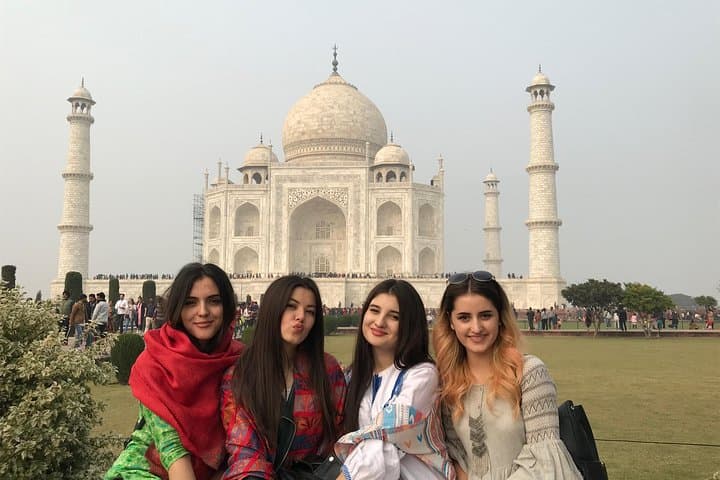
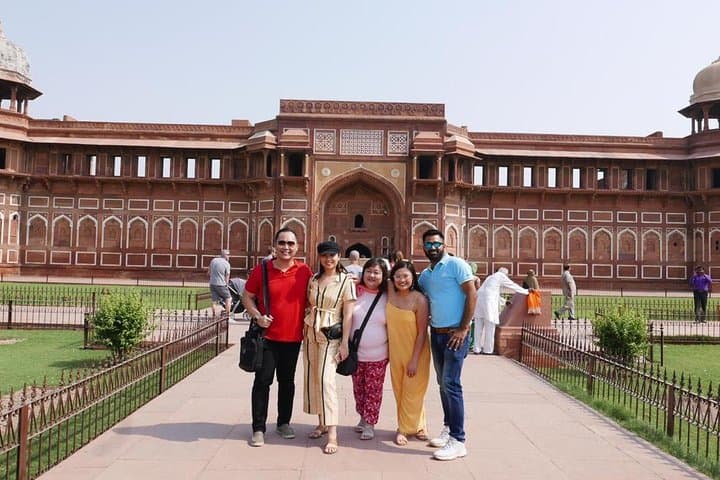
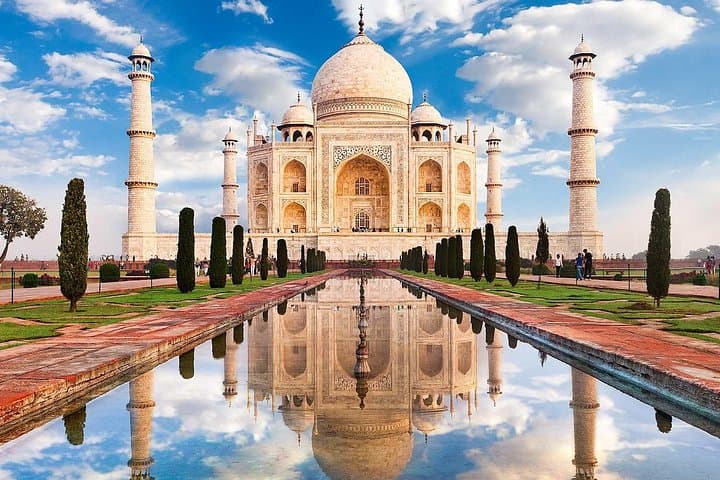
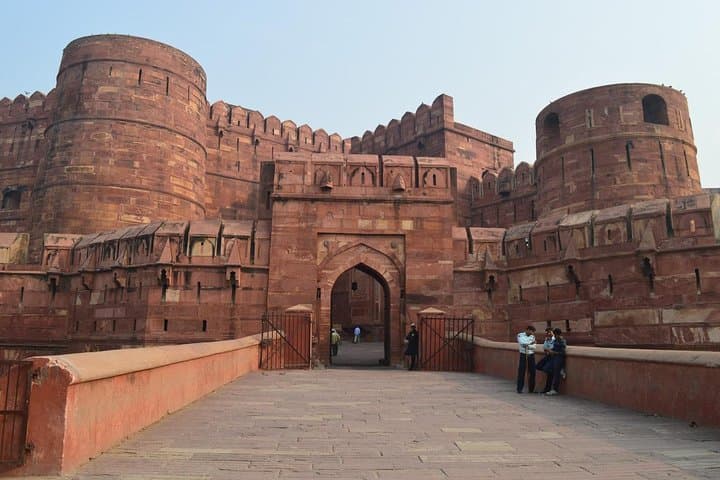
The day pairs modern India’s smooth expressway with Mughal-era architecture. The Taj Mahal, completed in the 1650s under Shah Jahan, sits on the banks of the Yamuna and is a precise exercise in symmetry and pietra dura inlay. Nearby Agra Fort—an earlier Mughal fortress—reveals defensive walls, palaces and the story of imperial life and family politics. Geologically, the site rests on alluvial deposits of the Indo-Gangetic Plain, a low, fertile landscape that made Agra an ideal imperial capital.
For travelers this is a logistical day: roughly a 3‑hour drive each way along the Yamuna Expressway, about 180–220 km depending on your Delhi start point, then guided time at the Taj (about 2–3 hours) and Agra Fort. Expect paved approaches, short stair sections, and long walks across manicured lawns.
Practical notes: arrive for sunrise to avoid crowds and heat, carry water and sun protection, and wear shoes that slip off easily for mosque spaces. The private car model gives flexibility—skip queues and tailor timing—but be ready for a full 10–14 hour day. Respect restricted areas, follow your guide’s instructions for photography near sensitive zones, and leave space for a contemplative moment on the marble platform; it’s the core of the visit.
moderate.
10–14 hours.
Suitable for travelers with moderate fitness—comfortable walking on level ground and short stair climbs required
Some options include monument entry; confirm at booking—this tour notes ‘Monument Entry Tickets (If Option Selected)’."
Yes—this private tour includes hotel pickup and drop-off in Delhi as stated in the inclusions.
Transport and some areas are wheelchair accessible, but marble platforms and certain fort sections have steps; contact the operator to confirm specific needs.
Photography is permitted in most outdoor and garden areas; follow onsite rules and guide instructions—tripod or commercial equipment may be restricted.
Agra rose to prominence under the Mughals; the Taj was built by Shah Jahan in memory of Mumtaz Mahal and perfected skilled inlay and symmetry techniques.
Preservation efforts limit certain materials and control visitor access to reduce marble wear; stick to pathways, avoid flash photography inside delicate inlay areas.
VEHERE INDIA operates guided outdoor trips and adventures with an emphasis on safety, stewardship, and memorable experiences.
You arrive before dawn, the car cutting east across the flat, pale plain toward a skyline that seems to be drawing itself in slow focus. When the first light strikes the Taj’s marble faces they look to tilt and breathe; columns and inlaid flowers step out of shadow as if the monument were waking. The Yamuna flows past the lower terraces, an obliging companion that nudges the scene into motion.
You arrive before dawn, the car cutting east across the flat, pale plain toward a skyline that seems to be drawing itself in slow focus. When the first light strikes the Taj’s marble faces they look to tilt and breathe; columns and inlaid flowers step out of shadow as if the monument were waking. The Yamuna flows past the lower terraces, an obliging companion that nudges the scene into motion.
The day pairs modern India’s smooth expressway with Mughal-era architecture. The Taj Mahal, completed in the 1650s under Shah Jahan, sits on the banks of the Yamuna and is a precise exercise in symmetry and pietra dura inlay. Nearby Agra Fort—an earlier Mughal fortress—reveals defensive walls, palaces and the story of imperial life and family politics. Geologically, the site rests on alluvial deposits of the Indo-Gangetic Plain, a low, fertile landscape that made Agra an ideal imperial capital.
For travelers this is a logistical day: roughly a 3‑hour drive each way along the Yamuna Expressway, about 180–220 km depending on your Delhi start point, then guided time at the Taj (about 2–3 hours) and Agra Fort. Expect paved approaches, short stair sections, and long walks across manicured lawns.
Practical notes: arrive for sunrise to avoid crowds and heat, carry water and sun protection, and wear shoes that slip off easily for mosque spaces. The private car model gives flexibility—skip queues and tailor timing—but be ready for a full 10–14 hour day. Respect restricted areas, follow your guide’s instructions for photography near sensitive zones, and leave space for a contemplative moment on the marble platform; it’s the core of the visit.