THE ADVENTURE COLLECTIVE® · Independent discovery and booking for outdoor travel

Witness Angkor Wat at sunrise, explore Ta Prohm’s root-clad galleries, and finish with a Bakheng sunset on this two-day private tour. A local official guide frames centuries of Khmer history while you navigate temple stones, reservoirs, and shaded paths.
Witness Angkor Wat at sunrise, explore Ta Prohm’s root-clad galleries, and finish with a Bakheng sunset on this two-day private tour. A local official guide frames centuries of Khmer history while you navigate temple stones, reservoirs, and shaded paths.
You stand at the edge of a still moat as pre-dawn light lifts a silhouette of five towers—Angkor Wat’s outline sharp against a cooling sky. The air is humid but the moment is crisp; photographers jockey for the best reflection while a local guide points out details in the bas-reliefs that only years of study would reveal.
Verified experiences and guided adventures in the surrounding area.
Operated by Golden Sunrise Angkor · Siem Reap, Siem Reap Province
You stand at the edge of a still moat as pre-dawn light lifts a silhouette of five towers—Angkor Wat’s outline sharp against a cooling sky. The air is humid but the moment is crisp; photographers jockey for the best reflection while a local guide points out details in the bas-reliefs that only years of study would reveal.
Across two days this private tour walks the grand circuit of the Angkor complex: Angkor Wat at sunrise, the root-entwined corridors of Ta Prohm, the enigmatic stone faces of Bayon, and quieter stones like Banteay Kdei and Ta Som. The temples span centuries of Khmer history, from 9th‑century hilltop shrines like Phnom Bakheng to 12th‑century Buddhist monuments under Jayavarman VII. Geologically the plains sit on sandstone plateaus shaped by seasonal monsoon cycles and ancient hydraulic engineering—East Mebon once rose from a reservoir now drained to farmland.
Expect a blend of cultural interpretation and steady walking on uneven stone, carved stairways, and dirt paths shaded by tropical trees. Your official guide will thread context—ritual use, iconography, and the empire’s waterworks—between stops.
Practicalities: buy a 2‑day Angkor pass in advance, wear breathable shoes with good grip, carry at least 2 liters of water, and plan sun protection and a compact rain layer for sudden downpours. Sunrise and sunset vantage points fill early; move deliberately, respect temple rules (no sleeveless tops or short skirts in some areas), and leave time to absorb quieter corners like Neak Pean’s healing pools. This tour is both a crash course in Khmer history and a paced, immersive field trip across one of Southeast Asia’s great archaeological landscapes.
moderate.
2 days (approx. 8–10 hours per day).
Light-to-moderate fitness for sustained walking on uneven ground and stairs; be prepared for periods standing and short climbs.
Yes. A 2‑day Angkor pass is required and typically purchased at the official ticket center; your guide can advise the best time to buy to avoid lines.
Generally yes—sites are family friendly but involve uneven steps and heat; consider a shorter pace or vehicle access where available.
This private tour includes private transportation and guide services but the Angkor park pass is usually an additional fee paid separately.
This product includes an official English‑speaking guide; confirm availability of other languages in advance if needed.
Angkor’s temples were built between the 9th and 13th centuries by successive Khmer kings; many combine Hindu and Buddhist iconography reflecting changing royal cults.
Visitor pressure and tropical weather accelerate sandstone erosion; stick to designated paths and avoid climbing non-restored structures to minimize impact.
Golden Sunrise Angkor operates guided outdoor trips and adventures with an emphasis on safety, stewardship, and memorable experiences.
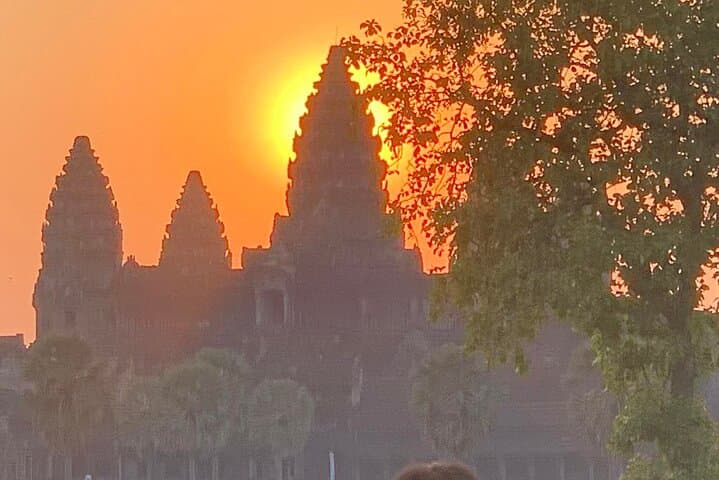


You stand at the edge of a still moat as pre-dawn light lifts a silhouette of five towers—Angkor Wat’s outline sharp against a cooling sky. The air is humid but the moment is crisp; photographers jockey for the best reflection while a local guide points out details in the bas-reliefs that only years of study would reveal.
You stand at the edge of a still moat as pre-dawn light lifts a silhouette of five towers—Angkor Wat’s outline sharp against a cooling sky. The air is humid but the moment is crisp; photographers jockey for the best reflection while a local guide points out details in the bas-reliefs that only years of study would reveal.
Across two days this private tour walks the grand circuit of the Angkor complex: Angkor Wat at sunrise, the root-entwined corridors of Ta Prohm, the enigmatic stone faces of Bayon, and quieter stones like Banteay Kdei and Ta Som. The temples span centuries of Khmer history, from 9th‑century hilltop shrines like Phnom Bakheng to 12th‑century Buddhist monuments under Jayavarman VII. Geologically the plains sit on sandstone plateaus shaped by seasonal monsoon cycles and ancient hydraulic engineering—East Mebon once rose from a reservoir now drained to farmland.
Expect a blend of cultural interpretation and steady walking on uneven stone, carved stairways, and dirt paths shaded by tropical trees. Your official guide will thread context—ritual use, iconography, and the empire’s waterworks—between stops.
Practicalities: buy a 2‑day Angkor pass in advance, wear breathable shoes with good grip, carry at least 2 liters of water, and plan sun protection and a compact rain layer for sudden downpours. Sunrise and sunset vantage points fill early; move deliberately, respect temple rules (no sleeveless tops or short skirts in some areas), and leave time to absorb quieter corners like Neak Pean’s healing pools. This tour is both a crash course in Khmer history and a paced, immersive field trip across one of Southeast Asia’s great archaeological landscapes.