THE ADVENTURE COLLECTIVE® · Independent discovery and booking for outdoor travel

A day hike from Sunrise to the Burroughs offers close-up views of Mount Rainier’s glaciers, high subalpine meadows and dramatic ridgelines. This guided six‑mile route is non‑technical but demanding—perfect for fit hikers who want panoramic volcano views without technical climbing.
A day hike from Sunrise to the Burroughs offers close-up views of Mount Rainier’s glaciers, high subalpine meadows and dramatic ridgelines. This guided six‑mile route is non‑technical but demanding—perfect for fit hikers who want panoramic volcano views without technical climbing.
High above the tree line the wind shapes the tundra; wildflowers crouch low against it while Mount Rainier fills the sky, glacier lines glinting like slow rivers of ice. Start at Sunrise Visitor Center and the trail immediately opens—Sourdough ridges, rocky benches and the clean, thin air that makes each breath feel purposeful.
Verified experiences and guided adventures in the surrounding area.
Operated by Adventures In Seattle · Enumclaw, Washington
High above the tree line the wind shapes the tundra; wildflowers crouch low against it while Mount Rainier fills the sky, glacier lines glinting like slow rivers of ice. Start at Sunrise Visitor Center and the trail immediately opens—Sourdough ridges, rocky benches and the clean, thin air that makes each breath feel purposeful.
The Burroughs route climbs into classic Cascade geology: volcanic andesite, moraines left by the Winthrop and Emmons glaciers, and a landscape still being carved by ice. Euro-American visitors have been drawn here since the late 19th century; Indigenous tribes including the Puyallup and Nisqually hold deep cultural ties to Rainier (Tahoma), which dominates local lore and seasonal hunting routes.
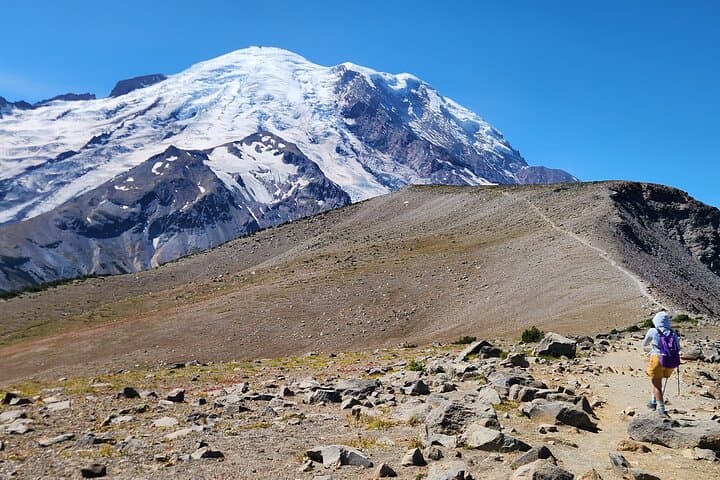
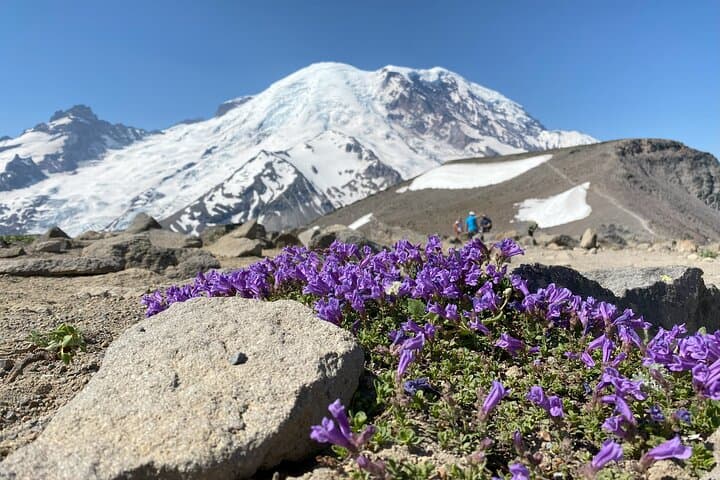
Expect roughly six miles round-trip through high subalpine tundra, ending near 7,800 ft on Burroughs Mountain with sweeping views of Rainier’s northeastern face and its glaciers. The trail is non-technical but steadily exposed—loose scree and boulder fields punctuate open meadows carpeted with lupine and avalanche lilies in summer.
Practical notes: guided departures from Seattle include private transport, lunch and snacks; plan for 8–10 hours total including drive time (about 2–2.5 hours each way). Carry at least 2–3 liters of water, layered clothing for wind and sun, and sturdy boots; altitude and sustained uphill require good cardiovascular fitness. Leave-no-trace matters here—stay on durable surfaces to protect fragile alpine plants. Check road and weather conditions before you go; Sunrise is seasonal and can close early or open late depending on snow.
challenging.
8–10 hours.
Good cardiovascular fitness and comfort hiking at sustained uphill grades and higher elevation
The guided route is about six miles round‑trip with roughly 1,200–1,600 ft of elevation gain; it’s non‑technical but sustained and best for fit hikers.
Mount Rainier National Park requires an entrance fee; guided tours often include it—confirm with your operator and carry your park pass if required.
Mid‑July through August typically brings the peak bloom in meadows around Sunrise, though timing varies year to year with snowpack.
No—Sunrise Road is seasonal and often closed by snow; summer months have the most reliable access and guided departures reflect road status.
Mount Rainier National Park was established in 1899; the mountain (Tahoma) has long cultural significance to local Indigenous peoples and guided routes follow landscapes those communities traversed.
The high alpine meadows are fragile—stick to durable surfaces, pack out waste, and follow seasonal access rules to limit impact.
Adventures In Seattle operates guided outdoor trips and adventures with an emphasis on safety, stewardship, and memorable experiences.
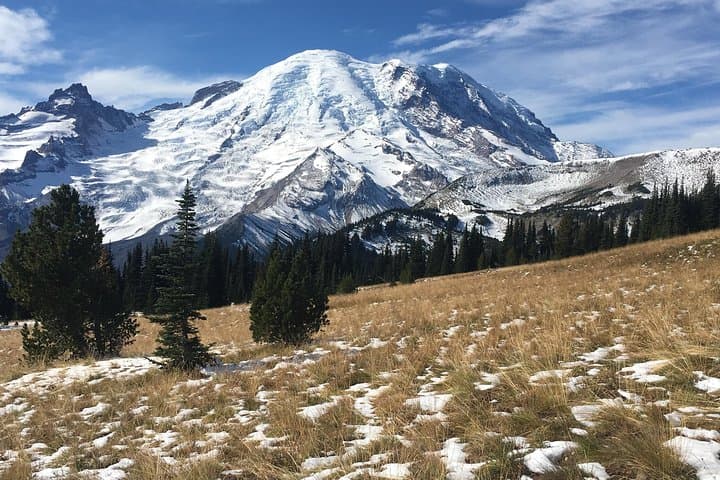
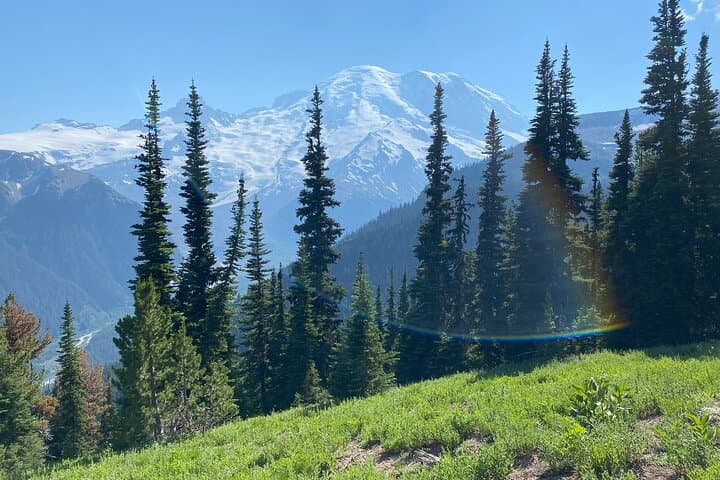
High above the tree line the wind shapes the tundra; wildflowers crouch low against it while Mount Rainier fills the sky, glacier lines glinting like slow rivers of ice. Start at Sunrise Visitor Center and the trail immediately opens—Sourdough ridges, rocky benches and the clean, thin air that makes each breath feel purposeful.
High above the tree line the wind shapes the tundra; wildflowers crouch low against it while Mount Rainier fills the sky, glacier lines glinting like slow rivers of ice. Start at Sunrise Visitor Center and the trail immediately opens—Sourdough ridges, rocky benches and the clean, thin air that makes each breath feel purposeful.
The Burroughs route climbs into classic Cascade geology: volcanic andesite, moraines left by the Winthrop and Emmons glaciers, and a landscape still being carved by ice. Euro-American visitors have been drawn here since the late 19th century; Indigenous tribes including the Puyallup and Nisqually hold deep cultural ties to Rainier (Tahoma), which dominates local lore and seasonal hunting routes.
Expect roughly six miles round-trip through high subalpine tundra, ending near 7,800 ft on Burroughs Mountain with sweeping views of Rainier’s northeastern face and its glaciers. The trail is non-technical but steadily exposed—loose scree and boulder fields punctuate open meadows carpeted with lupine and avalanche lilies in summer.
Practical notes: guided departures from Seattle include private transport, lunch and snacks; plan for 8–10 hours total including drive time (about 2–2.5 hours each way). Carry at least 2–3 liters of water, layered clothing for wind and sun, and sturdy boots; altitude and sustained uphill require good cardiovascular fitness. Leave-no-trace matters here—stay on durable surfaces to protect fragile alpine plants. Check road and weather conditions before you go; Sunrise is seasonal and can close early or open late depending on snow.