THE ADVENTURE COLLECTIVE® · Independent discovery and booking for outdoor travel

Beat the crowds with a pre-dawn drive from Delhi to Agra to watch sunrise over the Taj Mahal. This private-car day trip includes skip-the-line access, Agra Fort, lunch, and time to explore local craft bazaars.
Beat the crowds with a pre-dawn drive from Delhi to Agra to watch sunrise over the Taj Mahal. This private-car day trip includes skip-the-line access, Agra Fort, lunch, and time to explore local craft bazaars.
Before dawn, the highway rolls out like a dark ribbon toward Agra and the Taj Mahal's white silhouette waits for the sun's first clean edge. Travelers on this private-car sunrise tour leave Delhi at 2:30 a.m., arriving in time to watch pale light climb the marble facade and paint the Yamuna's waters gold.
Verified experiences and guided adventures in the surrounding area.
Operated by Deejohn Holidays India Tours · Agra, Uttar Pradesh
Before dawn, the highway rolls out like a dark ribbon toward Agra and the Taj Mahal's white silhouette waits for the sun's first clean edge. Travelers on this private-car sunrise tour leave Delhi at 2:30 a.m., arriving in time to watch pale light climb the marble facade and paint the Yamuna's waters gold.
The Taj Mahal, completed in 1653 by Emperor Shah Jahan, is a study in Mughal architecture—symmetry, pietra dura inlay, and an intentional siting along the Yamuna that amplifies reflections at dawn. Nearby, Agra Fort traces the city's martial past in red sandstone, while bazaars and workshops keep centuries-old marble carving and pietra dura techniques alive.
Geologically, the Taj's Makrana marble comes from Rajasthan; its gleam owes as much to material as to meticulous maintenance. Culturally, the monument is both mausoleum and pilgrimage site, so visitors should approach with quiet respect.
Practically, expect a long but straightforward day: a 3.5–4 hour drive each way, guided entry with skip-the-line access, a walk across formal gardens, interior viewing, and time for Agra Fort, lunch, and shopping before returning to Delhi. Wear comfortable shoes for walking on stone and steps, carry ID or passport for entry, and bring a light layer for early-morning chill that fades quickly.
This itinerary suits travelers who want a compact but rich look at India's Mughal legacy without overnight logistics—an intense cultural day that rewards an early alarm with a sunrise most visitors never forget.
easy.
14–16 hours.
Suitable for travelers in normal health; expect several short walks and long periods in a vehicle
The private vehicle typically makes the trip in about 3.5–4 hours each way via the Yamuna Expressway, depending on traffic.
This tour includes guided access and skip-the-line entry to the Taj Mahal, but check whether interior access is subject to visitor limits on the day.
Yes—infants can ride in strollers and join the tour, but the early start and long day may be tiring for very young children.
Breakfast at a luxury restaurant and bottled water are included; lunch is provided as described in the itinerary.
The Taj Mahal was built by Mughal emperor Shah Jahan in memory of his wife Mumtaz Mahal and completed in the mid-17th century; Agra was a Mughal capital with layers of imperial architecture.
Visitor numbers, pollution, and river proximity are ongoing concerns; conservation efforts and entry limits aim to protect the marble and surrounding gardens.
Deejohn Holidays India Tours operates guided outdoor trips and adventures with an emphasis on safety, stewardship, and memorable experiences.


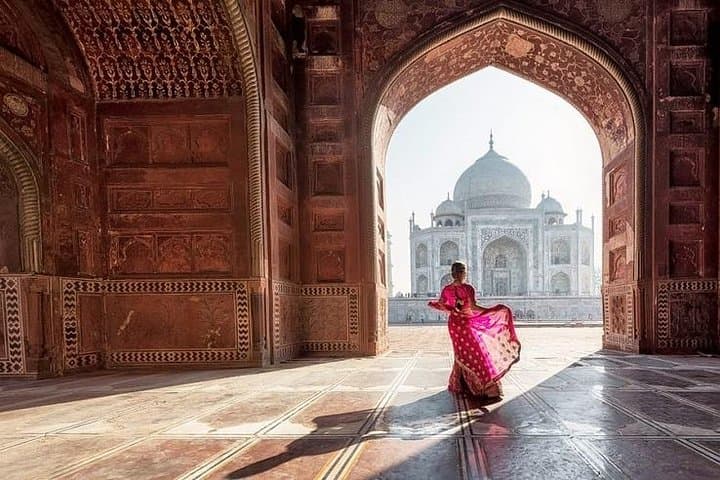

Before dawn, the highway rolls out like a dark ribbon toward Agra and the Taj Mahal's white silhouette waits for the sun's first clean edge. Travelers on this private-car sunrise tour leave Delhi at 2:30 a.m., arriving in time to watch pale light climb the marble facade and paint the Yamuna's waters gold.
Before dawn, the highway rolls out like a dark ribbon toward Agra and the Taj Mahal's white silhouette waits for the sun's first clean edge. Travelers on this private-car sunrise tour leave Delhi at 2:30 a.m., arriving in time to watch pale light climb the marble facade and paint the Yamuna's waters gold.
The Taj Mahal, completed in 1653 by Emperor Shah Jahan, is a study in Mughal architecture—symmetry, pietra dura inlay, and an intentional siting along the Yamuna that amplifies reflections at dawn. Nearby, Agra Fort traces the city's martial past in red sandstone, while bazaars and workshops keep centuries-old marble carving and pietra dura techniques alive.
Geologically, the Taj's Makrana marble comes from Rajasthan; its gleam owes as much to material as to meticulous maintenance. Culturally, the monument is both mausoleum and pilgrimage site, so visitors should approach with quiet respect.
Practically, expect a long but straightforward day: a 3.5–4 hour drive each way, guided entry with skip-the-line access, a walk across formal gardens, interior viewing, and time for Agra Fort, lunch, and shopping before returning to Delhi. Wear comfortable shoes for walking on stone and steps, carry ID or passport for entry, and bring a light layer for early-morning chill that fades quickly.
This itinerary suits travelers who want a compact but rich look at India's Mughal legacy without overnight logistics—an intense cultural day that rewards an early alarm with a sunrise most visitors never forget.