THE ADVENTURE COLLECTIVE® · Independent discovery and booking for outdoor travel

Witness the Taj Mahal at sunrise, explore Agra Fort and visit an ethical elephant rescue center on a full-day private tour from Delhi. This trip pairs world-class Mughal architecture with responsible wildlife encounters.
Witness the Taj Mahal at sunrise, explore Agra Fort and visit an ethical elephant rescue center on a full-day private tour from Delhi. This trip pairs world-class Mughal architecture with responsible wildlife encounters.
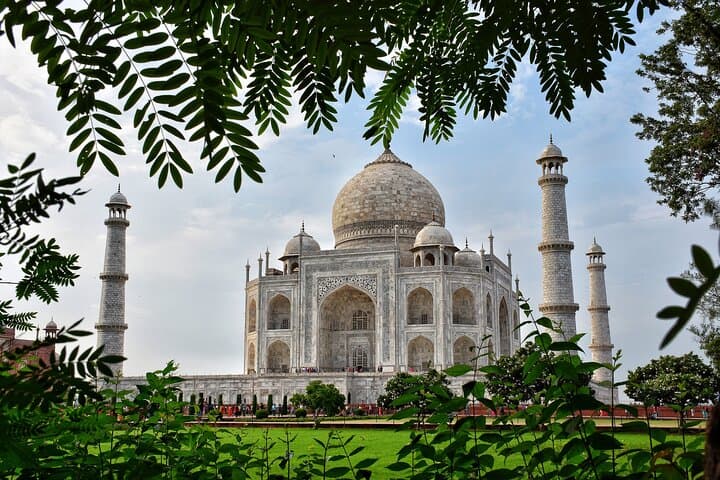
The tour begins before dawn on a Delhi road that still holds the night’s cool; by the time sunlight brushes the Yamuna flats you’re facing the Taj Mahal as the marble changes color with the growing light.
Verified experiences and guided adventures in the surrounding area.
Operated by Arush Tours · Agra, Uttar Pradesh
The tour begins before dawn on a Delhi road that still holds the night’s cool; by the time sunlight brushes the Yamuna flats you’re facing the Taj Mahal as the marble changes color with the growing light.
Built in the 17th century by Shah Jahan for Mumtaz Mahal, the Taj’s white dome and inlaid pietra dura reflect Mughal artistry and the empire’s mastery of masonry and geometry. Nearby Agra Fort, a red-sandstone stronghold, shows the political heart that once controlled trade and river routes; the smaller I'timād-ud-Daulah—often called the 'Baby Taj'—reveals the stylistic experiments that preceded the larger mausoleum.
Afternoon visits to Wildlife SOS’s Elephant Conservation and Care Center shift the tone from monuments to living history: rescued elephants are rehabilitated, given veterinary care, and reintroduced to social herds where possible. Guides explain the local context of human–elephant conflict and legal changes affecting captive elephants, framing the encounter as responsible observation—no riding, no coercion.
Practicalities: expect a 3.5–4 hour drive each way from Delhi in an air-conditioned vehicle, with a full day lasting about 10–12 hours. Wear comfortable shoes for walking on marble and uneven fort paths, bring sun protection and refillable water, and budget time for security queues at major sites. The itinerary is wheelchair-accessible in many areas but includes steps and outdoor terrain; photographers should come early for the softest light. This combination of world-class architecture and ethical wildlife care makes for a day that balances cultural immersion with conservation-minded travel.
easy.
10–12 hours.
Suitable for travelers in normal physical health; involves walking on paved and stone surfaces and some steps.
Expect roughly 3.5 to 4 hours one way by private, air-conditioned vehicle depending on traffic.
Yes—interior access is included on most itineraries, but it’s subject to site rules and may close on Fridays for prayers.
No—Wildlife SOS centers emphasize observation and care; there is no riding and interactions are supervised for animal welfare.
Many areas are wheelchair accessible and transport can be adapted, but some historic spots have steps and uneven surfaces—notify in advance for arrangements.
The Taj Mahal and Agra Fort reflect the Mughal Empire’s 16th–17th century consolidation of power, blending Persian and Indian architectural traditions.
Wildlife SOS focuses on rescuing elephants from abuse, promoting non-riding sanctuaries and community education to reduce human–elephant conflict.
Arush Tours operates guided outdoor trips and adventures with an emphasis on safety, stewardship, and memorable experiences.

The tour begins before dawn on a Delhi road that still holds the night’s cool; by the time sunlight brushes the Yamuna flats you’re facing the Taj Mahal as the marble changes color with the growing light.
The tour begins before dawn on a Delhi road that still holds the night’s cool; by the time sunlight brushes the Yamuna flats you’re facing the Taj Mahal as the marble changes color with the growing light.
Built in the 17th century by Shah Jahan for Mumtaz Mahal, the Taj’s white dome and inlaid pietra dura reflect Mughal artistry and the empire’s mastery of masonry and geometry. Nearby Agra Fort, a red-sandstone stronghold, shows the political heart that once controlled trade and river routes; the smaller I'timād-ud-Daulah—often called the 'Baby Taj'—reveals the stylistic experiments that preceded the larger mausoleum.
Afternoon visits to Wildlife SOS’s Elephant Conservation and Care Center shift the tone from monuments to living history: rescued elephants are rehabilitated, given veterinary care, and reintroduced to social herds where possible. Guides explain the local context of human–elephant conflict and legal changes affecting captive elephants, framing the encounter as responsible observation—no riding, no coercion.
Practicalities: expect a 3.5–4 hour drive each way from Delhi in an air-conditioned vehicle, with a full day lasting about 10–12 hours. Wear comfortable shoes for walking on marble and uneven fort paths, bring sun protection and refillable water, and budget time for security queues at major sites. The itinerary is wheelchair-accessible in many areas but includes steps and outdoor terrain; photographers should come early for the softest light. This combination of world-class architecture and ethical wildlife care makes for a day that balances cultural immersion with conservation-minded travel.