THE ADVENTURE COLLECTIVE® · Independent discovery and booking for outdoor travel

Ride a camel into the dunes around Douz for a private 3-hour sunrise or sunset trek across the Tunisia Sahara. Expect panoramic dune views, village palm groves en route, and an experience rooted in local Bedouin traditions.
Ride a camel into the dunes around Douz for a private 3-hour sunrise or sunset trek across the Tunisia Sahara. Expect panoramic dune views, village palm groves en route, and an experience rooted in local Bedouin traditions.
The sun burns low and the dunes throw long, clean shadows—camel hooves whisper on wind-sculpted sand as riders climb a dune rim for a wide, spare horizon. Whether you join at dawn when the desert exhales cool air or at dusk when temperatures drop and colors sharpen, the ride out of Douz compresses time into light, sand, and movement.
Verified experiences and guided adventures in the surrounding area.
Operated by SAHARANSKY · Douz, Kebili Governorate
The sun burns low and the dunes throw long, clean shadows—camel hooves whisper on wind-sculpted sand as riders climb a dune rim for a wide, spare horizon. Whether you join at dawn when the desert exhales cool air or at dusk when temperatures drop and colors sharpen, the ride out of Douz compresses time into light, sand, and movement.
Douz is known locally as the gateway to the Sahara, a small oasis town whose palm groves and date gardens have supported trans-Saharan routes for centuries. The dunes here are part of the greater Erg Oriental, a patchwork of mobile sand formed by Sahara winds over millennia; the landscape alternates broad, rolling ridges and pocketed depressions that hold the occasional acacia. Cultural touches—turbaned guides, the Djellaba robe offered for the trek, and nearby village gardens—recall Bedouin traditions and the town’s caravan history, still visible in markets and seasonal festivals.
Practically, expect a gentle, ~3-hour private outing: mounted camel travel across firm dune surfaces with a short walk to summit viewpoints. The camels provided handle soft sand; riders of all fitness levels can participate, though mounting and dismounting require basic balance. Bring sun protection, layers for early-morning chill or evening breeze, and a small daypack for water and camera gear. Photography is best in the golden hour; bring a secure strap—the wind will try to take loose lenses.
Tread lightly on this fragile ecosystem: stay on guide routes, pack out waste, and conserve water. The reward is elemental—big sky, quiet movement, and the slow, steady pace of the desert itself.
easy.
3 hours.
Suitable for most fitness levels; riders should have basic balance and be comfortable mounting a camel.
Yes; the tour notes children must be accompanied by an adult and infants may sit on laps—confirm specifics with the operator.
Yes; bookings allow selecting either a sunrise or sunset departure depending on availability.
Camels, basic head scarves and a Djellaba are provided; a local guide leads the private trek and handles route safety.
Facilities in the dunes are limited; use amenities in Douz before departure and ask the operator about nearby stops on return.
Douz developed as an oasis hub on trans-Saharan caravan routes and now hosts an annual Sahara festival that celebrates local Bedouin culture.
The Sahara near Douz is ecologically fragile—stick to guide lines, avoid disturbing plants and wildlife, and remove all trash to limit impact.
SAHARANSKY operates guided outdoor trips and adventures with an emphasis on safety, stewardship, and memorable experiences.
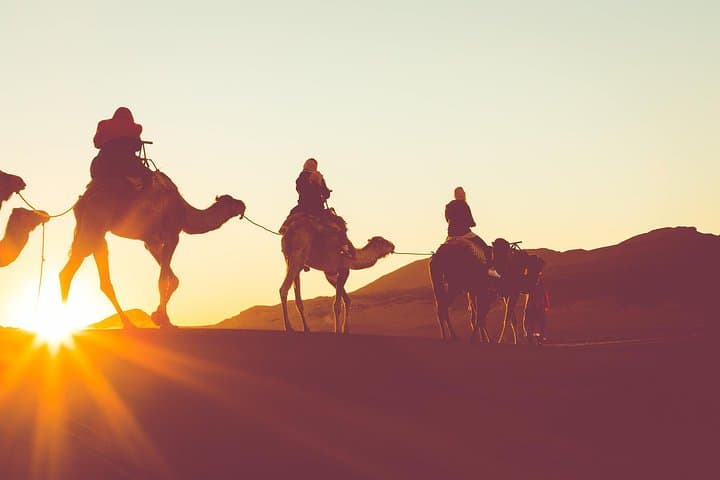
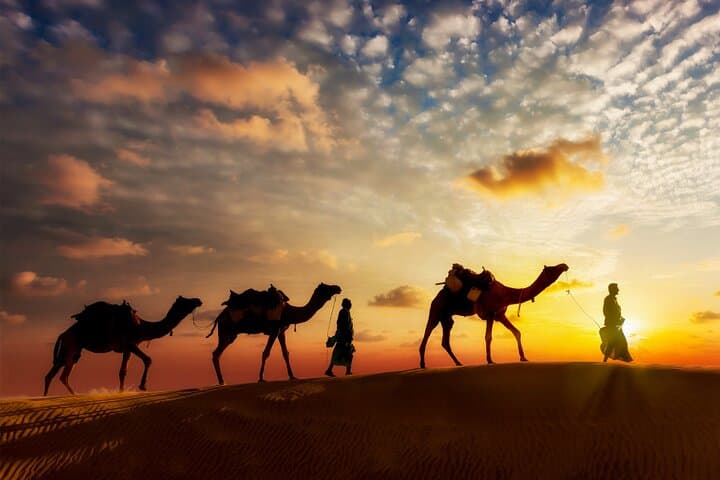
The sun burns low and the dunes throw long, clean shadows—camel hooves whisper on wind-sculpted sand as riders climb a dune rim for a wide, spare horizon. Whether you join at dawn when the desert exhales cool air or at dusk when temperatures drop and colors sharpen, the ride out of Douz compresses time into light, sand, and movement.
The sun burns low and the dunes throw long, clean shadows—camel hooves whisper on wind-sculpted sand as riders climb a dune rim for a wide, spare horizon. Whether you join at dawn when the desert exhales cool air or at dusk when temperatures drop and colors sharpen, the ride out of Douz compresses time into light, sand, and movement.
Douz is known locally as the gateway to the Sahara, a small oasis town whose palm groves and date gardens have supported trans-Saharan routes for centuries. The dunes here are part of the greater Erg Oriental, a patchwork of mobile sand formed by Sahara winds over millennia; the landscape alternates broad, rolling ridges and pocketed depressions that hold the occasional acacia. Cultural touches—turbaned guides, the Djellaba robe offered for the trek, and nearby village gardens—recall Bedouin traditions and the town’s caravan history, still visible in markets and seasonal festivals.
Practically, expect a gentle, ~3-hour private outing: mounted camel travel across firm dune surfaces with a short walk to summit viewpoints. The camels provided handle soft sand; riders of all fitness levels can participate, though mounting and dismounting require basic balance. Bring sun protection, layers for early-morning chill or evening breeze, and a small daypack for water and camera gear. Photography is best in the golden hour; bring a secure strap—the wind will try to take loose lenses.
Tread lightly on this fragile ecosystem: stay on guide routes, pack out waste, and conserve water. The reward is elemental—big sky, quiet movement, and the slow, steady pace of the desert itself.