THE ADVENTURE COLLECTIVE® · Independent discovery and booking for outdoor travel

Ride a camel across the Giza Plateau at sunrise or sunset with private hotel transfers and a Bedouin guide. Prebook to lock in preferred times, avoid haggling, and enjoy widescreen views of the pyramids in the best light.
Ride a camel across the Giza Plateau at sunrise or sunset with private hotel transfers and a Bedouin guide. Prebook to lock in preferred times, avoid haggling, and enjoy widescreen views of the pyramids in the best light.
A low sun slants across the Giza Plateau and the camels rise and fall like slow waves as you climb into the saddle. You move away from the gate, the city’s edge shrinking into dust and distant traffic, while the pyramids loom—stone shapes older than most maps—cutting clean silhouettes against the sky.
Verified experiences and guided adventures in the surrounding area.
Operated by Hesham Egypt tour guide · Giza, Giza Governorate
A low sun slants across the Giza Plateau and the camels rise and fall like slow waves as you climb into the saddle. You move away from the gate, the city’s edge shrinking into dust and distant traffic, while the pyramids loom—stone shapes older than most maps—cutting clean silhouettes against the sky.
The plateau is more than monuments: wind-carved limestone, millennia of human labor, and a living Bedouin culture that still works the sand. Geology here explains the scale—ancient sea deposits compacted into the quarried blocks that became Khufu’s and Khafre’s tombs—while centuries of trade and empire layered on the stories visitors feel when they stand nearby.
Riding with a Bedouin guide gives the experience context: tips for photos, safe mounting, and small local histories passed along as you move. Most operators meet you at your hotel in Cairo or Giza and provide private, air-conditioned transfer; rides usually last 60–120 minutes depending on your booking, and the camel paths remain outside the official entrance unless you pay pyramid site fees.
Plan for harsh light and shifting sand: go at sunrise or sunset to avoid peak heat and to capture the pyramids in low, directional light. Bring charged batteries, sunscreen, and loose layers for chilly mornings. Prebooking removes the day-of bargaining and secures a preferred time and private vehicle.
Respect local customs, tip your handler, and ride with clear expectations—mounted travel is relaxed but uneven. The Giza camel ride is short on technical challenge and long on atmosphere: a direct, tactile way to read ancient stone from the slow back of a camel.
easy.
2 hours.
Minimal fitness required; participants should be able to mount and sit on a camel for about an hour and handle short walks on sand.
Typical bookings include 60 minutes of riding within a 2-hour total window including transfers; some options offer longer rides depending on the package.
This camel excursion usually operates outside the main archaeological entrance; if you want to enter the sites you’ll need separate entry tickets and pay any site fees.
Private pickup and drop-off are generally included for central Cairo and Giza hotels; expect extra charges for locations outside downtown or further afield.
Yes, children can ride but must be accompanied by an adult and handlers may impose an age or weight limit for safety.
The Giza Plateau holds royal tombs and quarries from Egypt’s Old Kingdom; the pyramids are made from local limestone and reflect ancient construction techniques.
Visitor pressure is controlled by site regulations; stick to designated areas, avoid littering, and support guides who practice responsible tourism.
Hesham Egypt tour guide operates guided outdoor trips and adventures with an emphasis on safety, stewardship, and memorable experiences.
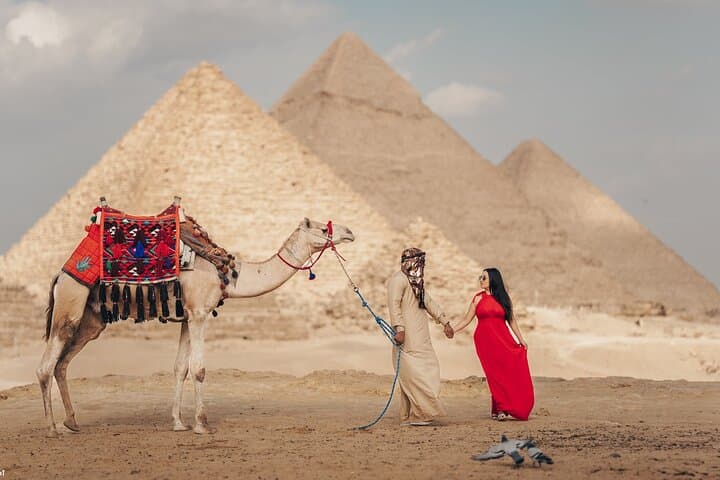

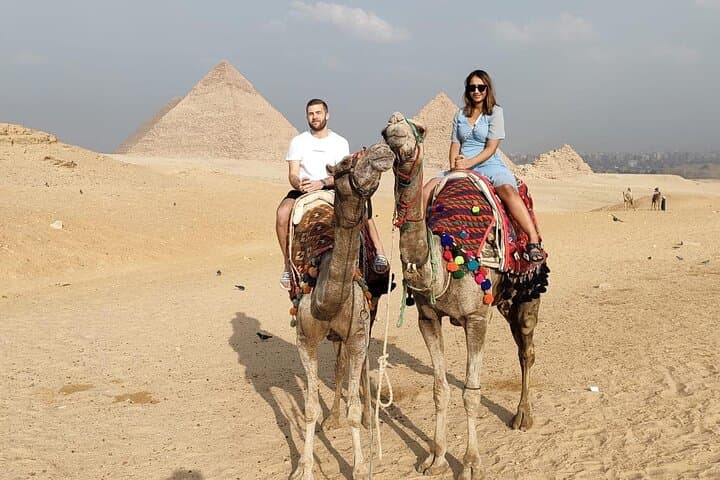
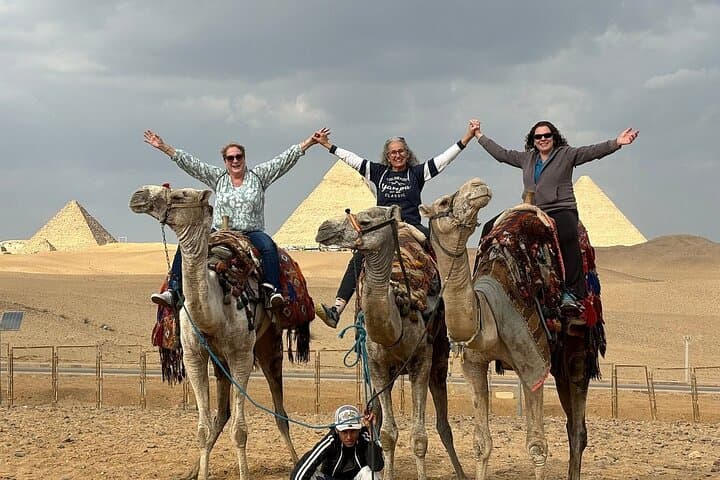
A low sun slants across the Giza Plateau and the camels rise and fall like slow waves as you climb into the saddle. You move away from the gate, the city’s edge shrinking into dust and distant traffic, while the pyramids loom—stone shapes older than most maps—cutting clean silhouettes against the sky.
A low sun slants across the Giza Plateau and the camels rise and fall like slow waves as you climb into the saddle. You move away from the gate, the city’s edge shrinking into dust and distant traffic, while the pyramids loom—stone shapes older than most maps—cutting clean silhouettes against the sky.
The plateau is more than monuments: wind-carved limestone, millennia of human labor, and a living Bedouin culture that still works the sand. Geology here explains the scale—ancient sea deposits compacted into the quarried blocks that became Khufu’s and Khafre’s tombs—while centuries of trade and empire layered on the stories visitors feel when they stand nearby.
Riding with a Bedouin guide gives the experience context: tips for photos, safe mounting, and small local histories passed along as you move. Most operators meet you at your hotel in Cairo or Giza and provide private, air-conditioned transfer; rides usually last 60–120 minutes depending on your booking, and the camel paths remain outside the official entrance unless you pay pyramid site fees.
Plan for harsh light and shifting sand: go at sunrise or sunset to avoid peak heat and to capture the pyramids in low, directional light. Bring charged batteries, sunscreen, and loose layers for chilly mornings. Prebooking removes the day-of bargaining and secures a preferred time and private vehicle.
Respect local customs, tip your handler, and ride with clear expectations—mounted travel is relaxed but uneven. The Giza camel ride is short on technical challenge and long on atmosphere: a direct, tactile way to read ancient stone from the slow back of a camel.