THE ADVENTURE COLLECTIVE® · Independent discovery and booking for outdoor travel

Ride a camel across the Giza Plateau at sunrise or sunset for unobstructed, golden views of the pyramids. This private tour includes hotel pickup, a one-hour camel ride, bottled water, and guided photo stops.
Ride a camel across the Giza Plateau at sunrise or sunset for unobstructed, golden views of the pyramids. This private tour includes hotel pickup, a one-hour camel ride, bottled water, and guided photo stops.
The first light slides across the limestone faces of the pyramids and the desert breathes—cool, silent, and wide. Riders mount a patient camel at the edge of the Giza Plateau as the sun lifts or lowers, and the pyramids catch gold and shadow in slow, cinematic pulses. The animal cradles each rider forward; the wind scratches patterns in the sand and the guide points out the best angles for photographs.
Verified experiences and guided adventures in the surrounding area.
Operated by Magic Cairo Tours · Giza, Giza Governorate
The first light slides across the limestone faces of the pyramids and the desert breathes—cool, silent, and wide. Riders mount a patient camel at the edge of the Giza Plateau as the sun lifts or lowers, and the pyramids catch gold and shadow in slow, cinematic pulses. The animal cradles each rider forward; the wind scratches patterns in the sand and the guide points out the best angles for photographs.
This stretch of the Sahara sits on millennia of human history: burial complexes, quarry marks, and the old camel routes that connected Cairo to the desert. Geologically, the plateau is a raised bed of Eocene limestone that gave masons the blocks for the monuments. Culturally, the experience is part performance and transport—local handlers, often from nearby communities, manage camels and guide visitors through a ritualized pause for photographs and storytelling.
Logistics are straightforward: private pickup from Cairo or Giza in an air-conditioned vehicle, about an hour on-site with a one-hour camel ride included, bottled water provided. Expect soft sand underfoot, short rises between dunes, and an easy pace suited for families and less fit travelers. Cameras and phones work well; your guide will often help frame shots. Wear sun protection, low-ankle footwear for sand, and arrive when light is low—sunrise is cooler, sunset brings warmer tones.
While brief, the ride places travelers in a physical connection to the landscape, offering panoramic views and an accessible chunk of Egyptian antiquity without the crowds inside the tombs.
easy.
2 hours.
Suitable for most fitness levels; riders should be able to mount a camel with assistance and tolerate short periods of standing and walking on sand.
The scheduled camel ride is approximately one hour as part of a two-hour private tour including pickup and drop-off.
Yes—families are welcome; infants must sit on an adult's lap and handlers can assist with boarding.
No—camels used on these tours are accustomed to riders and handlers provide basic instructions and assistance.
No—the tour focuses on exterior views of the Giza Plateau and photo stops; pyramid interior access requires separate tickets and timing.
The Giza Plateau holds the Great Pyramid of Khufu (circa 2560 BCE) and adjacent necropolises; the area has been a focal point of pilgrimage and study for centuries.
Stay on designated paths while visiting and avoid feeding or stressing animals; local operators increasingly follow guidelines to limit trampling and reduce litter.
Magic Cairo Tours operates guided outdoor trips and adventures with an emphasis on safety, stewardship, and memorable experiences.
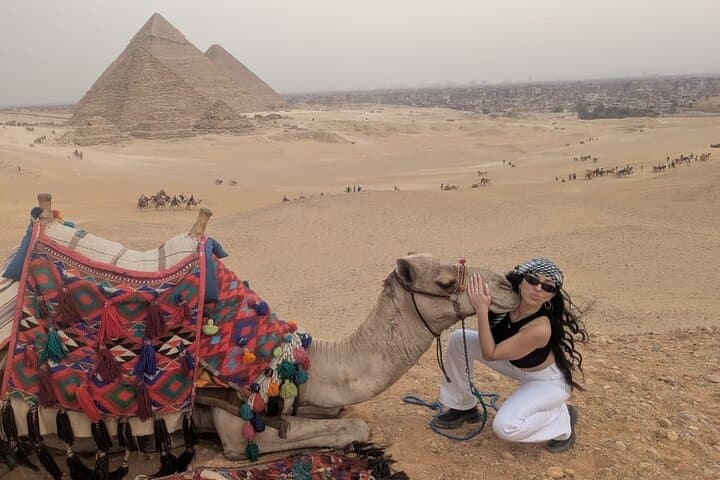
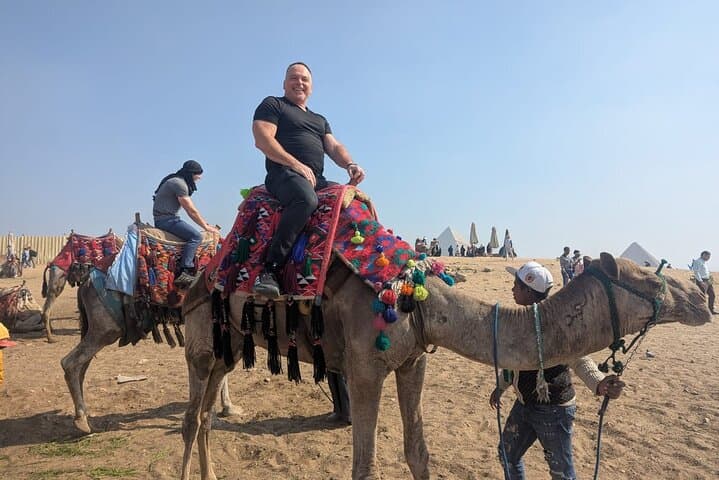
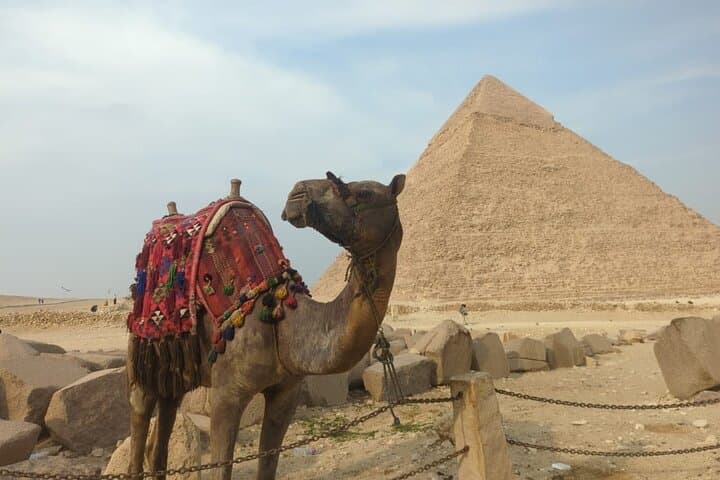
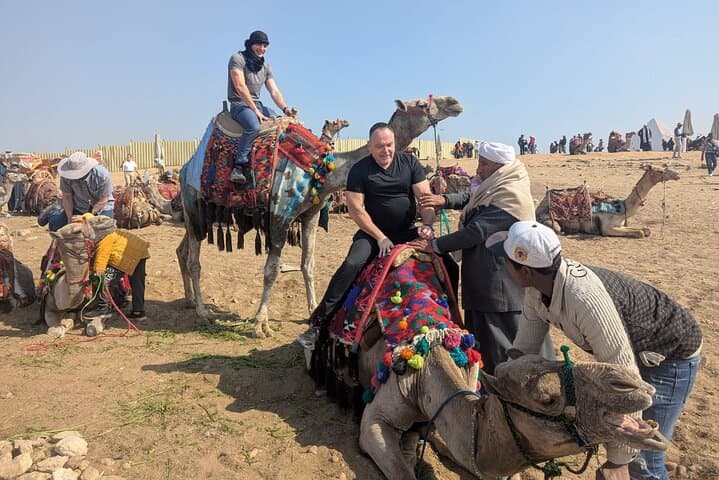
The first light slides across the limestone faces of the pyramids and the desert breathes—cool, silent, and wide. Riders mount a patient camel at the edge of the Giza Plateau as the sun lifts or lowers, and the pyramids catch gold and shadow in slow, cinematic pulses. The animal cradles each rider forward; the wind scratches patterns in the sand and the guide points out the best angles for photographs.
The first light slides across the limestone faces of the pyramids and the desert breathes—cool, silent, and wide. Riders mount a patient camel at the edge of the Giza Plateau as the sun lifts or lowers, and the pyramids catch gold and shadow in slow, cinematic pulses. The animal cradles each rider forward; the wind scratches patterns in the sand and the guide points out the best angles for photographs.
This stretch of the Sahara sits on millennia of human history: burial complexes, quarry marks, and the old camel routes that connected Cairo to the desert. Geologically, the plateau is a raised bed of Eocene limestone that gave masons the blocks for the monuments. Culturally, the experience is part performance and transport—local handlers, often from nearby communities, manage camels and guide visitors through a ritualized pause for photographs and storytelling.
Logistics are straightforward: private pickup from Cairo or Giza in an air-conditioned vehicle, about an hour on-site with a one-hour camel ride included, bottled water provided. Expect soft sand underfoot, short rises between dunes, and an easy pace suited for families and less fit travelers. Cameras and phones work well; your guide will often help frame shots. Wear sun protection, low-ankle footwear for sand, and arrive when light is low—sunrise is cooler, sunset brings warmer tones.
While brief, the ride places travelers in a physical connection to the landscape, offering panoramic views and an accessible chunk of Egyptian antiquity without the crowds inside the tombs.