THE ADVENTURE COLLECTIVE® · Independent discovery and booking for outdoor travel

Watch the first light from the summit of Mount Sinai and continue to St. Catherine’s Monastery to see ancient manuscripts and icons. This overnight-paced tour combines a strenuous predawn ascent with cultural exploration and a long transfer to and from Sharm el-Sheikh.
Watch the first light from the summit of Mount Sinai and continue to St. Catherine’s Monastery to see ancient manuscripts and icons. This overnight-paced tour combines a strenuous predawn ascent with cultural exploration and a long transfer to and from Sharm el-Sheikh.
The bus eats the night as it winds from Sharm el-Sheikh into the Sinai’s black silhouette; by the time you step out, the desert air will press cool and silent against your face. Headlamps cut white tunnels through the dark while the mountain ahead keeps its slow, patient stare—every step a soft negotiation with stone. The final rise opens to a horizon that pushes light into being; the sunrise here arrives like a deliberate performance, painting ridgelines and the courtyard below in hard, clean gold.
Verified experiences and guided adventures in the surrounding area.
Operated by Pharaohn Tours · Saint Catherine, South Sinai Governorate
The bus eats the night as it winds from Sharm el-Sheikh into the Sinai’s black silhouette; by the time you step out, the desert air will press cool and silent against your face. Headlamps cut white tunnels through the dark while the mountain ahead keeps its slow, patient stare—every step a soft negotiation with stone. The final rise opens to a horizon that pushes light into being; the sunrise here arrives like a deliberate performance, painting ridgelines and the courtyard below in hard, clean gold.
Geologically, Mount Sinai (Jebel Musa) is a granite massif carved by millennia of erosion; its sharp ridges and stepped terraces are the work of wind and thermal stress. Culturally the mountain and nearby St. Catherine’s Monastery — one of the world’s oldest working Christian monasteries — have been a crossroads of faith and scholarship for 1,500+ years, housing important manuscripts and icons.
Expect a 750-step ascent to roughly 2,285 meters, taking 2–3 hours up and 1.5–2 hours down depending on pace. The trail is stony and uneven, with short sections of packed switchback and exposed stairways. Temperatures swing strongly: cold at summit pre-dawn, moderate after sunrise. Hydrate before boarding, layer for wind and cold, and bring a headlamp with fresh batteries. Footwear with firm ankle support and a steady pace will make the climb sustainable; altitude is mild but noticeable for some.
This is a devotional landscape and a natural one — move with respect, leave no trace, and plan travel time around early departures and the long return to coastal hotels.
challenging.
14–17 hours.
Good aerobic fitness recommended; ability to walk uphill for 2–3 hours and manage steep stone steps.
The standard route follows about 750 stone steps and takes roughly 2–3 hours to ascend and 1.5–2 hours to descend depending on fitness and group pace.
This tour is not recommended for travelers with significant mobility issues, spinal problems, heart conditions, or for very young children due to the steep steps and prolonged exertion.
Pickup from Sharm el-Sheikh is typically between 8:00–9:00 PM; the walk is timed to reach the summit before local sunrise (varies seasonally), usually around 04:00–06:00.
Yes, the itinerary notes admission to St. Catherine’s Monastery is included in the tour package.
St. Catherine’s Monastery dates to the 6th century and houses a significant collection of early Christian manuscripts and icons, established under Byzantine patronage.
The Sinai highlands are ecologically fragile; stick to established paths, avoid touching ancient artifacts, and pack out all waste to limit erosion and cultural damage.
Pharaohn Tours operates guided outdoor trips and adventures with an emphasis on safety, stewardship, and memorable experiences.
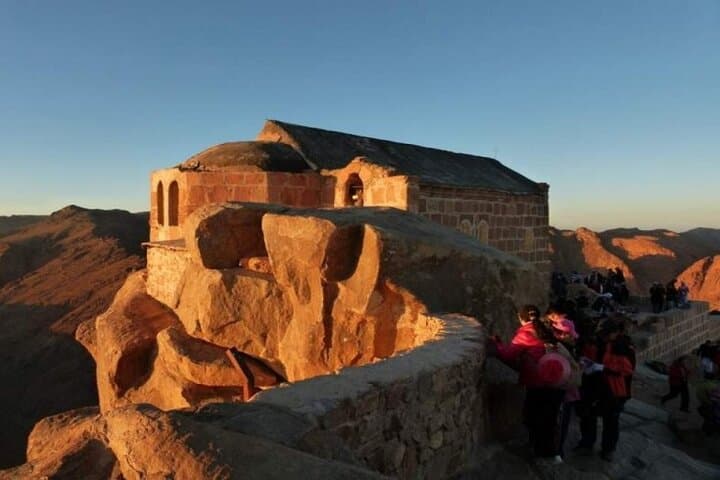
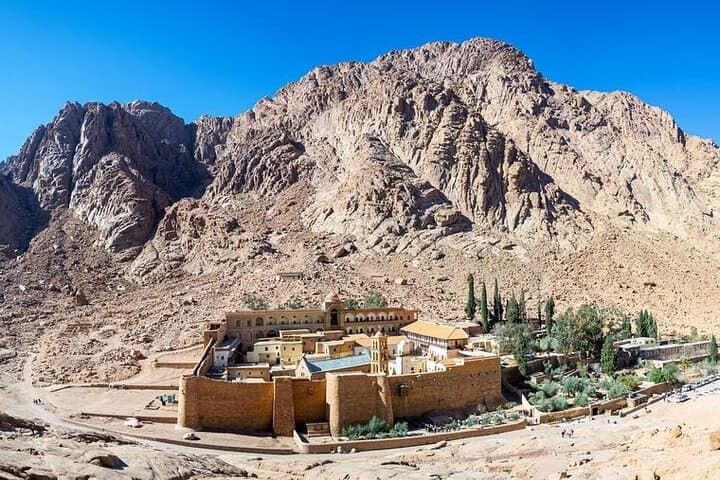
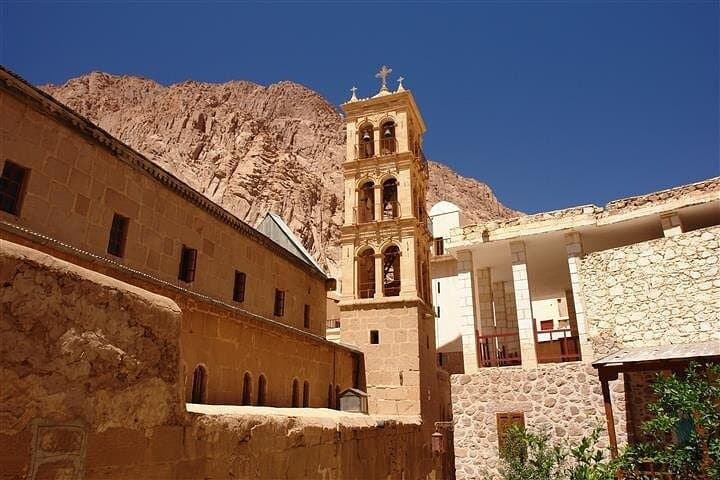
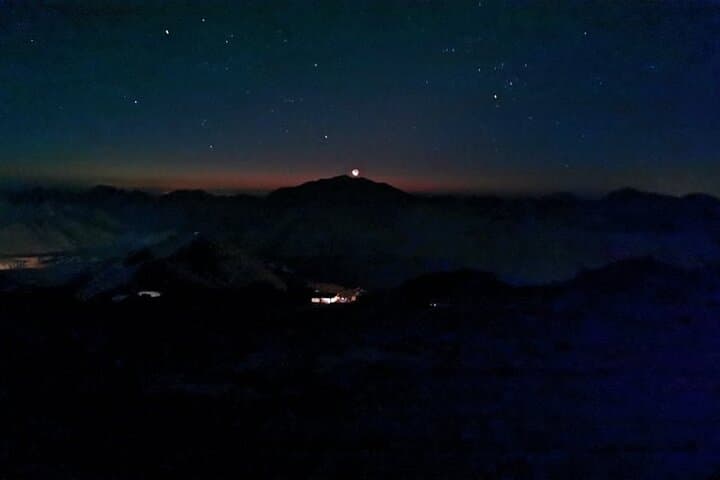
The bus eats the night as it winds from Sharm el-Sheikh into the Sinai’s black silhouette; by the time you step out, the desert air will press cool and silent against your face. Headlamps cut white tunnels through the dark while the mountain ahead keeps its slow, patient stare—every step a soft negotiation with stone. The final rise opens to a horizon that pushes light into being; the sunrise here arrives like a deliberate performance, painting ridgelines and the courtyard below in hard, clean gold.
The bus eats the night as it winds from Sharm el-Sheikh into the Sinai’s black silhouette; by the time you step out, the desert air will press cool and silent against your face. Headlamps cut white tunnels through the dark while the mountain ahead keeps its slow, patient stare—every step a soft negotiation with stone. The final rise opens to a horizon that pushes light into being; the sunrise here arrives like a deliberate performance, painting ridgelines and the courtyard below in hard, clean gold.
Geologically, Mount Sinai (Jebel Musa) is a granite massif carved by millennia of erosion; its sharp ridges and stepped terraces are the work of wind and thermal stress. Culturally the mountain and nearby St. Catherine’s Monastery — one of the world’s oldest working Christian monasteries — have been a crossroads of faith and scholarship for 1,500+ years, housing important manuscripts and icons.
Expect a 750-step ascent to roughly 2,285 meters, taking 2–3 hours up and 1.5–2 hours down depending on pace. The trail is stony and uneven, with short sections of packed switchback and exposed stairways. Temperatures swing strongly: cold at summit pre-dawn, moderate after sunrise. Hydrate before boarding, layer for wind and cold, and bring a headlamp with fresh batteries. Footwear with firm ankle support and a steady pace will make the climb sustainable; altitude is mild but noticeable for some.
This is a devotional landscape and a natural one — move with respect, leave no trace, and plan travel time around early departures and the long return to coastal hotels.