THE ADVENTURE COLLECTIVE® · Independent discovery and booking for outdoor travel

Head up Mount Batur before dawn to watch Bali wake from a volcanic rim—coffee in hand, headlamp on and sweat on your brow. This practical guide covers what to expect on the pre-dawn trek, safety tips, and local insights to make the morning summit unforgettable.
Head up Mount Batur before dawn to watch Bali wake from a volcanic rim—coffee in hand, headlamp on and sweat on your brow. This practical guide covers what to expect on the pre-dawn trek, safety tips, and local insights to make the morning summit unforgettable.
A thin white light cuts the horizon as your minivan threads rural roads toward Kintamani. At 2–4 a.m. climbers gather, breath visible in the chill, mugs of sweet Balinese coffee passed between strangers. The trail rises quickly—first switchbacks through black volcanic scree, then a steeper scramble where the mountain seems to push back. By 6:15 a.m. the summit rim delivers a raw panorama: the crescent caldera lake, steam vents at the crater’s edge, and the sunrise breaking over Bali’s northern ridge. Cheers rise like a small tide.
Verified experiences and guided adventures in the surrounding area.
Operated by Krisna Bali Trekking Tour · Kintamani, Bali
A thin white light cuts the horizon as your minivan threads rural roads toward Kintamani. At 2–4 a.m. climbers gather, breath visible in the chill, mugs of sweet Balinese coffee passed between strangers. The trail rises quickly—first switchbacks through black volcanic scree, then a steeper scramble where the mountain seems to push back. By 6:15 a.m. the summit rim delivers a raw panorama: the crescent caldera lake, steam vents at the crater’s edge, and the sunrise breaking over Bali’s northern ridge. Cheers rise like a small tide.
Mount Batur is one of Bali’s active volcanoes; its broad caldera formed by earlier, larger eruptions and the current cone sits inside that hollow. The landscape is recent geology—glassy lava flows and loose ash—and the area around Kintamani has long been important to local communities who farm the fertile volcanic soils and run small hot-spring and coffee estates in Toya Bungkah.
Practically, expect a 2–3 hour round-trip hike with roughly 600–900 m of elevation gain depending on your start point and 1,717 m summit elevation. Trails are a mix of packed earth, loose volcanic rock and short steeper sections; headlamp and steady footing are essential. Tours typically include hotel pickup, English-speaking guides, breakfast and a stop at a coffee plantation. Start very early, layer for cold at the top, bring water and a small daypack, and be ready for crowds at the crater rim—sunrise is a popular, communal moment.
Respect local offerings and keep to established paths; volcanic terrain recovers slowly, and leaving no trace helps preserve both the view and the village livelihoods below.
moderate.
2–3 hours (trek); full-day tour ~10 hours.
Moderate fitness—able to sustain steady uphill hiking for 60–90 minutes at a time and manage brief scrambling sections.
Guided treks typically start between 2:00–4:00 a.m. with 2–3 hours of hiking round-trip to reach sunrise and return; tours are full-day including transfers (≈10 hours).
Yes—many operators rate it moderate and suitable for reasonably fit beginners; however those with serious back, heart conditions, or pregnancy are advised not to participate.
You’ll see the crater rim, steam vents, black lava fields, and a sweeping view of the caldera lake and Bali’s northern ridges as the sun rises.
Guided tours are standard and include entrance fees; local guides know the safest routes, interpret geology and culture, and handle logistics like pickups and permits.
The Mount Batur cone formed inside a larger Pleistocene caldera; the surrounding region has been farmed for centuries on nutrient-rich volcanic soils.
Trails cross fragile volcanic soils and grazed farmland—stick to paths, pack out waste, and support local guides to encourage sustainable tourism practices.
Krisna Bali Trekking Tour operates guided outdoor trips and adventures with an emphasis on safety, stewardship, and memorable experiences.
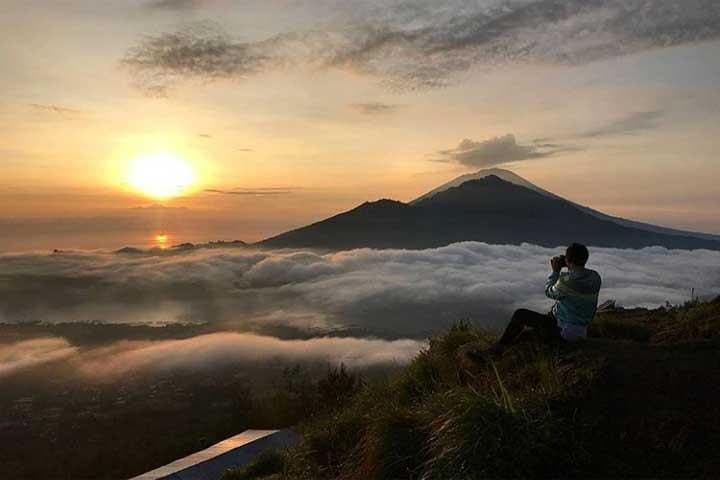
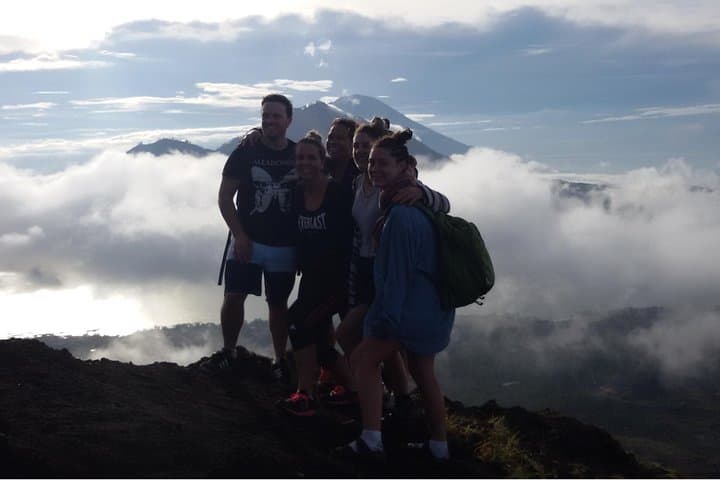
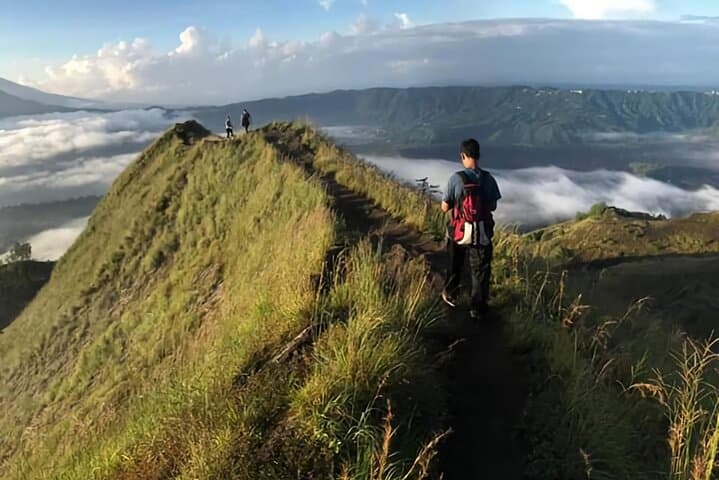
A thin white light cuts the horizon as your minivan threads rural roads toward Kintamani. At 2–4 a.m. climbers gather, breath visible in the chill, mugs of sweet Balinese coffee passed between strangers. The trail rises quickly—first switchbacks through black volcanic scree, then a steeper scramble where the mountain seems to push back. By 6:15 a.m. the summit rim delivers a raw panorama: the crescent caldera lake, steam vents at the crater’s edge, and the sunrise breaking over Bali’s northern ridge. Cheers rise like a small tide.
A thin white light cuts the horizon as your minivan threads rural roads toward Kintamani. At 2–4 a.m. climbers gather, breath visible in the chill, mugs of sweet Balinese coffee passed between strangers. The trail rises quickly—first switchbacks through black volcanic scree, then a steeper scramble where the mountain seems to push back. By 6:15 a.m. the summit rim delivers a raw panorama: the crescent caldera lake, steam vents at the crater’s edge, and the sunrise breaking over Bali’s northern ridge. Cheers rise like a small tide.
Mount Batur is one of Bali’s active volcanoes; its broad caldera formed by earlier, larger eruptions and the current cone sits inside that hollow. The landscape is recent geology—glassy lava flows and loose ash—and the area around Kintamani has long been important to local communities who farm the fertile volcanic soils and run small hot-spring and coffee estates in Toya Bungkah.
Practically, expect a 2–3 hour round-trip hike with roughly 600–900 m of elevation gain depending on your start point and 1,717 m summit elevation. Trails are a mix of packed earth, loose volcanic rock and short steeper sections; headlamp and steady footing are essential. Tours typically include hotel pickup, English-speaking guides, breakfast and a stop at a coffee plantation. Start very early, layer for cold at the top, bring water and a small daypack, and be ready for crowds at the crater rim—sunrise is a popular, communal moment.
Respect local offerings and keep to established paths; volcanic terrain recovers slowly, and leaving no trace helps preserve both the view and the village livelihoods below.