THE ADVENTURE COLLECTIVE® · Independent discovery and booking for outdoor travel

Catch sunrise among heritage palms at the UNESCO-listed Singapore Botanic Gardens, then hop the MRT to Tiong Bahru for an authentic hawker breakfast. This guided 3–4 hour walk blends botanical history, street culture and fresh-market life.
Catch sunrise among heritage palms at the UNESCO-listed Singapore Botanic Gardens, then hop the MRT to Tiong Bahru for an authentic hawker breakfast. This guided 3–4 hour walk blends botanical history, street culture and fresh-market life.
Dawn spreads cool light across manicured lawns as the guide leads a small group through the Singapore Botanic Gardens. Palm fronds lift and let the first sun through; a distant bandstand catches the light while the path underfoot still holds last night's humidity. Walkers slow to breathe in the morning—stretching, listening for a woodpecker, watching squirrels patter in the bamboo grove.
Verified experiences and guided adventures in the surrounding area.
Operated by On-A-Roll-Tours · Singapore, Singapore
Dawn spreads cool light across manicured lawns as the guide leads a small group through the Singapore Botanic Gardens. Palm fronds lift and let the first sun through; a distant bandstand catches the light while the path underfoot still holds last night's humidity. Walkers slow to breathe in the morning—stretching, listening for a woodpecker, watching squirrels patter in the bamboo grove.
The Botanic Gardens, founded in 1859 and Singapore’s only UNESCO World Heritage Site, is a working collection of tropical plants and colonial-era landscapes. The tour threads from Good Class Bungalow zones—where British-era black-and-white houses sit like oversized stage props—into Learning Forest and the Ginger Garden, where plant families become visible lessons. History surfaces at Swan Lake and the POW steps; culture appears later in Tiong Bahru, Singapore’s early public-housing estate known for Art Deco facades, wet-market life and vibrant street art.
Practical guidance follows the storytelling. The walk is gentle: about 3–4 hours total including a short MRT transfer, mostly paved and flat with occasional boardwalks. Expect mid-morning humidity: wear breathable layers, bring a refillable water bottle and a small towel. The route uses public transit (Napier to Havelock) so carry a contactless card and modest cash for hawker breakfast. The group size keeps the pace steady; strollers are workable on most stretches. For wildlife watchers, quiet pauses reward with otter sightings at Swan Lake or inquisitive squirrels in the trees. Time your visit for sunrise to catch the Gardens at its quietest and arrive at Tiong Bahru in time to sample a classic hawker breakfast—kopi and kaya toast, or a heartier rice-and-fishball bowl—before the neighborhood wakes fully.
easy.
3–4 hours.
Suitable for most fitness levels; involves steady walking on mostly flat, paved paths and short public-transit transfer.
Yes — the tour includes a traditional hawker-centre breakfast in Tiong Bahru as part of the itinerary.
Most sections through the Botanic Gardens are paved and suitable for strollers; some boardwalks or older paths may be uneven—check with the operator for wheelchair-specific needs.
The tour uses a short MRT hop (Napier Station to Havelock nearby) of under 10 minutes train time; allow 15–20 minutes door-to-door for transfer and walking to the hawker centre.
Keep quiet pauses to spot bushy-tailed plantain squirrels and, occasionally, smooth‑coated otters near Swan Lake; sightings aren’t guaranteed.
Established in 1859, the Botanic Gardens evolved from colonial experimental gardens into a global center for tropical botany; Tiong Bahru grew in the 1930s as one of Singapore's earliest public‑housing estates with distinctive Art Deco design.
The Gardens operate living collections and plant conservation programs under UNESCO protection; visitors are asked to stick to paths, avoid feeding wildlife and dispose of waste responsibly.
On-A-Roll-Tours operates guided outdoor trips and adventures with an emphasis on safety, stewardship, and memorable experiences.


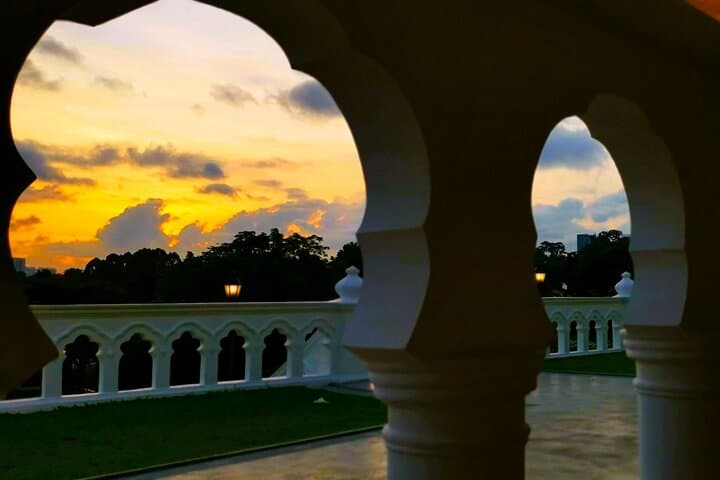

Dawn spreads cool light across manicured lawns as the guide leads a small group through the Singapore Botanic Gardens. Palm fronds lift and let the first sun through; a distant bandstand catches the light while the path underfoot still holds last night's humidity. Walkers slow to breathe in the morning—stretching, listening for a woodpecker, watching squirrels patter in the bamboo grove.
Dawn spreads cool light across manicured lawns as the guide leads a small group through the Singapore Botanic Gardens. Palm fronds lift and let the first sun through; a distant bandstand catches the light while the path underfoot still holds last night's humidity. Walkers slow to breathe in the morning—stretching, listening for a woodpecker, watching squirrels patter in the bamboo grove.
The Botanic Gardens, founded in 1859 and Singapore’s only UNESCO World Heritage Site, is a working collection of tropical plants and colonial-era landscapes. The tour threads from Good Class Bungalow zones—where British-era black-and-white houses sit like oversized stage props—into Learning Forest and the Ginger Garden, where plant families become visible lessons. History surfaces at Swan Lake and the POW steps; culture appears later in Tiong Bahru, Singapore’s early public-housing estate known for Art Deco facades, wet-market life and vibrant street art.
Practical guidance follows the storytelling. The walk is gentle: about 3–4 hours total including a short MRT transfer, mostly paved and flat with occasional boardwalks. Expect mid-morning humidity: wear breathable layers, bring a refillable water bottle and a small towel. The route uses public transit (Napier to Havelock) so carry a contactless card and modest cash for hawker breakfast. The group size keeps the pace steady; strollers are workable on most stretches. For wildlife watchers, quiet pauses reward with otter sightings at Swan Lake or inquisitive squirrels in the trees. Time your visit for sunrise to catch the Gardens at its quietest and arrive at Tiong Bahru in time to sample a classic hawker breakfast—kopi and kaya toast, or a heartier rice-and-fishball bowl—before the neighborhood wakes fully.