THE ADVENTURE COLLECTIVE® · Independent discovery and booking for outdoor travel

Catch dawn at Angkor Wat, then explore the ancient city by foot and bike. This guided experience pairs sunrise photography with brief rainforest trails and visits to Bayon, Ta Prohm and lesser-known ruins.
Catch dawn at Angkor Wat, then explore the ancient city by foot and bike. This guided experience pairs sunrise photography with brief rainforest trails and visits to Bayon, Ta Prohm and lesser-known ruins.
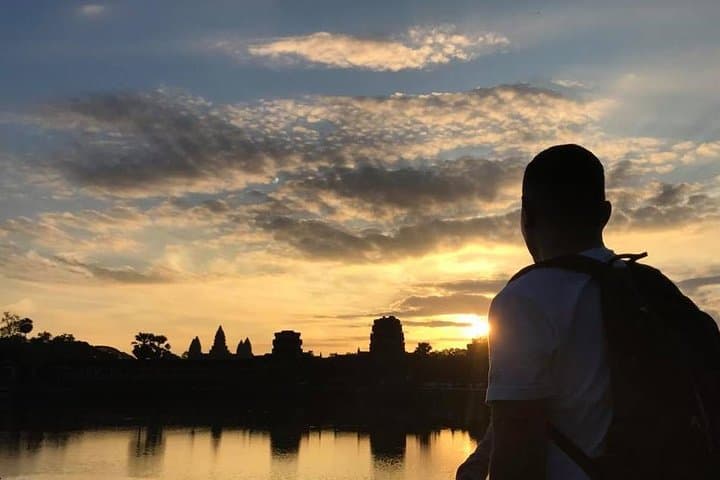
You stand in near-darkness on the causeway as the first light slides over Angkor Wat, stone faces and towers sharpening into gold.
Verified experiences and guided adventures in the surrounding area.
Operated by Angkor Cycling Tour · Siem Reap, Siem Reap Province
You stand in near-darkness on the causeway as the first light slides over Angkor Wat, stone faces and towers sharpening into gold.
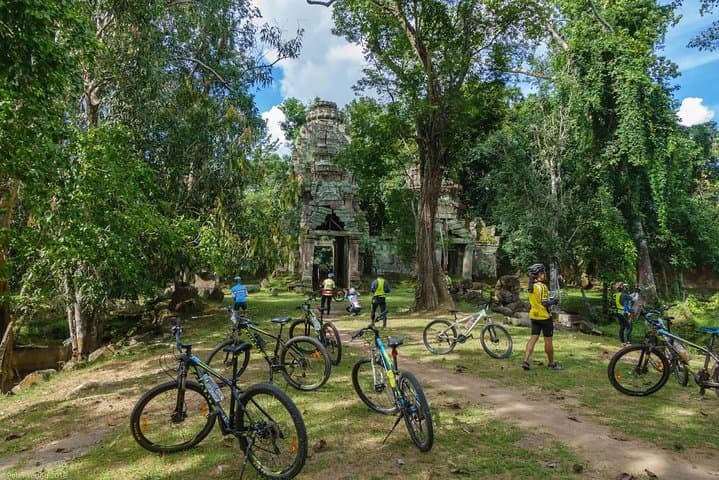
The tour moves from that cinematic sunrise through the maze of gallery reliefs and laterite foundations, then onto a short, guided bike ride that threads rainforest tracks between outlying temples. The air often tastes of wet earth and incense; the trees lean into the ruins as if to listen.
Angkor Wat dates to the 12th century under King Suryavarman II and later became a living Buddhist site—its sandstone bas-reliefs and shifting iconography reveal a city that changed with politics and religion. The foundations sit on an alluvial plain where seasonal water management created the baray reservoirs that sustained the Khmer capital.
Culture here feels immediate: monks on alms rounds, local vendors selling sticky rice, and temple guardians watching visitors with impassive stone eyes. Smaller sites like Prasat Chrung and Ta Nei show how jungle and architecture collide, where roots pry at masonry and sunlight paints the carvings.
Practical side: expect long periods of walking on uneven stone and a few kilometers of easy singletrack by bike. Bring a respectful wardrobe—shoulders and knees covered inside inner temples—and arrive early for the clearest light and thinner crowds. Hydrate: the combination of humidity and steps can fatigue quickly. Your guide times stops for shelter and photos, and helmets and quality hybrid mountain bikes are supplied.
This half-day to full-day loop pairs cinematic sunrise photography with grounded exploration: a mix of history, short pedal escapes, and quieter corners away from the main crowds.
moderate.
8–9 hours.
Basic cardio and mobility—comfortable walking on uneven ground and short stretches of cycling are required.
No; the Angkor Archaeological Park pass is not included—most visitors purchase a pass (1‑, 3‑, or 7‑day) at the park entrance before the tour.
The bike segments are on easy forest and dirt trails suitable for beginners; the operator provides hybrid mountain bikes and helmets.
Official fees are paid via the Angkor pass; small donations or purchases from local vendors are optional but appreciated.
Yes, photography is allowed in most outdoor and gallery areas, but avoid flash in delicate interiors and be respectful during religious activities.
Angkor was the capital of the Khmer Empire from the 9th to 15th centuries; Angkor Wat was built in the 12th century and later adopted as a Buddhist site.
The APSARA Authority manages visitor impact; stay on marked paths and avoid touching carvings to help slow erosion and protect the living religious site.
Angkor Cycling Tour operates guided outdoor trips and adventures with an emphasis on safety, stewardship, and memorable experiences.
You stand in near-darkness on the causeway as the first light slides over Angkor Wat, stone faces and towers sharpening into gold.
You stand in near-darkness on the causeway as the first light slides over Angkor Wat, stone faces and towers sharpening into gold.
The tour moves from that cinematic sunrise through the maze of gallery reliefs and laterite foundations, then onto a short, guided bike ride that threads rainforest tracks between outlying temples. The air often tastes of wet earth and incense; the trees lean into the ruins as if to listen.
Angkor Wat dates to the 12th century under King Suryavarman II and later became a living Buddhist site—its sandstone bas-reliefs and shifting iconography reveal a city that changed with politics and religion. The foundations sit on an alluvial plain where seasonal water management created the baray reservoirs that sustained the Khmer capital.
Culture here feels immediate: monks on alms rounds, local vendors selling sticky rice, and temple guardians watching visitors with impassive stone eyes. Smaller sites like Prasat Chrung and Ta Nei show how jungle and architecture collide, where roots pry at masonry and sunlight paints the carvings.
Practical side: expect long periods of walking on uneven stone and a few kilometers of easy singletrack by bike. Bring a respectful wardrobe—shoulders and knees covered inside inner temples—and arrive early for the clearest light and thinner crowds. Hydrate: the combination of humidity and steps can fatigue quickly. Your guide times stops for shelter and photos, and helmets and quality hybrid mountain bikes are supplied.
This half-day to full-day loop pairs cinematic sunrise photography with grounded exploration: a mix of history, short pedal escapes, and quieter corners away from the main crowds.