THE ADVENTURE COLLECTIVE® · Independent discovery and booking for outdoor travel

Catch sunrise from Sarangkot’s ridge above Pokhara for a compact, high-reward morning: panoramic Himalayan peaks, a calm view of Phewa Lake, and quick access from town. This short-drive viewpoint is ideal for early risers who want dramatic light without a long trek.
Catch sunrise from Sarangkot’s ridge above Pokhara for a compact, high-reward morning: panoramic Himalayan peaks, a calm view of Phewa Lake, and quick access from town. This short-drive viewpoint is ideal for early risers who want dramatic light without a long trek.
You arrive before light, the road still cool and the town below a scatter of sleeping lights. A short, steady drive up the winding access road delivers you to Sarangkot’s ridge as the horizon blushes; peaks ahead—Machhapuchhre’s fish‑tail, Annapurna’s serrated faces, distant Dhaulagiri—catch the first honest rays. The air pushes against you like an attentive guide, and the city and Phewa Lake sit quiet in the bowl beneath.
Verified experiences and guided adventures in the surrounding area.
Operated by Transport Hub Nepal · Pokhara, Gandaki Province
You arrive before light, the road still cool and the town below a scatter of sleeping lights. A short, steady drive up the winding access road delivers you to Sarangkot’s ridge as the horizon blushes; peaks ahead—Machhapuchhre’s fish‑tail, Annapurna’s serrated faces, distant Dhaulagiri—catch the first honest rays. The air pushes against you like an attentive guide, and the city and Phewa Lake sit quiet in the bowl beneath.
Sarangkot has long been a strategic lookout above Pokhara—historically a trade and transit corridor—now a simple public stage for sunrise and an entry point for paragliding. Geologically, the ridge is part of the Lesser Himalaya: folded, uplifted sedimentary and metamorphic rocks that give way to steep terraces and cultivated slopes. Local culture lingers in small temples and morning chai stalls where Gurung and Brahmin families greet early visitors.
Expect a brief, mostly paved drive and a short walk to formal viewpoints; minimal elevation gain from parking but brisk temperatures until the sun fully warms the ridge. Photography and binoculars reward early risers; the wind often picks up after sunrise and can push paragliders into lively flight.
Practical guidance: plan pickup by 5:00–5:30 a.m. (seasonally earlier in winter), dress in insulated layers, carry a headlamp and water, and book transport that understands the narrow uphill road. Respect local vendors, stay on marked paths, and leave no trace—the view is public, and keeping it clean keeps the morning bright for everyone.
easy.
2–3 hours.
Minimal fitness required—short walks from the parking area; able-bodied travelers and older children can participate.
Most tours run about 2–3 hours total—early morning pickup, 20–30 minutes at the viewpoint for sunrise and photos, then return to Pokhara.
Yes; the tour involves a short drive and light walking to the viewpoint, making it accessible for most ages and fitness levels.
Late fall through spring (October to April) generally provides the clearest visibility; post‑monsoon months are especially stable.
Paragliding operations run from Sarangkot and often launch after sunrise when thermals start; separate bookings with certified operators are required.
Sarangkot served historically as a natural lookout above trade routes into Pokhara; its modern role grew with tourism and adventure sports like paragliding.
High visitor traffic stresses local trails and waste systems—pack out rubbish, support local lodges, and favor operators who follow sustainable practices.
Transport Hub Nepal operates guided outdoor trips and adventures with an emphasis on safety, stewardship, and memorable experiences.


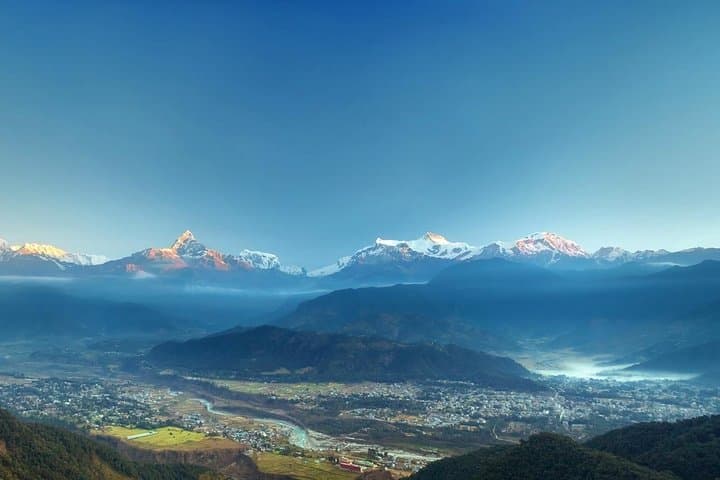
You arrive before light, the road still cool and the town below a scatter of sleeping lights. A short, steady drive up the winding access road delivers you to Sarangkot’s ridge as the horizon blushes; peaks ahead—Machhapuchhre’s fish‑tail, Annapurna’s serrated faces, distant Dhaulagiri—catch the first honest rays. The air pushes against you like an attentive guide, and the city and Phewa Lake sit quiet in the bowl beneath.
You arrive before light, the road still cool and the town below a scatter of sleeping lights. A short, steady drive up the winding access road delivers you to Sarangkot’s ridge as the horizon blushes; peaks ahead—Machhapuchhre’s fish‑tail, Annapurna’s serrated faces, distant Dhaulagiri—catch the first honest rays. The air pushes against you like an attentive guide, and the city and Phewa Lake sit quiet in the bowl beneath.
Sarangkot has long been a strategic lookout above Pokhara—historically a trade and transit corridor—now a simple public stage for sunrise and an entry point for paragliding. Geologically, the ridge is part of the Lesser Himalaya: folded, uplifted sedimentary and metamorphic rocks that give way to steep terraces and cultivated slopes. Local culture lingers in small temples and morning chai stalls where Gurung and Brahmin families greet early visitors.
Expect a brief, mostly paved drive and a short walk to formal viewpoints; minimal elevation gain from parking but brisk temperatures until the sun fully warms the ridge. Photography and binoculars reward early risers; the wind often picks up after sunrise and can push paragliders into lively flight.
Practical guidance: plan pickup by 5:00–5:30 a.m. (seasonally earlier in winter), dress in insulated layers, carry a headlamp and water, and book transport that understands the narrow uphill road. Respect local vendors, stay on marked paths, and leave no trace—the view is public, and keeping it clean keeps the morning bright for everyone.