THE ADVENTURE COLLECTIVE® · Independent discovery and booking for outdoor travel

Climb Jebel Musa before dawn to watch the sun spill over Sinai’s ridgelines, then visit the ancient St. Catherine Monastery below. This guided night hike mixes dramatic sunrise views with concentrated history—expect steep switchbacks, cold summit air, and the famous 750 steps to the top.
Climb Jebel Musa before dawn to watch the sun spill over Sinai’s ridgelines, then visit the ancient St. Catherine Monastery below. This guided night hike mixes dramatic sunrise views with concentrated history—expect steep switchbacks, cold summit air, and the famous 750 steps to the top.
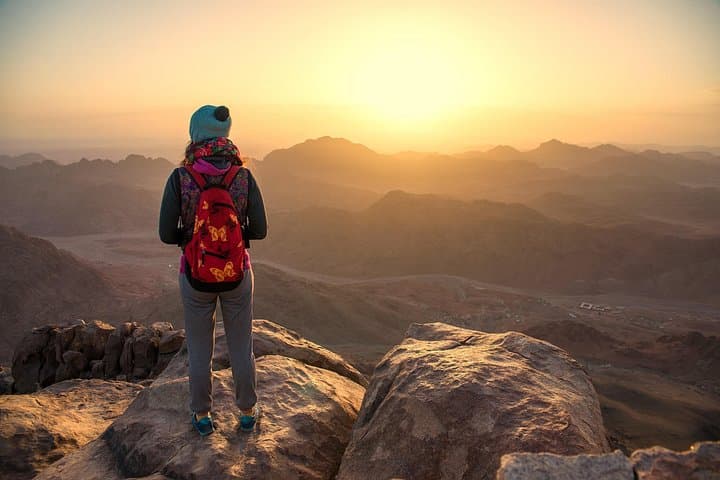
A headlamp bobbing through cold desert air, the bus sliding past basalt ridges, and then the slow, steady crunch of boots on stone as the world turns toward light — that’s the first hour of a Mt. Sinai sunrise trek. Climbers leave late evening, walk through a moonlit valley and climb a rough trail that finishes with the famous 750 carved steps to Jebel Musa’s summit (2,285 m). By the time the horizon bleeds color, you’re standing above bruised ridgelines watching sun push the hush from the peaks.
Verified experiences and guided adventures in the surrounding area.
Operated by Cleotours Egypt · St. Catherine, South Sinai Governorate
A headlamp bobbing through cold desert air, the bus sliding past basalt ridges, and then the slow, steady crunch of boots on stone as the world turns toward light — that’s the first hour of a Mt. Sinai sunrise trek. Climbers leave late evening, walk through a moonlit valley and climb a rough trail that finishes with the famous 750 carved steps to Jebel Musa’s summit (2,285 m). By the time the horizon bleeds color, you’re standing above bruised ridgelines watching sun push the hush from the peaks.
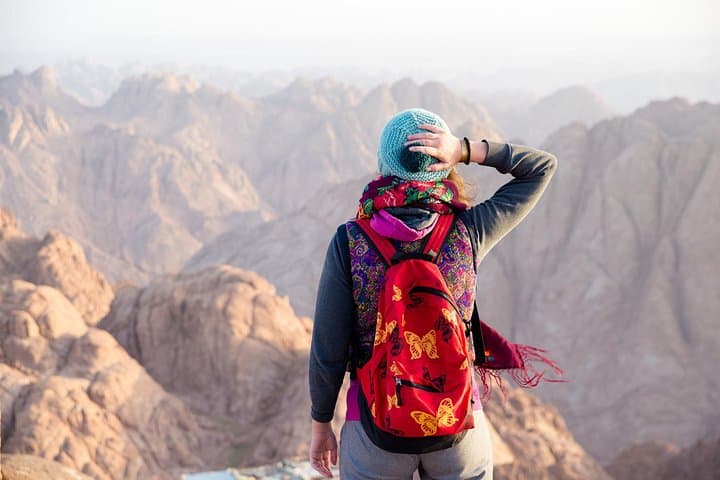
This route threads history and geology: granite spires hewn by ancient uplift and erosion, and a landscape tied to biblical tradition — the mountain long associated with Moses. After sunrise the group descends to St. Catherine’s Monastery at the mountain’s base, a sixth-century complex that houses early icons and manuscripts and remains a living religious site.
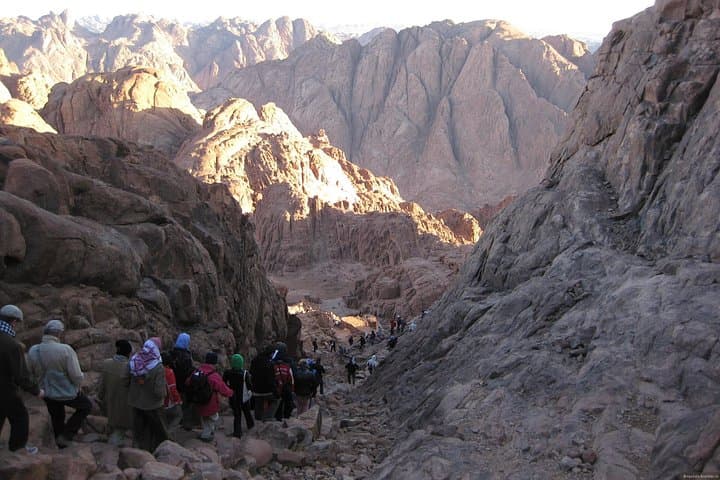
Practical edge: expect roughly 700 m of elevation gain from the monastery area, with 2–3 km of steep trail and the final stepped pitch. Night temps can drop sharply; strong headlamps, warm layers, and sturdy boots matter more than speed. Camel rental is an option for part of the route, but the last ascent is on foot. The tour includes entrance fees and hotel pickup, but space for luggage in the minibus is limited. Aim to hydrate, carry snacks and cash for small purchases, and pace the climb — altitude and the cold at the summit are the real challenges.
challenging.
16–18 hours.
Good cardiovascular fitness and leg strength; comfortable with sustained uphill hiking at night.
The route is physically demanding: about 700 m of elevation gain with steep switchbacks and a final 750 stone steps—expect 2–3 hours up depending on fitness and pace.
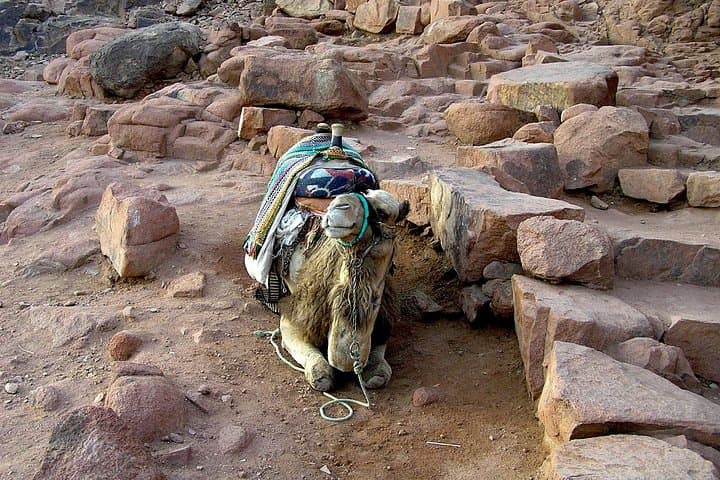
Camels can be rented for much of the approach but cannot navigate the final stepped section to the summit; riders must dismount for the 750 steps.
Yes, most tours include entrance to St. Catherine’s Monastery and a guided visit after the sunrise descent.
Not recommended for pregnant travelers or those with serious heart conditions; bring warm clothing and inform guides of any medical issues before departure.
Jebel Musa and St. Catherine’s are tied to late antique pilgrimage routes; the monastery dates to the 6th century and preserves ancient Christian manuscripts and icons.
The area is fragile desert ecology — stick to the trail, pack out waste, and avoid collecting artifacts; local authorities manage the site for cultural preservation and limited tourism impact.
Cleotours Egypt operates guided outdoor trips and adventures with an emphasis on safety, stewardship, and memorable experiences.
A headlamp bobbing through cold desert air, the bus sliding past basalt ridges, and then the slow, steady crunch of boots on stone as the world turns toward light — that’s the first hour of a Mt. Sinai sunrise trek. Climbers leave late evening, walk through a moonlit valley and climb a rough trail that finishes with the famous 750 carved steps to Jebel Musa’s summit (2,285 m). By the time the horizon bleeds color, you’re standing above bruised ridgelines watching sun push the hush from the peaks.
A headlamp bobbing through cold desert air, the bus sliding past basalt ridges, and then the slow, steady crunch of boots on stone as the world turns toward light — that’s the first hour of a Mt. Sinai sunrise trek. Climbers leave late evening, walk through a moonlit valley and climb a rough trail that finishes with the famous 750 carved steps to Jebel Musa’s summit (2,285 m). By the time the horizon bleeds color, you’re standing above bruised ridgelines watching sun push the hush from the peaks.
This route threads history and geology: granite spires hewn by ancient uplift and erosion, and a landscape tied to biblical tradition — the mountain long associated with Moses. After sunrise the group descends to St. Catherine’s Monastery at the mountain’s base, a sixth-century complex that houses early icons and manuscripts and remains a living religious site.
Practical edge: expect roughly 700 m of elevation gain from the monastery area, with 2–3 km of steep trail and the final stepped pitch. Night temps can drop sharply; strong headlamps, warm layers, and sturdy boots matter more than speed. Camel rental is an option for part of the route, but the last ascent is on foot. The tour includes entrance fees and hotel pickup, but space for luggage in the minibus is limited. Aim to hydrate, carry snacks and cash for small purchases, and pace the climb — altitude and the cold at the summit are the real challenges.