THE ADVENTURE COLLECTIVE® · Independent discovery and booking for outdoor travel

Catch sunrise from the Sartorius craters on Mount Etna, hike across recent lava fields, explore Grotta della Neve and finish with a traditional Sicilian granita and brioche. This private 4WD-assisted tour combines geology, short hikes and local flavor.
Catch sunrise from the Sartorius craters on Mount Etna, hike across recent lava fields, explore Grotta della Neve and finish with a traditional Sicilian granita and brioche. This private 4WD-assisted tour combines geology, short hikes and local flavor.
A pre-dawn road climbs Etna’s southern flank, headlights cutting through a cool, lunar landscape as guides park near the Sartorius craters. The air has the sharp mineral scent of recent lava; steam still rises from cracks, and the black sea of old flows waits below. You’ll step from a 4WD onto rough, gritty ground and hike a short, steady route up one of the Sartorius cones to catch the sun edging over the horizon.
Verified experiences and guided adventures in the surrounding area.
Operated by Etna Passion · Nicolosi, Sicily
A pre-dawn road climbs Etna’s southern flank, headlights cutting through a cool, lunar landscape as guides park near the Sartorius craters. The air has the sharp mineral scent of recent lava; steam still rises from cracks, and the black sea of old flows waits below. You’ll step from a 4WD onto rough, gritty ground and hike a short, steady route up one of the Sartorius cones to catch the sun edging over the horizon.
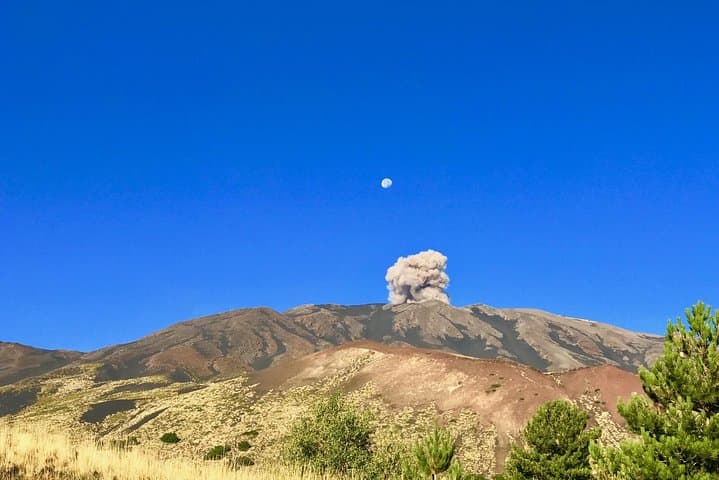
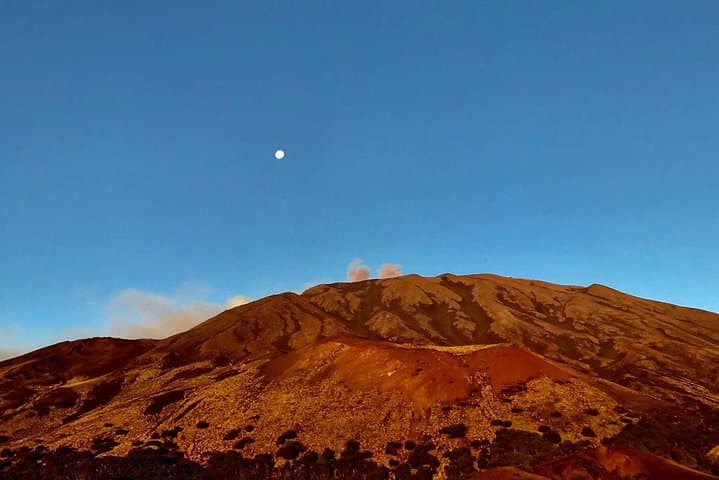
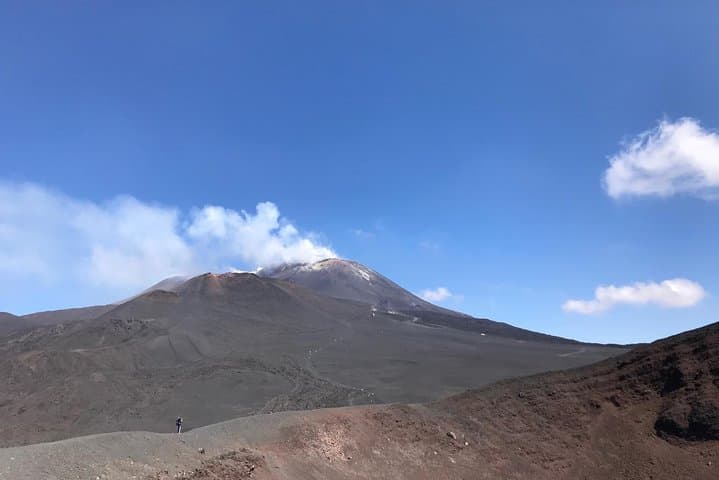
Geology and history converge here: the Sartorius craters are remnants of the 1865 eruptive phase cataloged by Wolfgang Sartorius von Waltershausen. Along the route the guide points out Grotta della Neve, once a snow-mill where winter stores were kept for summer, then lava fields from the 1950–51 and 1979 eruptions that still read like maps of recent fire.
Culturally, the morning ends with a small Sicilian ritual—granita and brioche—served at Case Pietracannone, a welcome contrast to the volcanic air. Practically, expect a 4–5 hour outing with transfers by 4WD, short hikes over uneven lava and loose ash, and a final perch near Monte Fontane at ~1,278 m looking into the Valle del Bove.
Plan for early starts, layered clothing against cold pre-dawn winds, sturdy boots for jagged terrain, and a headlamp for the approach. Guides will handle route-finding and logistics, but bring water, a camera with spare battery, and respect the fragile volcanic surface. Sunrise on Etna is part spectacle, part geology lesson—raw landscape that rewards simple preparation.
easy.
5 hours.
Suitable for most people in average physical condition; involves short uphill walks on uneven volcanic terrain.
Tours depart well before sunrise—plan for a meeting time around 3:30–4:30 AM depending on season to reach the viewpoint in time.
Yes; the outing is designed to be accessible with short hikes and 4WD transfers, but mobility limitations should be discussed at booking.
Weather can change quickly; guides can cancel for safety. There is modest altitude (around 1,200–1,700 m) so those with serious respiratory or mobility issues should consult a doctor.
A typical Sicilian breakfast on this tour includes granita and brioche, often served with coffee; transfers by 4WD are also provided.
The Sartorius craters were formed during Etna’s 1865 eruption and named for the 19th-century volcanologist Wolfgang Sartorius von Waltershausen; local snow-mills once stored winter snow for summer use.
Mount Etna is a protected regional park—stick to trails, avoid collecting rocks or lichens, and carry out all waste to protect fragile volcanic soils.
Etna Passion operates guided outdoor trips and adventures with an emphasis on safety, stewardship, and memorable experiences.
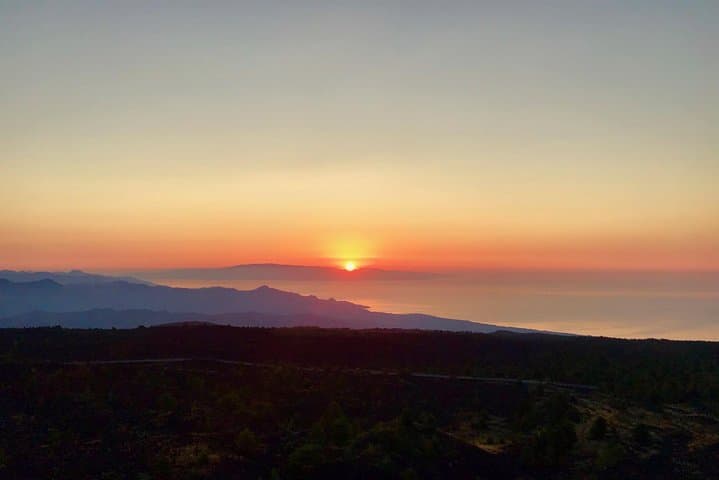
A pre-dawn road climbs Etna’s southern flank, headlights cutting through a cool, lunar landscape as guides park near the Sartorius craters. The air has the sharp mineral scent of recent lava; steam still rises from cracks, and the black sea of old flows waits below. You’ll step from a 4WD onto rough, gritty ground and hike a short, steady route up one of the Sartorius cones to catch the sun edging over the horizon.
A pre-dawn road climbs Etna’s southern flank, headlights cutting through a cool, lunar landscape as guides park near the Sartorius craters. The air has the sharp mineral scent of recent lava; steam still rises from cracks, and the black sea of old flows waits below. You’ll step from a 4WD onto rough, gritty ground and hike a short, steady route up one of the Sartorius cones to catch the sun edging over the horizon.
Geology and history converge here: the Sartorius craters are remnants of the 1865 eruptive phase cataloged by Wolfgang Sartorius von Waltershausen. Along the route the guide points out Grotta della Neve, once a snow-mill where winter stores were kept for summer, then lava fields from the 1950–51 and 1979 eruptions that still read like maps of recent fire.
Culturally, the morning ends with a small Sicilian ritual—granita and brioche—served at Case Pietracannone, a welcome contrast to the volcanic air. Practically, expect a 4–5 hour outing with transfers by 4WD, short hikes over uneven lava and loose ash, and a final perch near Monte Fontane at ~1,278 m looking into the Valle del Bove.
Plan for early starts, layered clothing against cold pre-dawn winds, sturdy boots for jagged terrain, and a headlamp for the approach. Guides will handle route-finding and logistics, but bring water, a camera with spare battery, and respect the fragile volcanic surface. Sunrise on Etna is part spectacle, part geology lesson—raw landscape that rewards simple preparation.