THE ADVENTURE COLLECTIVE® · Independent discovery and booking for outdoor travel

Lift off at dawn for a 40–50 minute luxury balloon flight over Luxor’s temples and the Nile. This early-morning aerial tour pairs dramatic light with easy logistics—hotel transfers, snacks, and a short ground ceremony after landing.
Lift off at dawn for a 40–50 minute luxury balloon flight over Luxor’s temples and the Nile. This early-morning aerial tour pairs dramatic light with easy logistics—hotel transfers, snacks, and a short ground ceremony after landing.
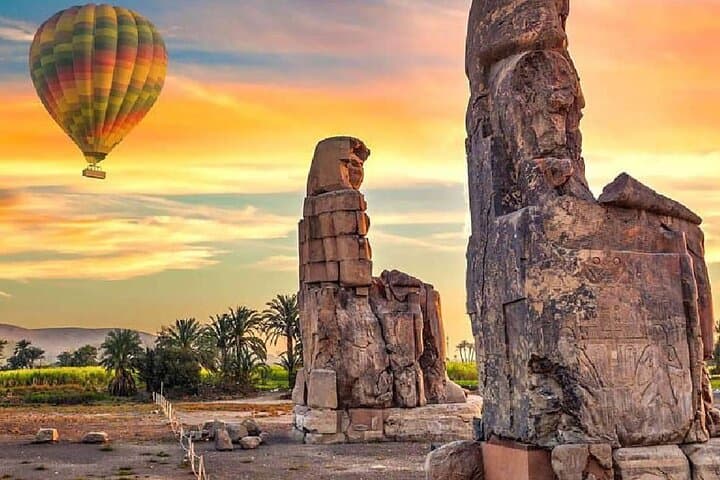
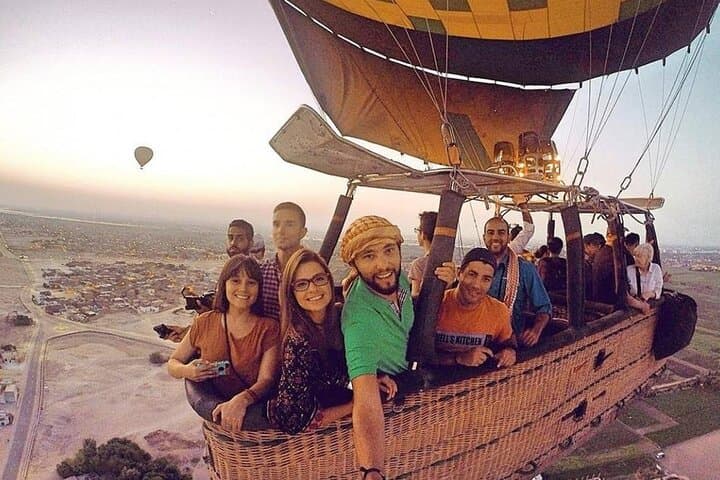
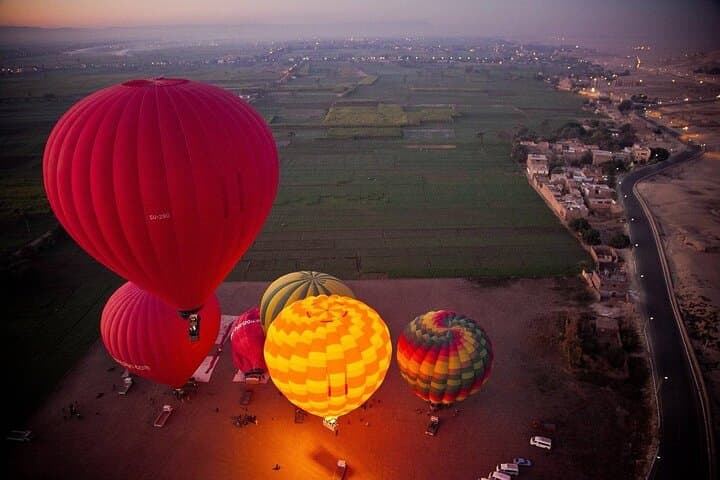
Before first light, the balloon basket hums with polite activity as the desert cools and the Nile blinks awake below. You rise slowly, the city shrinking into ordered blocks of mudbrick and palm groves; beneath you the long lines of columns at Karnak and the compact hills of the West Bank—Valley of the Kings and Deir el-Bahri—slide past like an open map.
Verified experiences and guided adventures in the surrounding area.
Operated by Top Tours In Egypt · Luxor, Luxor Governorate
Before first light, the balloon basket hums with polite activity as the desert cools and the Nile blinks awake below. You rise slowly, the city shrinking into ordered blocks of mudbrick and palm groves; beneath you the long lines of columns at Karnak and the compact hills of the West Bank—Valley of the Kings and Deir el-Bahri—slide past like an open map.
Luxor sits on the site of ancient Thebes; from the sky the relationship between river, floodplain and desert escarpment becomes obvious—fertile strips of green sharply edged by ochre sand. Geologically, the Nile’s alluvial plain gives way to limestone cliffs on the west where pharaohs cut tombs into the rock. Culturally, morning in Luxor still belongs to small cafes and farmers who tend narrow fields; a balloon flight accentuates that human scale against millennia-old monuments.
Practically: the airborne portion is about 40–50 minutes within a 3–4 hour door-to-door experience including transfers. Operators typically provide hotel pickup, a light snack, and a short ground ceremony after landing. Flights occur at sunrise when thermals are calm and light flatters the temples’ relief. Expect brief standing periods and easy climbs in and out of the basket; the experience is accessible to most travelers but check booking requirements (passports, child policies) in advance.
Bring layered clothing for pre-dawn chill, a camera with extra battery, and a patient early-morning mindset—the payoff is an unparalleled, quiet view of Luxor’s archaeology and the river that shaped it.
easy.
3–4 hours.
Minimal fitness required; must be able to stand for the 40–50 minute flight and step into a basket.
The airborne portion is typically 40–50 minutes; total experience including transfers and ground time runs about 3–4 hours.
Yes—this experience includes round-trip hotel pickup and drop-off; confirm exact pickup time and location when booking.
Flights are canceled if conditions are unsafe; operators will usually offer a full refund if canceled at least 24 hours before departure or provide a reschedule option.
Children can usually ride but infants are typically required to sit on an adult’s lap—check age and weight policies with the operator when booking.
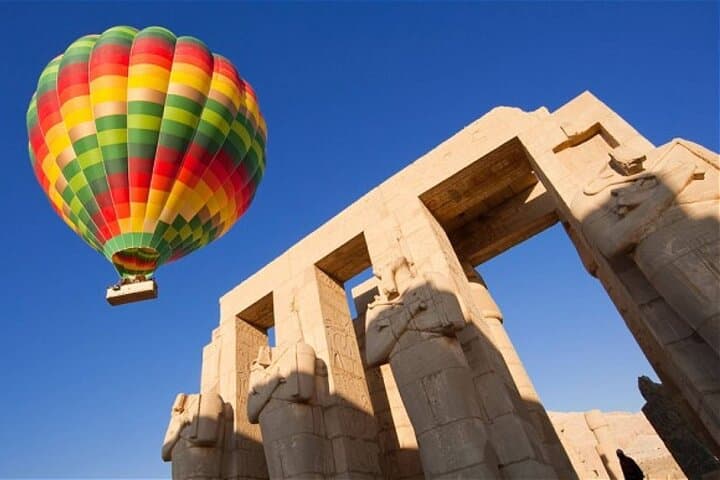
Luxor occupies the ancient city of Thebes; the flight gives direct views of major Pharaonic sites including Karnak, Luxor Temple, and the Valley of the Kings on the western cliffs.
Balloon operators work with local authorities to avoid landing near fragile archaeological sites; visitors should follow operator guidance and minimize footprint around landing zones and temple grounds.
Top Tours In Egypt operates guided outdoor trips and adventures with an emphasis on safety, stewardship, and memorable experiences.
Before first light, the balloon basket hums with polite activity as the desert cools and the Nile blinks awake below. You rise slowly, the city shrinking into ordered blocks of mudbrick and palm groves; beneath you the long lines of columns at Karnak and the compact hills of the West Bank—Valley of the Kings and Deir el-Bahri—slide past like an open map.
Before first light, the balloon basket hums with polite activity as the desert cools and the Nile blinks awake below. You rise slowly, the city shrinking into ordered blocks of mudbrick and palm groves; beneath you the long lines of columns at Karnak and the compact hills of the West Bank—Valley of the Kings and Deir el-Bahri—slide past like an open map.
Luxor sits on the site of ancient Thebes; from the sky the relationship between river, floodplain and desert escarpment becomes obvious—fertile strips of green sharply edged by ochre sand. Geologically, the Nile’s alluvial plain gives way to limestone cliffs on the west where pharaohs cut tombs into the rock. Culturally, morning in Luxor still belongs to small cafes and farmers who tend narrow fields; a balloon flight accentuates that human scale against millennia-old monuments.
Practically: the airborne portion is about 40–50 minutes within a 3–4 hour door-to-door experience including transfers. Operators typically provide hotel pickup, a light snack, and a short ground ceremony after landing. Flights occur at sunrise when thermals are calm and light flatters the temples’ relief. Expect brief standing periods and easy climbs in and out of the basket; the experience is accessible to most travelers but check booking requirements (passports, child policies) in advance.
Bring layered clothing for pre-dawn chill, a camera with extra battery, and a patient early-morning mindset—the payoff is an unparalleled, quiet view of Luxor’s archaeology and the river that shaped it.