THE ADVENTURE COLLECTIVE® · Independent discovery and booking for outdoor travel

Float above Luxor at first light to see the Valley of the Kings, Hatshepsut Temple and Colossi of Memnon from a bird’s-eye view. This sunrise balloon flight pairs calm morning air with dramatic archaeological sightlines and a short, guided logistics experience.
Float above Luxor at first light to see the Valley of the Kings, Hatshepsut Temple and Colossi of Memnon from a bird’s-eye view. This sunrise balloon flight pairs calm morning air with dramatic archaeological sightlines and a short, guided logistics experience.
The basket rises before the sun clears the horizon, and the desert exhales beneath you — a slow, warm current lifting the balloon over flat ochre plains and the braided ribbon of the Nile. Low light turns sandstone into a palette of ochres and gold; temples and colossi resolve from shadow as you drift quietly over the West Bank.
Verified experiences and guided adventures in the surrounding area.
Operated by DrMo Tours Egypt · Luxor, Luxor Governorate
The basket rises before the sun clears the horizon, and the desert exhales beneath you — a slow, warm current lifting the balloon over flat ochre plains and the braided ribbon of the Nile. Low light turns sandstone into a palette of ochres and gold; temples and colossi resolve from shadow as you drift quietly over the West Bank.
Luxor sits where pharaonic history crowds the landscape: the Valley of the Kings, Hatshepsut’s funerary temple, and the Colossi of Memnon are spread like stage props below. Geologically the Nile floodplain is recent alluvium; the sharp silhouettes of temple ruins contrast with the soft, cultivated fields that follow the river’s course. This flight offers both cultural perspective and scale — human monuments small against the sweep of desert and river, yet intimately detailed when seen from above.
Local crews handle inflation, launch and recovery; a short drive from central Luxor delivers you to the launch field while guides explain safety and flight patterns. Expect early pickup, a preflight briefing, and a flight of roughly 40–60 minutes followed by ground recovery and a simple landing celebration.
Practical notes: dress in layers for cold mornings, bring a camera with a wide lens and spare battery, and stow falling items securely — the basket’s wind can be insistent. The flight is low-impact but weather-dependent; operators may cancel for high winds. For travelers who want a calm, photo-rich way to see Luxor’s archaeology from a fresh angle, the sunrise balloon is hard to beat — it’s quiet, airborne, and unforgettable.
easy.
40–60 minutes (flight); 1–2 hours total including transfers.
Suitable for most fitness levels; passengers must be able to step into a basket and stand for the duration.
The airborne portion is typically 40–60 minutes; total tour time including transfers and briefing is about 1–2 hours.
Most operators accept children and adults but may have weight limits per passenger and require parental supervision for minors — check booking terms.
Flights are canceled for high winds or unsafe conditions; operators usually offer a full refund or reschedule when possible.
Many operators can accommodate limited mobility for ground transfers and boarding with advance notice, but confirm accessibility and assistance needs when booking.
Luxor was the ancient city of Thebes, a major center of Egyptian religion and royalty — many New Kingdom pharaohs built temples and tombs here between roughly 1550–1070 BCE.
Balloon operators and visitors share sensitive archaeological landscapes; stick to organized operators, avoid litter, and respect landing zones to minimize impact.
DrMo Tours Egypt operates guided outdoor trips and adventures with an emphasis on safety, stewardship, and memorable experiences.


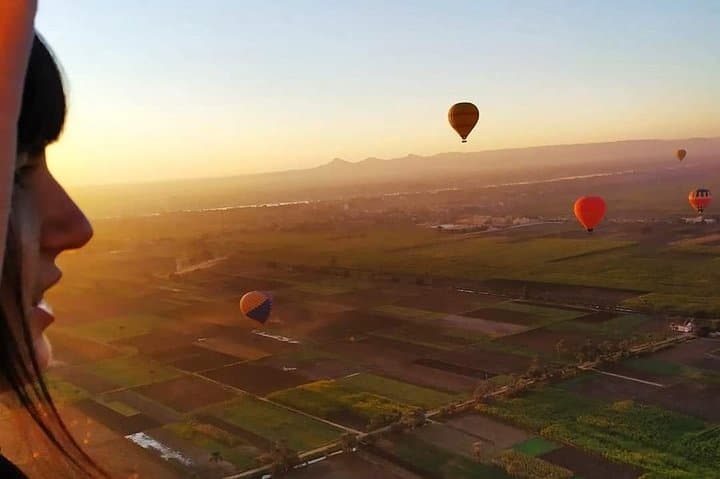
The basket rises before the sun clears the horizon, and the desert exhales beneath you — a slow, warm current lifting the balloon over flat ochre plains and the braided ribbon of the Nile. Low light turns sandstone into a palette of ochres and gold; temples and colossi resolve from shadow as you drift quietly over the West Bank.
The basket rises before the sun clears the horizon, and the desert exhales beneath you — a slow, warm current lifting the balloon over flat ochre plains and the braided ribbon of the Nile. Low light turns sandstone into a palette of ochres and gold; temples and colossi resolve from shadow as you drift quietly over the West Bank.
Luxor sits where pharaonic history crowds the landscape: the Valley of the Kings, Hatshepsut’s funerary temple, and the Colossi of Memnon are spread like stage props below. Geologically the Nile floodplain is recent alluvium; the sharp silhouettes of temple ruins contrast with the soft, cultivated fields that follow the river’s course. This flight offers both cultural perspective and scale — human monuments small against the sweep of desert and river, yet intimately detailed when seen from above.
Local crews handle inflation, launch and recovery; a short drive from central Luxor delivers you to the launch field while guides explain safety and flight patterns. Expect early pickup, a preflight briefing, and a flight of roughly 40–60 minutes followed by ground recovery and a simple landing celebration.
Practical notes: dress in layers for cold mornings, bring a camera with a wide lens and spare battery, and stow falling items securely — the basket’s wind can be insistent. The flight is low-impact but weather-dependent; operators may cancel for high winds. For travelers who want a calm, photo-rich way to see Luxor’s archaeology from a fresh angle, the sunrise balloon is hard to beat — it’s quiet, airborne, and unforgettable.