THE ADVENTURE COLLECTIVE® · Independent discovery and booking for outdoor travel

Rise with the sun over ancient Thebes on a hot-air balloon flight above Luxor. Float past the Nile, Karnak and the Valley of the Kings for an aerial perspective that pairs calm early-morning skies with precise local operations.
Rise with the sun over ancient Thebes on a hot-air balloon flight above Luxor. Float past the Nile, Karnak and the Valley of the Kings for an aerial perspective that pairs calm early-morning skies with precise local operations.
You lift before the city wakes; the burner hisses and the balloon swells as dawn pushes a clean, golden edge over the Nile. From the basket the river threads the valley like a slow, deliberate line, temples and colossi shrinking into miniature while the desert cliffs hold their silent, ochre watch. The light changes from cool to incandescent during the quiet ascent, and the city below rearranges itself—fields, palm groves, and ancient stone—into a new, clarified map.
Verified experiences and guided adventures in the surrounding area.
Operated by Egydise Tours · Luxor, Luxor Governorate
You lift before the city wakes; the burner hisses and the balloon swells as dawn pushes a clean, golden edge over the Nile. From the basket the river threads the valley like a slow, deliberate line, temples and colossi shrinking into miniature while the desert cliffs hold their silent, ochre watch. The light changes from cool to incandescent during the quiet ascent, and the city below rearranges itself—fields, palm groves, and ancient stone—into a new, clarified map.
Luxor sits on the site of ancient Thebes, a living archive of pharaonic power: Karnak’s pylons, Luxor Temple, and the rock-cut tombs on the West Bank were carved from the Nile’s limestone terraces and tell a story of labor, ritual, and water-managed agriculture. Geologically the valley is a floodplain framed by desert plateaus; from the sky you see the boundary where green ends and sand resumes.
Culturally the flight is a snapshot of daily life—farm workers, felucca sails, and market roofs—seen from a rare angle. Local balloon operators provide pickup, an English-speaking guide, a flight certificate and a short celebration after landing.
Practical notes: allow 2–3 hours door-to-door, dress in layers for a cool pre-dawn and warmer post-flight; bring a camera with a secure strap and a light daypack. Flights run weather-dependent and are not recommended for pregnant travelers. Expect gentle landings and a small group (up to ~20). Hydrate, pack sun protection for after the flight, and plan any temple visits for later in the day when ticket offices open. A sunrise balloon in Luxor is cinematic and methodical: dramatic views delivered with careful local experience.
easy.
2–3 hours.
Basic mobility and balance for stepping into a basket; travelers should be comfortable standing for the duration of the flight.
Total experience is about 2–3 hours including pickup, pre-flight briefing, the 45–60 minute airborne portion (varies), and return transfer.
Most operators permit all ages but children should be supervised; those with mobility concerns should check landing procedures and discuss with the operator beforehand.
Flights are canceled for high winds or unsafe conditions; operators usually offer a full refund or rebooking—book early in your trip to allow flexibility.
Yes—Karnak, Luxor Temple, the Nile’s cultivated banks and the West Bank necropolis are visible during flight, though you won’t land at sites.
Luxor occupies the site of ancient Thebes; the temples and tombs visible from the air were central to Egypt’s New Kingdom power between the 16th and 11th centuries BCE.
Operators follow weather-based safety and minimize noise and low-altitude disturbance; tourists should respect landing crews and avoid littering around archaeological zones.
Egydise Tours operates guided outdoor trips and adventures with an emphasis on safety, stewardship, and memorable experiences.
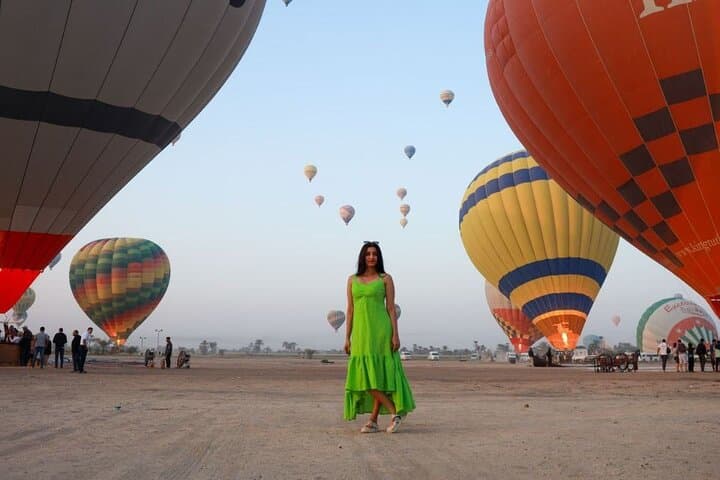
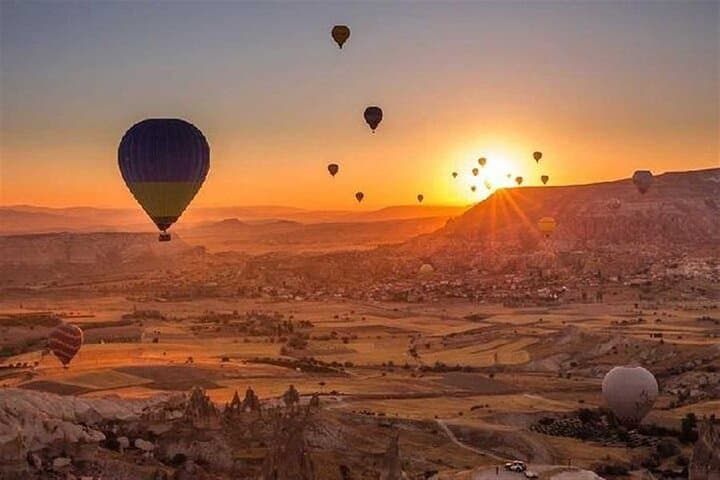
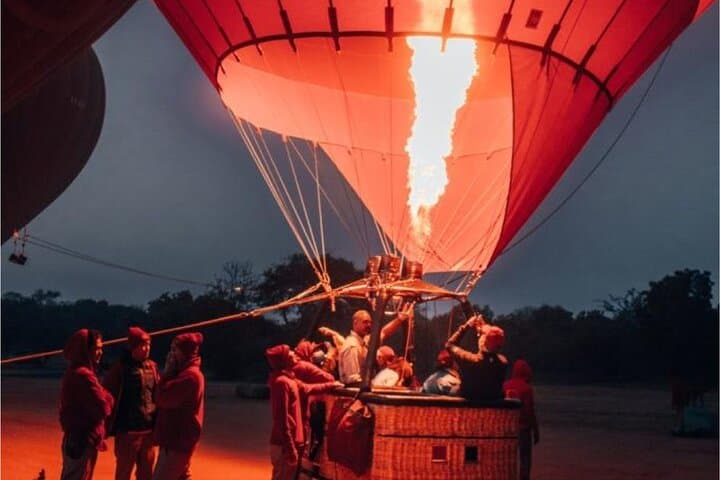
You lift before the city wakes; the burner hisses and the balloon swells as dawn pushes a clean, golden edge over the Nile. From the basket the river threads the valley like a slow, deliberate line, temples and colossi shrinking into miniature while the desert cliffs hold their silent, ochre watch. The light changes from cool to incandescent during the quiet ascent, and the city below rearranges itself—fields, palm groves, and ancient stone—into a new, clarified map.
You lift before the city wakes; the burner hisses and the balloon swells as dawn pushes a clean, golden edge over the Nile. From the basket the river threads the valley like a slow, deliberate line, temples and colossi shrinking into miniature while the desert cliffs hold their silent, ochre watch. The light changes from cool to incandescent during the quiet ascent, and the city below rearranges itself—fields, palm groves, and ancient stone—into a new, clarified map.
Luxor sits on the site of ancient Thebes, a living archive of pharaonic power: Karnak’s pylons, Luxor Temple, and the rock-cut tombs on the West Bank were carved from the Nile’s limestone terraces and tell a story of labor, ritual, and water-managed agriculture. Geologically the valley is a floodplain framed by desert plateaus; from the sky you see the boundary where green ends and sand resumes.
Culturally the flight is a snapshot of daily life—farm workers, felucca sails, and market roofs—seen from a rare angle. Local balloon operators provide pickup, an English-speaking guide, a flight certificate and a short celebration after landing.
Practical notes: allow 2–3 hours door-to-door, dress in layers for a cool pre-dawn and warmer post-flight; bring a camera with a secure strap and a light daypack. Flights run weather-dependent and are not recommended for pregnant travelers. Expect gentle landings and a small group (up to ~20). Hydrate, pack sun protection for after the flight, and plan any temple visits for later in the day when ticket offices open. A sunrise balloon in Luxor is cinematic and methodical: dramatic views delivered with careful local experience.