THE ADVENTURE COLLECTIVE® · Independent discovery and booking for outdoor travel

Lift off at first light and watch Luxor’s temples and the Nile unfold beneath you. This early-morning hot air balloon flight offers 45–80 minutes of aerial perspective on Karnak, Hatshepsut’s Temple and the West Bank’s funerary cliffs.
Lift off at first light and watch Luxor’s temples and the Nile unfold beneath you. This early-morning hot air balloon flight offers 45–80 minutes of aerial perspective on Karnak, Hatshepsut’s Temple and the West Bank’s funerary cliffs.
Before dawn the desert exhales and the valley holds its breath.
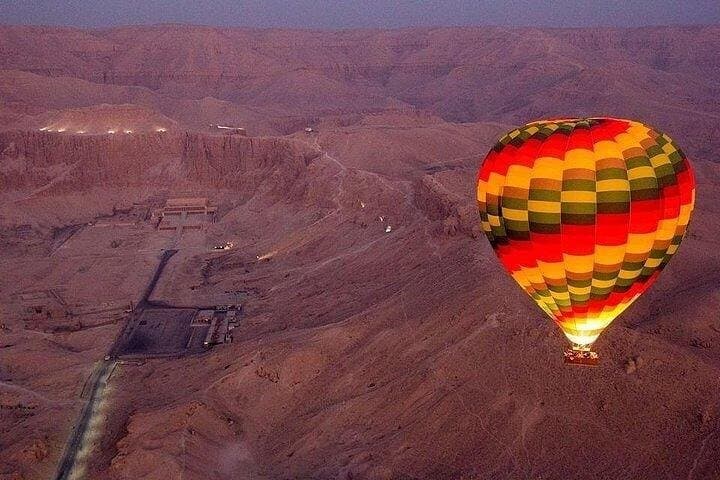
You’re driven across the Nile to the West Bank, where crews inflate a bright envelope that will lift you above Luxor’s layered history. The basket rattles, the burner breathes, and the city shrinks into a pattern of temples, palms and the slow ribbon of the Nile. As light climbs, sandstone monuments glow gold and shadow, and your pilot points out Karnak’s temple complex, Hatshepsut’s terraces and the tomb-studded ridges beyond.
Verified experiences and guided adventures in the surrounding area.
Operated by Sofy · Luxor, Luxor Governorate
Before dawn the desert exhales and the valley holds its breath.
You’re driven across the Nile to the West Bank, where crews inflate a bright envelope that will lift you above Luxor’s layered history. The basket rattles, the burner breathes, and the city shrinks into a pattern of temples, palms and the slow ribbon of the Nile. As light climbs, sandstone monuments glow gold and shadow, and your pilot points out Karnak’s temple complex, Hatshepsut’s terraces and the tomb-studded ridges beyond.
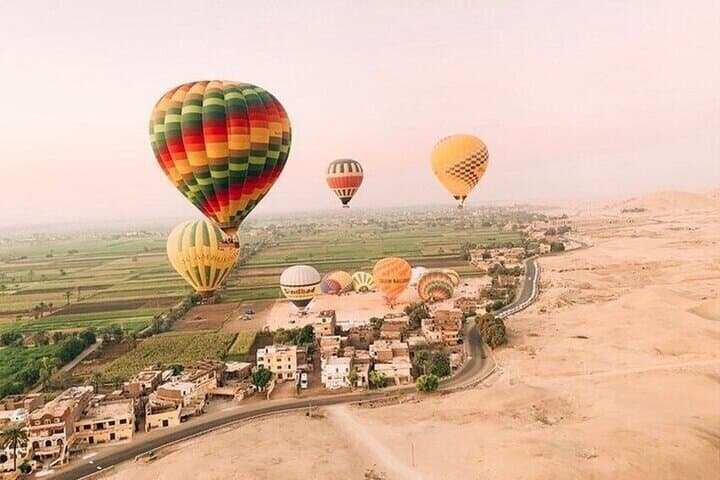
This is landscape and history in motion. Luxor sits on an alluvial plain carved by the Nile and backed by limestone escarpments that hold the royal necropolises; what looks like flat desert from the shore reveals funerary temples, processional avenues and irrigation scars when seen from above. The flight connects Pharaonic urban planning with the living river: farmers tending feluccas, date palms aligning canal edges, and the West Bank’s cliffs where tombs were cut into stone.
Practical guidance: flights typically last 45–80 minutes within a 2–3 hour window including transfers and briefing. Expect early pickup (pre-dawn), steady but low-to-moderate altitude in the first light, and a soft, often bumpy landing on open ground. Bring layered clothing for chill at altitude, sturdy shoes for boarding and standing, and a camera with a strap.
Book with flexible timing—weather can cancel flights early in the morning—and confirm pickup details the day before. A balloon ride here is quiet, panoramic and rooted in the geography that made Luxor a global archaeological classroom.
easy.
2–3 hours.
Minimal fitness required — able to stand for the flight and step in/out of a low basket opening.
The actual airborne time typically ranges from 45 to 80 minutes depending on wind conditions; the full experience including transfers and briefing is around 2–3 hours.
Operators usually cancel for unsafe wind or visibility; most offer a full refund or the option to reschedule — confirm the policy when booking.
Most operators allow all ages but require that passengers can stand unaided and follow crew instructions; disclose ages and any mobility issues at booking.
Yes — hotel and Nile cruise pickups are included; confirm pickup point and time when you receive your confirmation.
Luxor occupies the ancient city of Thebes, once Egypt’s religious and political heart; many of the monuments you’ll see date to the New Kingdom (16th–11th century BCE).
Flights operate in sensitive archaeological landscapes—avoid littering at launch/landing sites and follow crew guidance to minimize disturbance to local agriculture and wildlife.
Sofy operates guided outdoor trips and adventures with an emphasis on safety, stewardship, and memorable experiences.

Before dawn the desert exhales and the valley holds its breath.
You’re driven across the Nile to the West Bank, where crews inflate a bright envelope that will lift you above Luxor’s layered history. The basket rattles, the burner breathes, and the city shrinks into a pattern of temples, palms and the slow ribbon of the Nile. As light climbs, sandstone monuments glow gold and shadow, and your pilot points out Karnak’s temple complex, Hatshepsut’s terraces and the tomb-studded ridges beyond.
Before dawn the desert exhales and the valley holds its breath.
You’re driven across the Nile to the West Bank, where crews inflate a bright envelope that will lift you above Luxor’s layered history. The basket rattles, the burner breathes, and the city shrinks into a pattern of temples, palms and the slow ribbon of the Nile. As light climbs, sandstone monuments glow gold and shadow, and your pilot points out Karnak’s temple complex, Hatshepsut’s terraces and the tomb-studded ridges beyond.
This is landscape and history in motion. Luxor sits on an alluvial plain carved by the Nile and backed by limestone escarpments that hold the royal necropolises; what looks like flat desert from the shore reveals funerary temples, processional avenues and irrigation scars when seen from above. The flight connects Pharaonic urban planning with the living river: farmers tending feluccas, date palms aligning canal edges, and the West Bank’s cliffs where tombs were cut into stone.
Practical guidance: flights typically last 45–80 minutes within a 2–3 hour window including transfers and briefing. Expect early pickup (pre-dawn), steady but low-to-moderate altitude in the first light, and a soft, often bumpy landing on open ground. Bring layered clothing for chill at altitude, sturdy shoes for boarding and standing, and a camera with a strap.
Book with flexible timing—weather can cancel flights early in the morning—and confirm pickup details the day before. A balloon ride here is quiet, panoramic and rooted in the geography that made Luxor a global archaeological classroom.