THE ADVENTURE COLLECTIVE® · Independent discovery and booking for outdoor travel

Lift off at first light for a 45-minute balloon flight over Luxor’s temples, Nile bends and desert cliffs. This early-morning experience pairs sweeping aerial views with quick hotel pickup and light refreshments—ideal for travelers who want a high, quiet perspective on ancient Thebes.
Lift off at first light for a 45-minute balloon flight over Luxor’s temples, Nile bends and desert cliffs. This early-morning experience pairs sweeping aerial views with quick hotel pickup and light refreshments—ideal for travelers who want a high, quiet perspective on ancient Thebes.
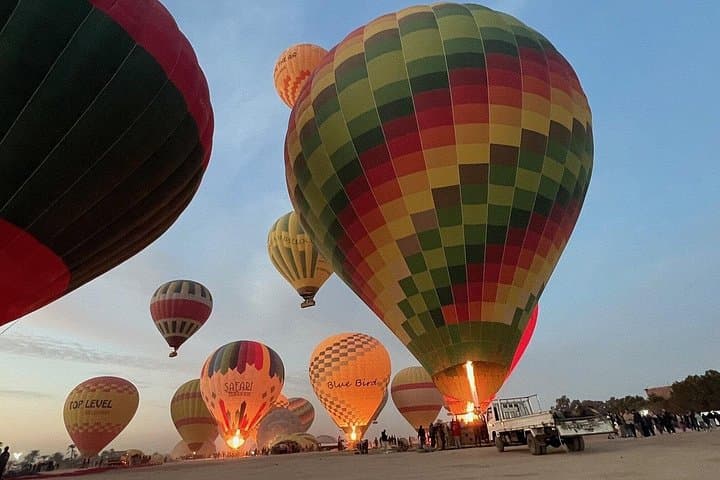
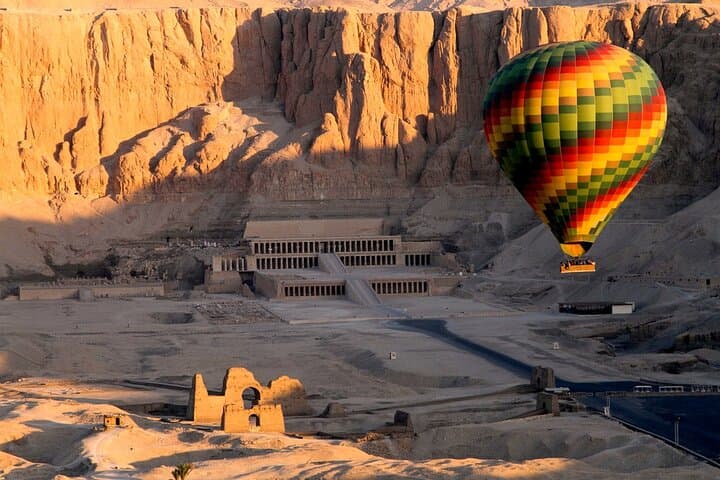
Before dawn the balloon field on Luxor’s West Bank smells of dust, diesel, and the faint sweetness of date palms. The envelope fills with fire; wicker baskets clink as passengers are readied. As the balloon lifts, the Nile uncoils like a dark ribbon beneath you, and temples, colossi and carved rock faces retreat in layers until the Valley of the Kings and Karnak appear as scaled reliefs under the warming light.
Verified experiences and guided adventures in the surrounding area.
Operated by Al Sahel Travel · Luxor, Luxor Governorate
Before dawn the balloon field on Luxor’s West Bank smells of dust, diesel, and the faint sweetness of date palms. The envelope fills with fire; wicker baskets clink as passengers are readied. As the balloon lifts, the Nile uncoils like a dark ribbon beneath you, and temples, colossi and carved rock faces retreat in layers until the Valley of the Kings and Karnak appear as scaled reliefs under the warming light.
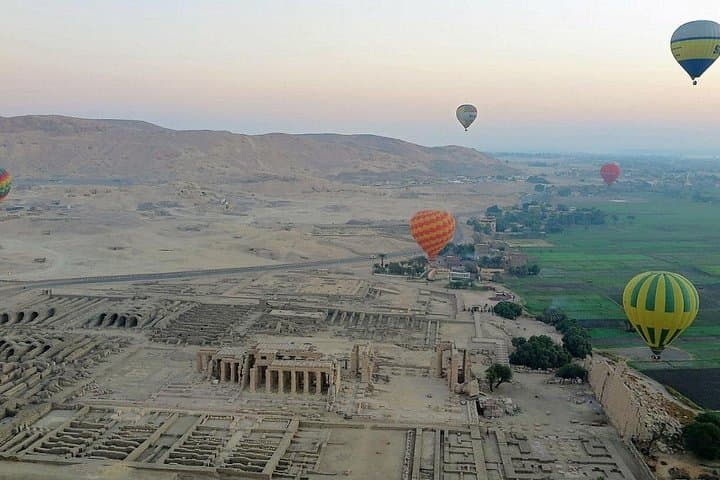
This flight crosses the heart of ancient Thebes, where pharaonic funerary complexes and the stone quarries of the West Bank mark a human footprint thousands of years old. Geologically, the Nile floodplain here is soft alluvial sediment edged by Eocene limestones cutting into the desert—cliffs that have sheltered tombs and shaped trade routes for millennia. Local culture is present in small ways: early morning fishermen, farmers tending fields, and feluccas slipping past like stitched sails.
Practically: most operators include morning hotel pickup, bottled water and a ~45-minute airborne leg inside a 3-hour door-to-door window. Expect a gentle but occasionally bouncy landing; dress in layers for pre-dawn chill that quickly becomes warm sun. Bring a camera with wrist strap and your passport for check-in. Balloon flights are not recommended for pregnant travelers or people with serious cardiac or spinal conditions; moderate mobility is required for stepping into the basket and standing for the flight.
Timing matters—sunrise provides the best light and thermal stability—so plan for an early start, confirm pickup details the night before, and leave room in your day to visit Karnak or the Luxor Temple refreshed after landing.
moderate.
2–3 hours.
Light to moderate fitness—able to stand for the flight and step into/out of a basket
The airborne portion is typically about 45 minutes, within a 2–3 hour total window including transfers and briefings.
Policies vary by operator, but many allow children; check age minimums and safety briefings at booking.
Operators usually offer a full refund or rebooking if winds or safety conditions prevent flying—confirm the policy at booking.
Tipping is customary for the pilot and ground crew—small cash tips are appreciated but not mandatory.
Luxor sits on the site of ancient Thebes, the capital of Egypt during the Middle and New Kingdoms; the West Bank holds the Valley of the Kings and many pharaonic necropolises.
Operators are increasingly regulated to minimize noise and ground impact; practice leave-no-trace by not discarding waste and supporting companies that follow local conservation rules.
Al Sahel Travel operates guided outdoor trips and adventures with an emphasis on safety, stewardship, and memorable experiences.
Before dawn the balloon field on Luxor’s West Bank smells of dust, diesel, and the faint sweetness of date palms. The envelope fills with fire; wicker baskets clink as passengers are readied. As the balloon lifts, the Nile uncoils like a dark ribbon beneath you, and temples, colossi and carved rock faces retreat in layers until the Valley of the Kings and Karnak appear as scaled reliefs under the warming light.
Before dawn the balloon field on Luxor’s West Bank smells of dust, diesel, and the faint sweetness of date palms. The envelope fills with fire; wicker baskets clink as passengers are readied. As the balloon lifts, the Nile uncoils like a dark ribbon beneath you, and temples, colossi and carved rock faces retreat in layers until the Valley of the Kings and Karnak appear as scaled reliefs under the warming light.
This flight crosses the heart of ancient Thebes, where pharaonic funerary complexes and the stone quarries of the West Bank mark a human footprint thousands of years old. Geologically, the Nile floodplain here is soft alluvial sediment edged by Eocene limestones cutting into the desert—cliffs that have sheltered tombs and shaped trade routes for millennia. Local culture is present in small ways: early morning fishermen, farmers tending fields, and feluccas slipping past like stitched sails.
Practically: most operators include morning hotel pickup, bottled water and a ~45-minute airborne leg inside a 3-hour door-to-door window. Expect a gentle but occasionally bouncy landing; dress in layers for pre-dawn chill that quickly becomes warm sun. Bring a camera with wrist strap and your passport for check-in. Balloon flights are not recommended for pregnant travelers or people with serious cardiac or spinal conditions; moderate mobility is required for stepping into the basket and standing for the flight.
Timing matters—sunrise provides the best light and thermal stability—so plan for an early start, confirm pickup details the night before, and leave room in your day to visit Karnak or the Luxor Temple refreshed after landing.