THE ADVENTURE COLLECTIVE® · Independent discovery and booking for outdoor travel

Lift off at first light above Marrakech and glide toward the High Atlas, finishing with a traditional Berber breakfast. This sunrise flight pairs calm aerial views with local hospitality and a short, memorable time aloft.
Lift off at first light above Marrakech and glide toward the High Atlas, finishing with a traditional Berber breakfast. This sunrise flight pairs calm aerial views with local hospitality and a short, memorable time aloft.
Before dawn the burner cuts the chill and the balloon fills like a slow, obedient animal. You stand in the basket as Marrakech's ochre rooftops blur and the plain unrolls toward the High Atlas, crags and ridgelines catching the first copper light. The ascent is gentle; wind decides the route, cliffs and river terraces provide the show.
Verified experiences and guided adventures in the surrounding area.
Operated by Moroccan odyssey · Marrakech, Marrakesh-Safi
Before dawn the burner cuts the chill and the balloon fills like a slow, obedient animal. You stand in the basket as Marrakech's ochre rooftops blur and the plain unrolls toward the High Atlas, crags and ridgelines catching the first copper light. The ascent is gentle; wind decides the route, cliffs and river terraces provide the show.
The Atlas chain is young by mountain standards, shaped by the collision of the African and Eurasian plates and capped by Jebel Toubkal, North Africa’s highest peak to the south. Below, valleys hold traditional Amazigh (Berber) villages where terraced fields and mule tracks map a long human presence. The post-flight breakfast in a Berber tent—fresh bread, amlou, mint tea—connects that geology and culture to a local rhythm.
Practically: expect a 4–5 hour outing from hotel pickup to drop-off, with the airborne portion typically around 45–75 minutes. Operators launch at sunrise to exploit calm layers; flights are weather-dependent and may be canceled for wind or rain. Wear layered clothing, sturdy shoes for uneven landings, and bring a camera with a fast shutter—photography windows are brief. Pilots are licensed and flights include safety briefings; passengers must be able to step into and out of a 1–2 meter high basket and stand for the duration.
Plan for early pick-up, limited group sizes for clearer views, and a respectful approach to landing sites and local hosts. The flight gives you a quiet, elevated perspective: the mountains seem to move beneath you, wind guiding the story.
easy.
4–5 hours.
Suitable for most fitness levels; must be able to stand for about an hour and step up/down a 1–2m basket edge
Professional pilots operate certified balloons and perform weather checks; follow the pilot’s briefing and crew instructions—flights are grounded if conditions are unsafe.
Operators typically offer full refunds for cancellations due to weather and will reschedule if possible; confirm the specific cancellation window at booking.
Children are usually permitted but must be supervised; pregnant travelers and those with serious heart or spinal conditions are advised not to fly—check operator restrictions when booking.
The airborne time is generally 45–75 minutes, with the total experience including transfers and breakfast lasting around 4–5 hours.
The High Atlas has long been home to Amazigh (Berber) communities; their villages and terraced agriculture reflect centuries of adaptation to a rugged landscape.
Flight operators should minimize landings in private fields and follow local guidance—respect landing sites and avoid littering to protect fragile semi-arid habitats.
Moroccan odyssey operates guided outdoor trips and adventures with an emphasis on safety, stewardship, and memorable experiences.
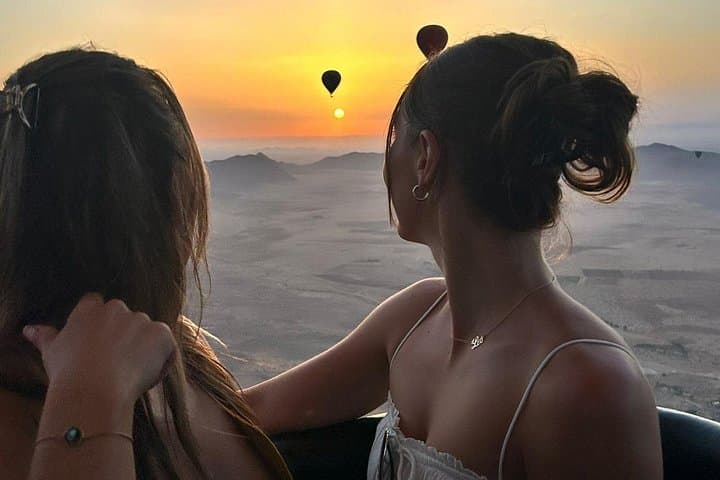
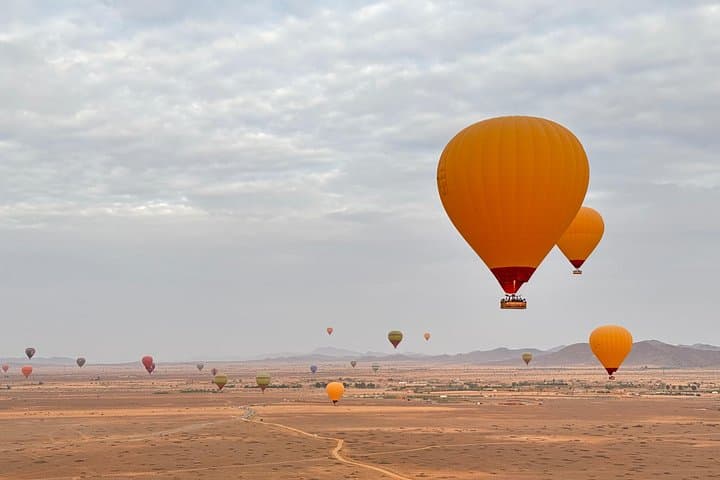
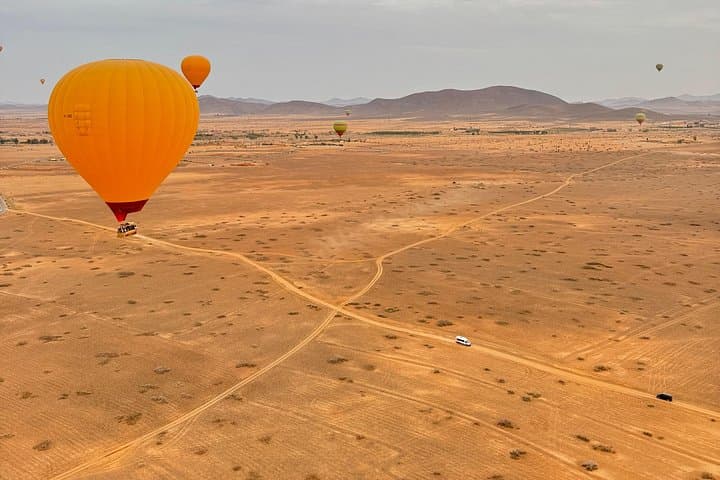
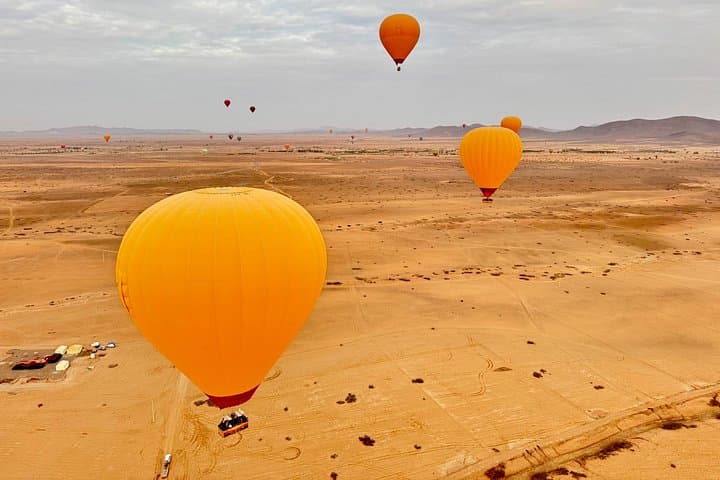
Before dawn the burner cuts the chill and the balloon fills like a slow, obedient animal. You stand in the basket as Marrakech's ochre rooftops blur and the plain unrolls toward the High Atlas, crags and ridgelines catching the first copper light. The ascent is gentle; wind decides the route, cliffs and river terraces provide the show.
Before dawn the burner cuts the chill and the balloon fills like a slow, obedient animal. You stand in the basket as Marrakech's ochre rooftops blur and the plain unrolls toward the High Atlas, crags and ridgelines catching the first copper light. The ascent is gentle; wind decides the route, cliffs and river terraces provide the show.
The Atlas chain is young by mountain standards, shaped by the collision of the African and Eurasian plates and capped by Jebel Toubkal, North Africa’s highest peak to the south. Below, valleys hold traditional Amazigh (Berber) villages where terraced fields and mule tracks map a long human presence. The post-flight breakfast in a Berber tent—fresh bread, amlou, mint tea—connects that geology and culture to a local rhythm.
Practically: expect a 4–5 hour outing from hotel pickup to drop-off, with the airborne portion typically around 45–75 minutes. Operators launch at sunrise to exploit calm layers; flights are weather-dependent and may be canceled for wind or rain. Wear layered clothing, sturdy shoes for uneven landings, and bring a camera with a fast shutter—photography windows are brief. Pilots are licensed and flights include safety briefings; passengers must be able to step into and out of a 1–2 meter high basket and stand for the duration.
Plan for early pick-up, limited group sizes for clearer views, and a respectful approach to landing sites and local hosts. The flight gives you a quiet, elevated perspective: the mountains seem to move beneath you, wind guiding the story.