THE ADVENTURE COLLECTIVE® · Independent discovery and booking for outdoor travel

Rise with the sun over the Atlas foothills on a sunrise hot-air balloon flight from Marrakech. Float 40–60 minutes above desert valleys, then land for a traditional Berber breakfast.
Rise with the sun over the Atlas foothills on a sunrise hot-air balloon flight from Marrakech. Float 40–60 minutes above desert valleys, then land for a traditional Berber breakfast.
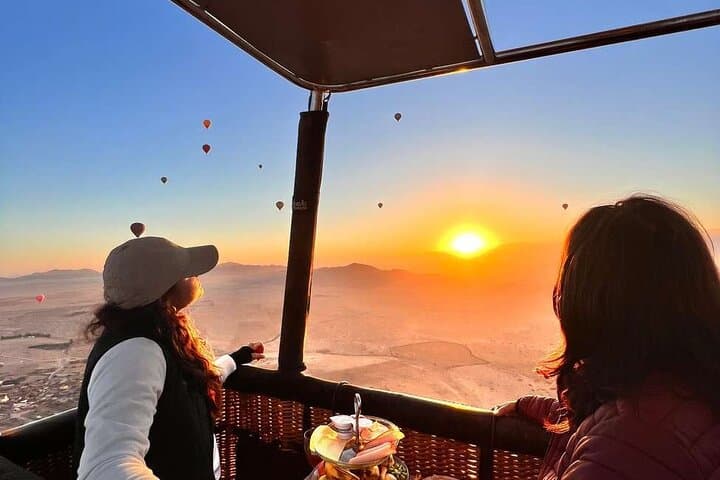
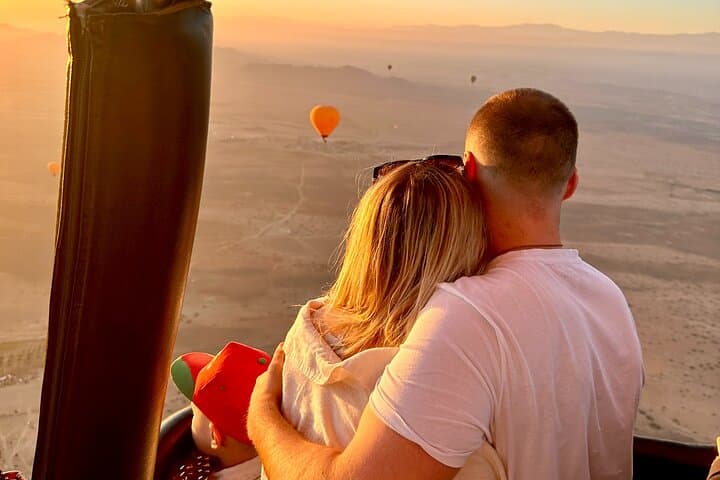
Dawn pulls at the edges of Marrakech as a pale horizon pushes the Atlas Mountains into silhouette. You leave the city in a 4x4 while the world is still cool; at the launch field the crew inflates a giant envelope and the smell of propane and warm pastry fills the air. As the balloon lifts, valleys, rocky ridges and scattered Berber villages spread beneath you—the desert floor and mountain foothills changing color with every thousand feet.
Verified experiences and guided adventures in the surrounding area.
Operated by Marrakech By Air · Marrakech, Marrakesh-Safi
Dawn pulls at the edges of Marrakech as a pale horizon pushes the Atlas Mountains into silhouette. You leave the city in a 4x4 while the world is still cool; at the launch field the crew inflates a giant envelope and the smell of propane and warm pastry fills the air. As the balloon lifts, valleys, rocky ridges and scattered Berber villages spread beneath you—the desert floor and mountain foothills changing color with every thousand feet.
This flight follows a long arc of human curiosity about the high view: ballooning arrived in Morocco in the 20th century and today combines quiet aviation with cultural ritual. Geologically, the Atlas foothills are fractured and folded limestone and sandstone—visible from above as striated ridgelines and dry riverbeds that channel seasonal rains. Culturally, the flight often ends in a Berber tent for a simple, regional breakfast—cornbread, mint tea and olives—that connects the airborne moment to the land and its people.
Practicalities matter: expect a 40–60 minute flight within a roughly four-hour window including hotel pickup, transfer, setup and breakfast. Mornings are cold; layers and sturdy shoes are sensible for a bumpy landing and short walk to and from the basket. Pilots choose flight paths for smooth lift and views rather than speed, so bring a camera and steady hands.
Safety is straightforward but strict—follow crew briefings, respect the 110 kg weight policy if applicable, and confirm pickup details the day before. For anyone wanting a quiet, panoramic view of Morocco, the sunrise balloon over the Atlas is an efficient, memorable way to see both landscape and culture from above.
easy.
4 hours (includes transfer, setup, flight, and breakfast).
Light; ability to stand for the flight and step into a basket is required
The airborne portion typically lasts 40–60 minutes; the full experience including hotel pickup and breakfast is about four hours.
Minimum age is generally 3 years; most operators enforce a maximum weight of 110 kg per passenger—check and disclose any special requirements when booking.
Flights are canceled in unsafe wind or visibility conditions; operators usually offer a full refund or reschedule and advise confirming pickup the day before.
No—this experience is suitable for first-time flyers and requires no technical skills beyond standing in and stepping out of the basket.
Ballooning in Morocco is a modern addition to long-standing Berber land use; the Atlas foothills have been inhabited for millennia and appear on aerial routes as terraced plots and village clusters.
Operators minimize ground impact by using designated launch fields and packing out all equipment; stick to established meeting points and follow crew guidance to protect fragile desert soils.
Marrakech By Air operates guided outdoor trips and adventures with an emphasis on safety, stewardship, and memorable experiences.
Dawn pulls at the edges of Marrakech as a pale horizon pushes the Atlas Mountains into silhouette. You leave the city in a 4x4 while the world is still cool; at the launch field the crew inflates a giant envelope and the smell of propane and warm pastry fills the air. As the balloon lifts, valleys, rocky ridges and scattered Berber villages spread beneath you—the desert floor and mountain foothills changing color with every thousand feet.
Dawn pulls at the edges of Marrakech as a pale horizon pushes the Atlas Mountains into silhouette. You leave the city in a 4x4 while the world is still cool; at the launch field the crew inflates a giant envelope and the smell of propane and warm pastry fills the air. As the balloon lifts, valleys, rocky ridges and scattered Berber villages spread beneath you—the desert floor and mountain foothills changing color with every thousand feet.
This flight follows a long arc of human curiosity about the high view: ballooning arrived in Morocco in the 20th century and today combines quiet aviation with cultural ritual. Geologically, the Atlas foothills are fractured and folded limestone and sandstone—visible from above as striated ridgelines and dry riverbeds that channel seasonal rains. Culturally, the flight often ends in a Berber tent for a simple, regional breakfast—cornbread, mint tea and olives—that connects the airborne moment to the land and its people.
Practicalities matter: expect a 40–60 minute flight within a roughly four-hour window including hotel pickup, transfer, setup and breakfast. Mornings are cold; layers and sturdy shoes are sensible for a bumpy landing and short walk to and from the basket. Pilots choose flight paths for smooth lift and views rather than speed, so bring a camera and steady hands.
Safety is straightforward but strict—follow crew briefings, respect the 110 kg weight policy if applicable, and confirm pickup details the day before. For anyone wanting a quiet, panoramic view of Morocco, the sunrise balloon over the Atlas is an efficient, memorable way to see both landscape and culture from above.