THE ADVENTURE COLLECTIVE® · Independent discovery and booking for outdoor travel

Float over Teotihuacán at dawn with burners bright against a cool sky. This practical guide explains what the flight feels like, the site's history and what to pack for a smooth sunrise balloon experience.
Float over Teotihuacán at dawn with burners bright against a cool sky. This practical guide explains what the flight feels like, the site's history and what to pack for a smooth sunrise balloon experience.
Before the sun clears the eastern ridge, burners puncture the cold and the basket lifts. The valley exhales beneath you—fields, tile roofs and the rigid silhouettes of the Pyramid of the Sun and Pyramid of the Moon shrink and then expand into a new geometry as the balloon glides. Wind, not engines, decides your route; the pilot reads it like a map of currents.
Verified experiences and guided adventures in the surrounding area.
Operated by Von Navi · San Juan Teotihuacán, State of Mexico
Before the sun clears the eastern ridge, burners puncture the cold and the basket lifts. The valley exhales beneath you—fields, tile roofs and the rigid silhouettes of the Pyramid of the Sun and Pyramid of the Moon shrink and then expand into a new geometry as the balloon glides. Wind, not engines, decides your route; the pilot reads it like a map of currents.
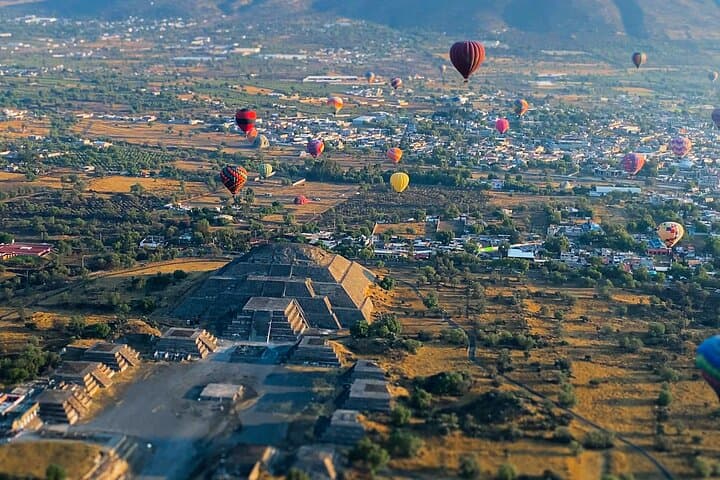
Teotihuacán was one of Mesoamerica’s largest cities between 100 BCE and 650 CE. The site sits on a volcanic plain of hardened lava and ash—rich in obsidian that ancient artisans used for tools and trade. Modern-day San Juan Teotihuacán keeps craft and pulque traditions alive; from the air you can pick out clustered workshops and the broad Avenue of the Dead slicing the landscape.
Practical notes fold neatly into the romance: flights run about 45–65 minutes and are weather-dependent—high winds or low visibility cancel for safety. Operators in the valley carry AFAC certifications and typically include transfers, light snacks, a flight certificate and a post-flight toast. Expect an early pickup from Mexico City (roughly 45–60 minutes by van), a brief inflation spectacle, pre-flight safety briefing and a potentially brisk landing that asks you to follow crew directions.
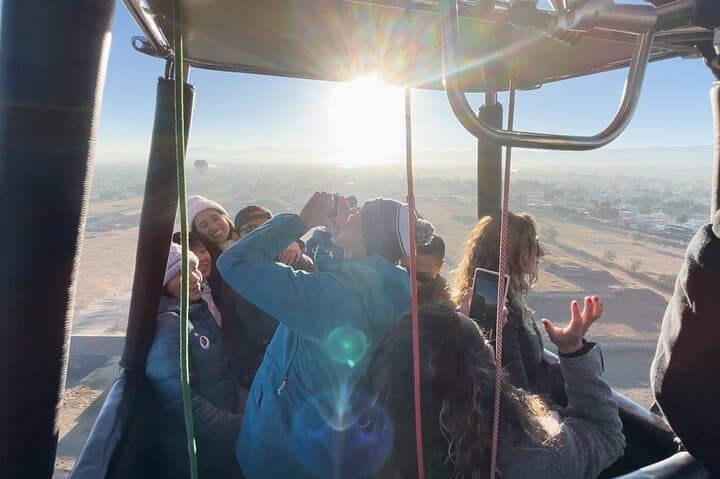
Dress in layers for cool pre-dawn temps and stronger sun at altitude; flat, closed shoes help at takeoff and landing. Cameras and phones are welcome but tether them—the balloon’s motion and crew activity demand awareness. For a brief hour above ancient stones, the landscape becomes an honest counterpart: it nudges, surprises and keeps you present.
easy.
45–65 minutes.
Suitable for most fitness levels; requires ability to stand for the duration and step in/out of a basket.
Flights typically last between 45 and 65 minutes, depending on wind conditions and the specific flight plan.
Not always—flight paths depend on wind direction and pilot decisions; many flights pass nearby and offer excellent aerial views of the pyramids.
The activity is suitable for most people but not recommended for pregnant travelers or those with serious cardiovascular conditions; operators also set weight limits and boarding requirements.
Operators usually offer a full refund or rebooking; cancellations are common for safety when winds are strong or visibility is poor.
Teotihuacán rose between roughly 100 BCE and 650 CE and became a major urban and ceremonial center known for large pyramids and extensive urban planning.
The archaeological zone and surrounding lands are sensitive to foot traffic and development; stick to designated paths, avoid littering and support local conservation or artisan initiatives.
Von Navi operates guided outdoor trips and adventures with an emphasis on safety, stewardship, and memorable experiences.
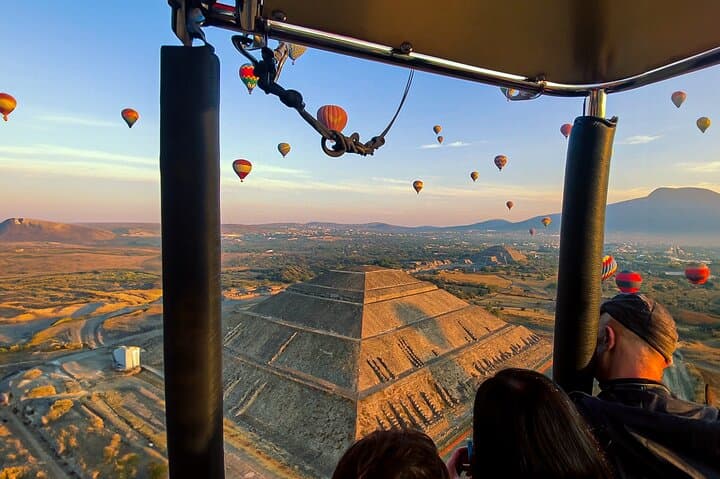
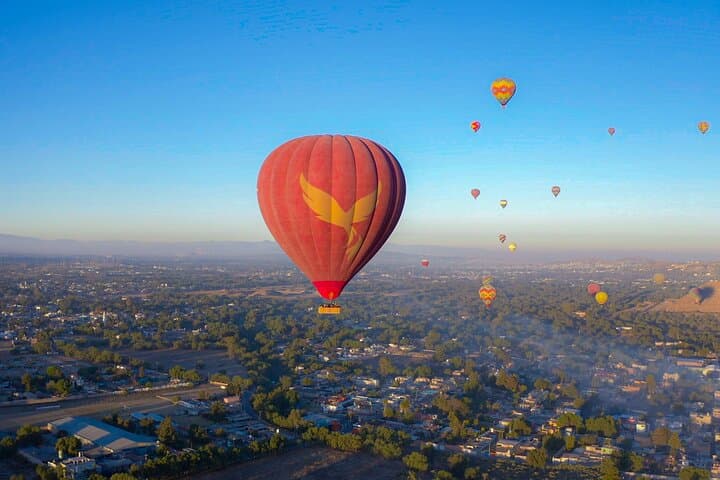
Before the sun clears the eastern ridge, burners puncture the cold and the basket lifts. The valley exhales beneath you—fields, tile roofs and the rigid silhouettes of the Pyramid of the Sun and Pyramid of the Moon shrink and then expand into a new geometry as the balloon glides. Wind, not engines, decides your route; the pilot reads it like a map of currents.
Before the sun clears the eastern ridge, burners puncture the cold and the basket lifts. The valley exhales beneath you—fields, tile roofs and the rigid silhouettes of the Pyramid of the Sun and Pyramid of the Moon shrink and then expand into a new geometry as the balloon glides. Wind, not engines, decides your route; the pilot reads it like a map of currents.
Teotihuacán was one of Mesoamerica’s largest cities between 100 BCE and 650 CE. The site sits on a volcanic plain of hardened lava and ash—rich in obsidian that ancient artisans used for tools and trade. Modern-day San Juan Teotihuacán keeps craft and pulque traditions alive; from the air you can pick out clustered workshops and the broad Avenue of the Dead slicing the landscape.
Practical notes fold neatly into the romance: flights run about 45–65 minutes and are weather-dependent—high winds or low visibility cancel for safety. Operators in the valley carry AFAC certifications and typically include transfers, light snacks, a flight certificate and a post-flight toast. Expect an early pickup from Mexico City (roughly 45–60 minutes by van), a brief inflation spectacle, pre-flight safety briefing and a potentially brisk landing that asks you to follow crew directions.
Dress in layers for cool pre-dawn temps and stronger sun at altitude; flat, closed shoes help at takeoff and landing. Cameras and phones are welcome but tether them—the balloon’s motion and crew activity demand awareness. For a brief hour above ancient stones, the landscape becomes an honest counterpart: it nudges, surprises and keeps you present.