THE ADVENTURE COLLECTIVE® · Independent discovery and booking for outdoor travel

Float above Pamukkale’s surreal white travertines at sunrise, then explore the Roman ruins of Hierapolis and swim in Cleopatra’s Pool on a long, guided day trip from Antalya. This full-day experience pairs a 45–60 minute balloon flight with archaeological highlights and thermal terraces.
Float above Pamukkale’s surreal white travertines at sunrise, then explore the Roman ruins of Hierapolis and swim in Cleopatra’s Pool on a long, guided day trip from Antalya. This full-day experience pairs a 45–60 minute balloon flight with archaeological highlights and thermal terraces.
You lift gently into a cool pre-dawn sky as Pamukkale’s white terraces unfurl beneath you, glowing like sheets of salt stretched across the hills. The balloon drifts over calcified pools and the grid of ancient ruins, the valley opening and closing with the breeze; for a few suspended minutes the landscape scripts its own slow motion.
Verified experiences and guided adventures in the surrounding area.
Operated by HARLEY · Pamukkale, Denizli
You lift gently into a cool pre-dawn sky as Pamukkale’s white terraces unfurl beneath you, glowing like sheets of salt stretched across the hills. The balloon drifts over calcified pools and the grid of ancient ruins, the valley opening and closing with the breeze; for a few suspended minutes the landscape scripts its own slow motion.
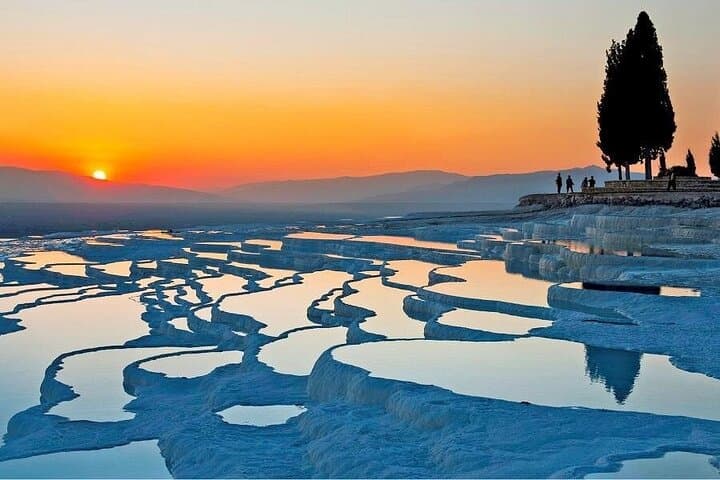
On the ground, Hierapolis reads like a living spa city: Roman theaters, a sprawling necropolis and the warm springs that drew visitors for millennia. The travertine terraces formed by mineral-rich thermal water—temperatures locally range from about 35–100°C—build tiered pools that force you to remove shoes and feel the warm calcium underfoot. Cleopatra’s Pool offers a swim amid submerged Roman columns while the theater and the St. Philip basilica testify to successive civilizations that valued these waters for healing and ceremony.
The geology is simple and dramatic: carbonate minerals precipitate as hot groundwater cools, creating the white runoff that made the site world-famous and earned UNESCO protection. Local culture still orbits those springs—small restaurants serve hearty lunches and Denizli craftsmen sell woven textiles nearby.
Practical note: this is a long, guided day trip with hotel pickup from Antalya and roughly 15–16 hours door-to-door. Balloon flights last about 45–60 minutes depending on winds; terraces require barefoot walking and modest clothing for the archaeological sites. Bring a light jacket for the morning, sun protection, and a camera with a fast lens for dawn light. Expect an early wake-up but a rare combination of aerial perspective and hands-on cultural history in a single, very full day.
easy.
15–16 hours.
Suitable for travelers in normal health; involves short walks on uneven terraces and an early start for the balloon segment.
Flights typically last 45–60 minutes depending on wind conditions, followed by a short landing celebration and certificate.
No—walking on the travertines requires bare feet or socks to protect the fragile calcite deposits; guidelines are enforced on-site.
Children can usually participate, but check operator age and weight restrictions; the tour advises that pregnant travelers consult a doctor and the operator as ballooning is not recommended.
This tour typically includes lunch and the Pamukkale–Hierapolis entrance fee, as well as hotel pickup and drop-off from Antalya—confirm inclusions when booking.
Hierapolis became a Roman and later Byzantine spa center built atop the thermal springs; successive cultures expanded the baths and religious structures, creating the layered ruins seen today.
The travertines are protected and foot traffic is managed to prevent damage; follow site rules (no shoes on terraces, stay on designated paths) to help preserve mineral deposits and archaeological fabric.
HARLEY operates guided outdoor trips and adventures with an emphasis on safety, stewardship, and memorable experiences.
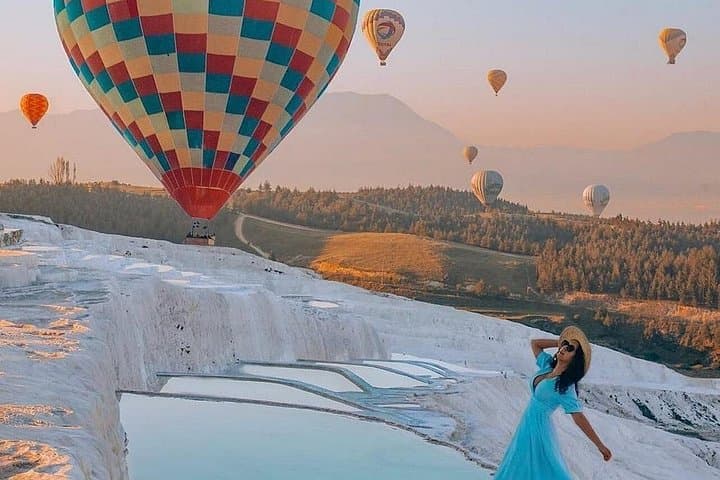


You lift gently into a cool pre-dawn sky as Pamukkale’s white terraces unfurl beneath you, glowing like sheets of salt stretched across the hills. The balloon drifts over calcified pools and the grid of ancient ruins, the valley opening and closing with the breeze; for a few suspended minutes the landscape scripts its own slow motion.
You lift gently into a cool pre-dawn sky as Pamukkale’s white terraces unfurl beneath you, glowing like sheets of salt stretched across the hills. The balloon drifts over calcified pools and the grid of ancient ruins, the valley opening and closing with the breeze; for a few suspended minutes the landscape scripts its own slow motion.
On the ground, Hierapolis reads like a living spa city: Roman theaters, a sprawling necropolis and the warm springs that drew visitors for millennia. The travertine terraces formed by mineral-rich thermal water—temperatures locally range from about 35–100°C—build tiered pools that force you to remove shoes and feel the warm calcium underfoot. Cleopatra’s Pool offers a swim amid submerged Roman columns while the theater and the St. Philip basilica testify to successive civilizations that valued these waters for healing and ceremony.
The geology is simple and dramatic: carbonate minerals precipitate as hot groundwater cools, creating the white runoff that made the site world-famous and earned UNESCO protection. Local culture still orbits those springs—small restaurants serve hearty lunches and Denizli craftsmen sell woven textiles nearby.
Practical note: this is a long, guided day trip with hotel pickup from Antalya and roughly 15–16 hours door-to-door. Balloon flights last about 45–60 minutes depending on winds; terraces require barefoot walking and modest clothing for the archaeological sites. Bring a light jacket for the morning, sun protection, and a camera with a fast lens for dawn light. Expect an early wake-up but a rare combination of aerial perspective and hands-on cultural history in a single, very full day.