THE ADVENTURE COLLECTIVE® · Independent discovery and booking for outdoor travel

Glide over Marrakech at dawn in a hot air balloon, tracing palm groves, medina walls and Atlas foothills before a traditional Berber breakfast on landing. This early‑morning flight pairs easy logistics with spectacular aerial views.
Glide over Marrakech at dawn in a hot air balloon, tracing palm groves, medina walls and Atlas foothills before a traditional Berber breakfast on landing. This early‑morning flight pairs easy logistics with spectacular aerial views.
You lift off before the city wakes, a basket humming as it peels away from the palm groves and red-earth silhouettes of Marrakech. Below, the Palmeraie glints in morning light and the crumbling medina walls look small against the rising profile of the High Atlas; the air is cool, the balloon drifting where the winds decide.
Verified experiences and guided adventures in the surrounding area.
Operated by Morocco Trip · Marrakech, Marrakech-Safi
You lift off before the city wakes, a basket humming as it peels away from the palm groves and red-earth silhouettes of Marrakech. Below, the Palmeraie glints in morning light and the crumbling medina walls look small against the rising profile of the High Atlas; the air is cool, the balloon drifting where the winds decide.
Marrakech is an imperial city shaped by centuries of trade and the Almoravid dynasty; from the air you see human patterns—irrigation channels, fields, and the ochre blocks that define the old quarter. Geologically, the vista moves from alluvial plains into the folded, sometimes snow-capped ridges of the Atlas, giving a clear sense of the region’s climatic and tectonic contrasts. Culturally the flight ends simply and well: a traditional Berber breakfast—tea, flatbread, olive oil, and local fruit—served after touchdown and a keepsake flight certificate to mark the morning.
Practically, expect a 4‑hour window that includes hotel pickup in a 4x4, 45–70 minutes of round-trip transfers, a roughly 40–60 minute airborne segment depending on wind, and breakfast on landing. Dress in layers, bring a secure camera, and plan for early starts; pilots prioritize calm dawn thermals, and flights can be canceled for high winds. The experience is low-impact physically but high in sensory return—minimal walking at launch and landing, standing in the basket for the flight. For photographers and first-time flyers alike, this is an accessible way to see Marrakech’s landscape from a fresh angle while sampling local hospitality.
easy.
4 hours.
Minimal fitness required—able to stand and step in/out of a basket; limited walking on uneven ground.
The airborne portion typically ranges 40–60 minutes; total excursion including transfers and breakfast is about four hours.
Most operators welcome all ages; children should be supervised, and passengers should be able to step in/out of the basket and stand for the flight—check age or weight limits with the provider.
Flights are canceled for high winds or unsafe conditions—operators usually offer a full refund or rescheduling; confirm the cancellation policy when booking.
Yes—this experience includes hotel pickup in a 4x4 or van to the launch site and return after landing and breakfast.
Marrakech has been a cultural crossroads since its 11th‑century founding; airborne views emphasize the city’s irrigation and agricultural patterns that sustained it for centuries.
Operators aim for low-footprint landings and coordinate with landowners to avoid disturbance; choose companies that follow local safety and environmental guidelines.
Morocco Trip operates guided outdoor trips and adventures with an emphasis on safety, stewardship, and memorable experiences.

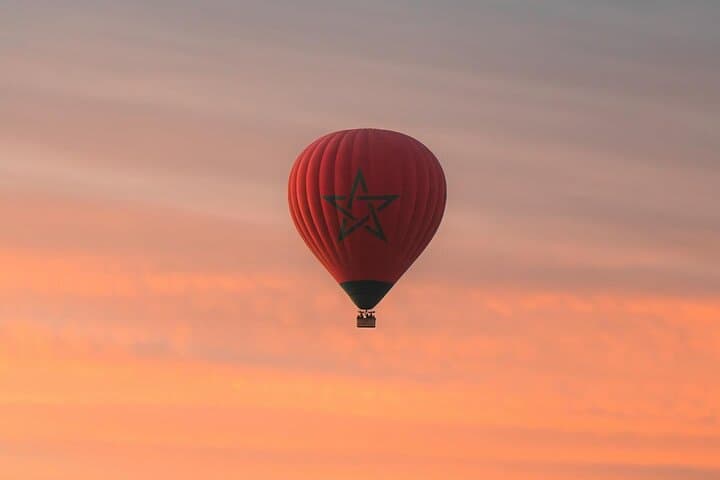
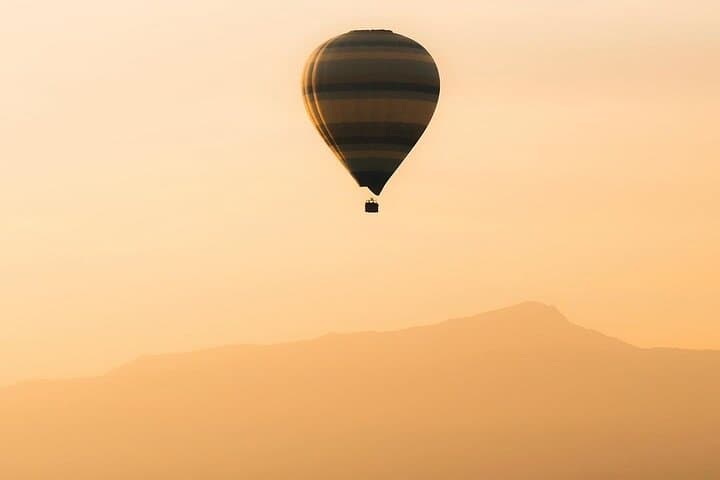
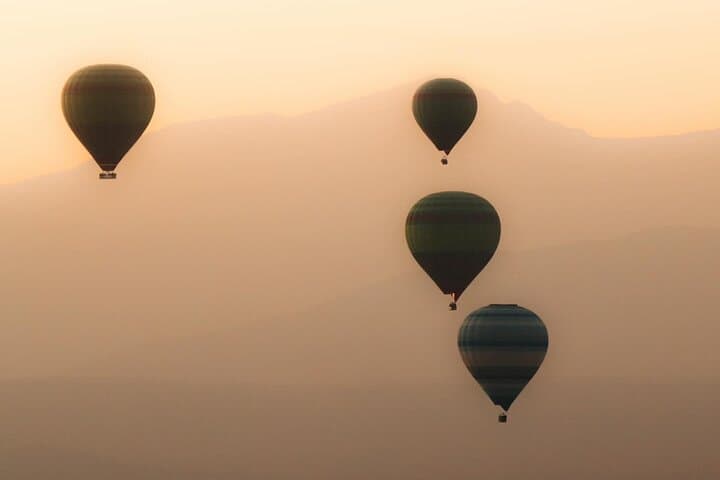
You lift off before the city wakes, a basket humming as it peels away from the palm groves and red-earth silhouettes of Marrakech. Below, the Palmeraie glints in morning light and the crumbling medina walls look small against the rising profile of the High Atlas; the air is cool, the balloon drifting where the winds decide.
You lift off before the city wakes, a basket humming as it peels away from the palm groves and red-earth silhouettes of Marrakech. Below, the Palmeraie glints in morning light and the crumbling medina walls look small against the rising profile of the High Atlas; the air is cool, the balloon drifting where the winds decide.
Marrakech is an imperial city shaped by centuries of trade and the Almoravid dynasty; from the air you see human patterns—irrigation channels, fields, and the ochre blocks that define the old quarter. Geologically, the vista moves from alluvial plains into the folded, sometimes snow-capped ridges of the Atlas, giving a clear sense of the region’s climatic and tectonic contrasts. Culturally the flight ends simply and well: a traditional Berber breakfast—tea, flatbread, olive oil, and local fruit—served after touchdown and a keepsake flight certificate to mark the morning.
Practically, expect a 4‑hour window that includes hotel pickup in a 4x4, 45–70 minutes of round-trip transfers, a roughly 40–60 minute airborne segment depending on wind, and breakfast on landing. Dress in layers, bring a secure camera, and plan for early starts; pilots prioritize calm dawn thermals, and flights can be canceled for high winds. The experience is low-impact physically but high in sensory return—minimal walking at launch and landing, standing in the basket for the flight. For photographers and first-time flyers alike, this is an accessible way to see Marrakech’s landscape from a fresh angle while sampling local hospitality.