THE ADVENTURE COLLECTIVE® · Independent discovery and booking for outdoor travel

Lift off at first light and watch Luxor’s funerary landscape unfold beneath you. This early-morning hot air balloon flight gives a compact, airborne view of the Valley of the Kings, Hatshepsut’s temple, and the Nile’s green ribbon.
Lift off at first light and watch Luxor’s funerary landscape unfold beneath you. This early-morning hot air balloon flight gives a compact, airborne view of the Valley of the Kings, Hatshepsut’s temple, and the Nile’s green ribbon.
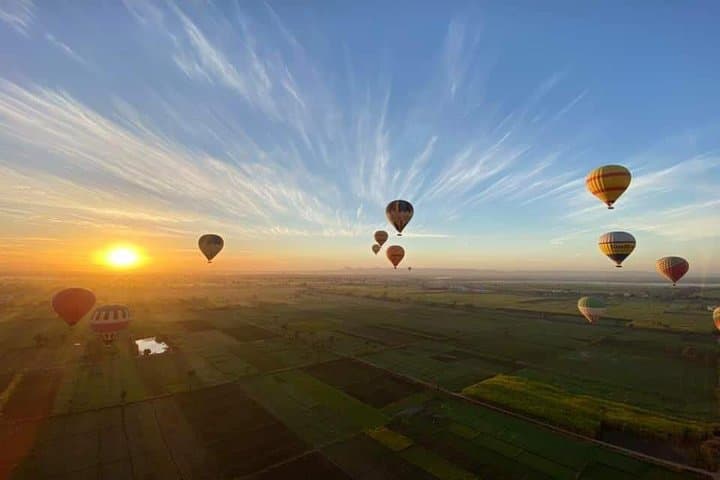
Before the sun clears the desert rim, burner heat thumps and the envelope lifts like a slow-breathing giant, carrying a basket of passengers out over the Nile valley.
Verified experiences and guided adventures in the surrounding area.
Operated by DrMo Tours Egypt · Luxor, Luxor Governorate
Before the sun clears the desert rim, burner heat thumps and the envelope lifts like a slow-breathing giant, carrying a basket of passengers out over the Nile valley.
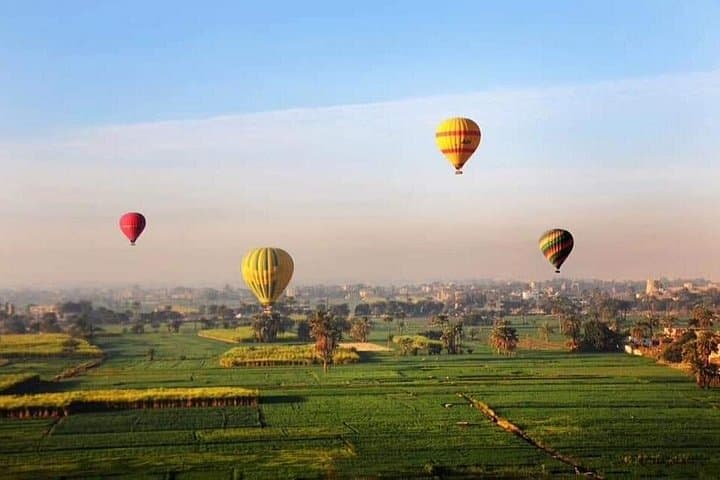
From the basket the modern and the ancient collide: the river threads green through ochre sand, workaday feluccas slide like dark commas, and the terraces of the West Bank—Valley of the Kings, Hatshepsut’s cliff-clinging mortuary, the Colossi of Memnon—shrink and align into a plan laid down by pharaohs.
Luxor sits on a geological edge: the fertile Nile floodplain against a dry limestone escarpment that preserves tombs cut into its face. The area’s history as Thebes is visible in axis and alignment; from above you see why temples were sited where they are, oriented to rituals of light.
Local crews move with practiced calm—balloon rigging, safety briefings, and a quick cup of coffee before launch—reflecting a tourism culture built on morning light and precise timing. Many operators include hotel pickup, bottled water, snacks, a short motorboat transfer for West Bank logistics, and a flight certificate after landing.
Practical guidance: flights run at first light to avoid thermals; expect a 40–60 minute airborne window within a 2–3 hour door-to-door experience. Dress in layers (cool desert morning, warmer after sunrise), wear flat shoes, and secure cameras—wide-angle lenses capture the sweep best. Landings can be brisk; follow crew instructions. Weather cancels are common for safety; book early in high season and be flexible with mornings.
Aerial perspective here is both poetic and pragmatic: it compresses centuries into minutes and leaves you with clear places to continue on foot—temples, tombs, and the river that keeps this landscape alive.
easy.
40–60 minutes (in air); 2–3 hours total.
Suitable for people in average physical condition; requires standing and stepping into a basket
Typical airborne time is 40–60 minutes, though total door-to-door time including pickup, transfers, and briefing is around 2–3 hours.
No—operators cancel flights for high winds, low visibility, or unsafe conditions and typically offer a full refund or rescheduling.
Most operators accept a wide age range and describe the activity as physically easy, but check specific age or weight limits and consult if you have mobility concerns.
Space in the launch and landing areas is limited; bring a small daypack—large luggage should remain at your hotel for pickup and return.
Luxor occupies the site of ancient Thebes, a political and religious center for New Kingdom pharaohs; many major temples and royal tombs are concentrated along the Nile’s banks and escarpment.
Balloon operators are encouraged to follow strict safety and noise guidelines; visitors should avoid leaving litter, respect agricultural plots, and keep clear of sensitive archaeological sites.
DrMo Tours Egypt operates guided outdoor trips and adventures with an emphasis on safety, stewardship, and memorable experiences.

Before the sun clears the desert rim, burner heat thumps and the envelope lifts like a slow-breathing giant, carrying a basket of passengers out over the Nile valley.
Before the sun clears the desert rim, burner heat thumps and the envelope lifts like a slow-breathing giant, carrying a basket of passengers out over the Nile valley.
From the basket the modern and the ancient collide: the river threads green through ochre sand, workaday feluccas slide like dark commas, and the terraces of the West Bank—Valley of the Kings, Hatshepsut’s cliff-clinging mortuary, the Colossi of Memnon—shrink and align into a plan laid down by pharaohs.
Luxor sits on a geological edge: the fertile Nile floodplain against a dry limestone escarpment that preserves tombs cut into its face. The area’s history as Thebes is visible in axis and alignment; from above you see why temples were sited where they are, oriented to rituals of light.
Local crews move with practiced calm—balloon rigging, safety briefings, and a quick cup of coffee before launch—reflecting a tourism culture built on morning light and precise timing. Many operators include hotel pickup, bottled water, snacks, a short motorboat transfer for West Bank logistics, and a flight certificate after landing.
Practical guidance: flights run at first light to avoid thermals; expect a 40–60 minute airborne window within a 2–3 hour door-to-door experience. Dress in layers (cool desert morning, warmer after sunrise), wear flat shoes, and secure cameras—wide-angle lenses capture the sweep best. Landings can be brisk; follow crew instructions. Weather cancels are common for safety; book early in high season and be flexible with mornings.
Aerial perspective here is both poetic and pragmatic: it compresses centuries into minutes and leaves you with clear places to continue on foot—temples, tombs, and the river that keeps this landscape alive.