THE ADVENTURE COLLECTIVE® · Independent discovery and booking for outdoor travel

Lift off at dawn and float above the archaeological riches of Luxor on a 45-minute hot air balloon flight. Early pickups, calm thermals and sweeping views of temples and the Nile make this a compact, unforgettable sunrise experience.
Lift off at dawn and float above the archaeological riches of Luxor on a 45-minute hot air balloon flight. Early pickups, calm thermals and sweeping views of temples and the Nile make this a compact, unforgettable sunrise experience.
Before dawn the Nile slips into shadow and the West Bank’s fields blur into a low, dark seam. Riders are collected from hotels in an air-conditioned van and carried across the river, where the takeoff field waits and crews stitch a huge envelope to morning light.
Verified experiences and guided adventures in the surrounding area.
Operated by Book My Egypt Tours · Luxor, Luxor Governorate
Before dawn the Nile slips into shadow and the West Bank’s fields blur into a low, dark seam. Riders are collected from hotels in an air-conditioned van and carried across the river, where the takeoff field waits and crews stitch a huge envelope to morning light.
Luxor sits on the site of ancient Thebes; from the balloon the city reads like an open-air museum — the rectangular grids of modern town give way to temple pylons, colonnades and the clustered tombs of the Valley of the Kings. The plateau’s limestone and alluvial terraces reflect millennia of human presence: pharaonic funerary complexes carved into older sedimentary rock, and the Nile’s floodplain still shaping fields below.
Culturally the flight is quiet and observational: pilots point out Hatshepsut’s temple, the Colossi of Memnon and irrigation channels while the desert breeze nudges the basket. The balloon rides here are run early to exploit calm thermals; visibility is often excellent, and the light at sunrise amplifies the ochres and whites of stone.
Practically: expect a 3:30–6:30am pickup window, about 45 minutes airborne and two hours total door-to-door. Dress in layers — desert mornings are cool, then warm quickly. Shoes should be sturdy for uneven landing zones. Bring a camera with extra battery and a small, secure bag; pilots handle inflation and launch but briefings cover safety and landing positions. Flights are weather-dependent; operators will rebook or refund if conditions ground the balloon. For photographers and history-minded travelers, this is a compact, high-altitude way to read Luxor’s landscape with context and clarity.
easy.
2 hours (total, includes transfers).
Minimal fitness required — able to stand for 45 minutes and step into/out of the basket
The airborne portion is about 45 minutes; total experience including pickup and return is approximately 2 hours.
Pickups run before sunrise (roughly 3:30–6:30am depending on the season); the operator confirms exact times when you book.
The experience is suitable for most people but not recommended for pregnant travelers or those with significant back or heart problems; check with the operator for specifics.
Flights are weather-dependent; if conditions ground the balloons operators typically rebook for the next available morning or issue a full refund.
Luxor occupies the site of ancient Thebes; the West Bank hosts royal tombs and mortuary temples carved into local limestone and silt deposits from the Nile.
Stick to licensed operators, carry out any trash, and avoid disturbing archaeological sites — responsible flights minimize ground impact and support local guides.
Book My Egypt Tours operates guided outdoor trips and adventures with an emphasis on safety, stewardship, and memorable experiences.
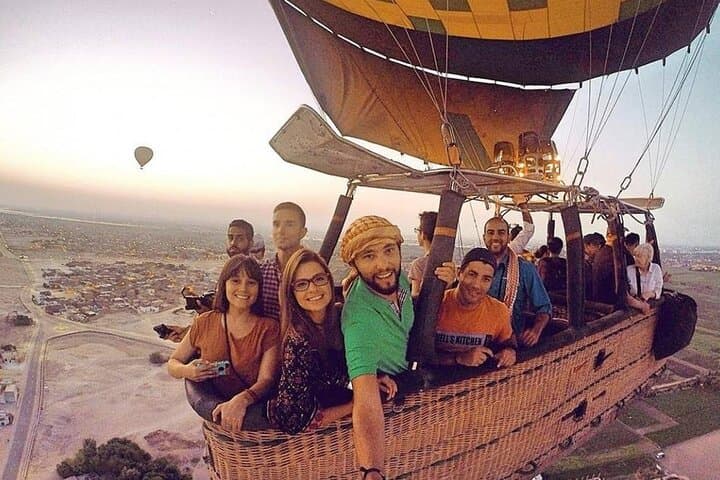
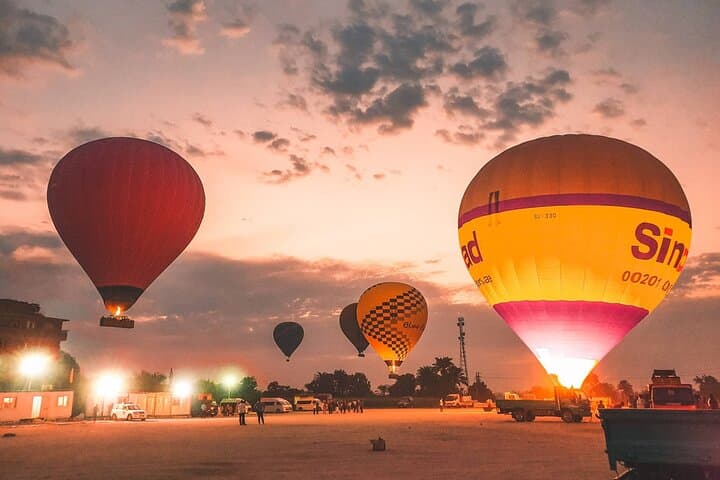
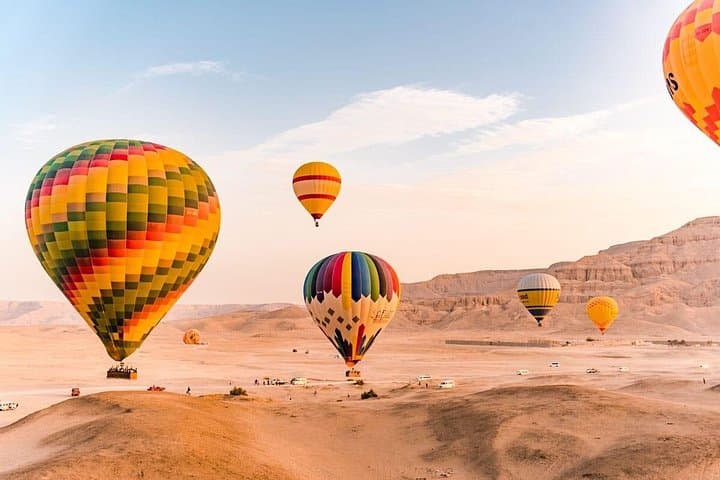
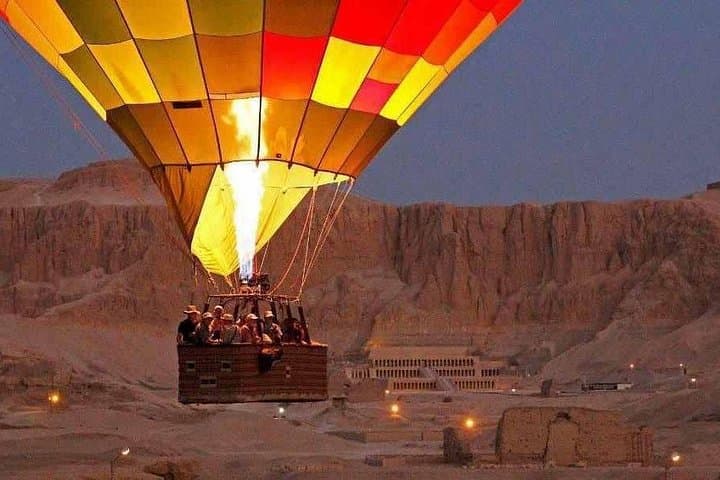
Before dawn the Nile slips into shadow and the West Bank’s fields blur into a low, dark seam. Riders are collected from hotels in an air-conditioned van and carried across the river, where the takeoff field waits and crews stitch a huge envelope to morning light.
Before dawn the Nile slips into shadow and the West Bank’s fields blur into a low, dark seam. Riders are collected from hotels in an air-conditioned van and carried across the river, where the takeoff field waits and crews stitch a huge envelope to morning light.
Luxor sits on the site of ancient Thebes; from the balloon the city reads like an open-air museum — the rectangular grids of modern town give way to temple pylons, colonnades and the clustered tombs of the Valley of the Kings. The plateau’s limestone and alluvial terraces reflect millennia of human presence: pharaonic funerary complexes carved into older sedimentary rock, and the Nile’s floodplain still shaping fields below.
Culturally the flight is quiet and observational: pilots point out Hatshepsut’s temple, the Colossi of Memnon and irrigation channels while the desert breeze nudges the basket. The balloon rides here are run early to exploit calm thermals; visibility is often excellent, and the light at sunrise amplifies the ochres and whites of stone.
Practically: expect a 3:30–6:30am pickup window, about 45 minutes airborne and two hours total door-to-door. Dress in layers — desert mornings are cool, then warm quickly. Shoes should be sturdy for uneven landing zones. Bring a camera with extra battery and a small, secure bag; pilots handle inflation and launch but briefings cover safety and landing positions. Flights are weather-dependent; operators will rebook or refund if conditions ground the balloon. For photographers and history-minded travelers, this is a compact, high-altitude way to read Luxor’s landscape with context and clarity.