THE ADVENTURE COLLECTIVE® · Independent discovery and booking for outdoor travel

Float above Luxor at sunrise on a 45-minute hot air balloon flight that reveals Karnak, Luxor Temple and the Nile in a single sweep. Expect an early pickup, a brief boat transfer to the West Bank, and calm morning air ideal for photography.
Float above Luxor at sunrise on a 45-minute hot air balloon flight that reveals Karnak, Luxor Temple and the Nile in a single sweep. Expect an early pickup, a brief boat transfer to the West Bank, and calm morning air ideal for photography.
The balloon lifts as the desert exhales and the Nile dares you to look down. Dawn paints Karnak’s columns and Luxor Temple in pale gold while the basket drifts across the wide, sleeping plain of ancient Thebes. Below, palm groves and the river’s slow ribbon cut the landscape into farmland and ruins; above, the pilot trims altitude to give clear views of colossi, mortuary temples and the irregular geometry of tomb-covered hills.
Verified experiences and guided adventures in the surrounding area.
Operated by Packnfly · Luxor, Luxor Governorate
The balloon lifts as the desert exhales and the Nile dares you to look down. Dawn paints Karnak’s columns and Luxor Temple in pale gold while the basket drifts across the wide, sleeping plain of ancient Thebes. Below, palm groves and the river’s slow ribbon cut the landscape into farmland and ruins; above, the pilot trims altitude to give clear views of colossi, mortuary temples and the irregular geometry of tomb-covered hills.
Luxor sits on the eastern bank of the Nile at the heart of Egypt’s pharaonic past. Balloon flights take advantage of cool, stable morning air; pilots will often fly low enough to read hieroglyphs from the sky and high enough to flatten the horizon into a panorama. Geology here is simple—Nile silt plains spilling into limestone hills that hold the Valley of the Kings—yet the contrast between riverine fertility and desert escarpment frames every landmark.
Practically, expect a very early pickup, a short boat transfer to the West Bank launch area, and a 45-minute airborne window within a roughly 90-minute tour. Wear layers—the basket is breezy at altitude—closed-toe shoes, and sunscreen. Bring a camera with charged batteries and a small, fast lens for low-light shots. If you’re prone to motion sickness, take precautions the night before. Operators issue flight certificates and usually assist with hotel transfer; confirm pickup details when you book.
This is accessible aerial sightseeing: little technical skill required, plenty of photographic reward, and an uncommon vantage on one of the world’s greatest archaeological landscapes.
easy.
1–2 hours.
Minimal fitness required; participants should be able to stand and step in/out of a low basket.
The airborne portion is approximately 45 minutes; the full outing including pickup, transfer and wrap-up runs around 90 minutes.
Yes; this activity is generally suitable for most ages and fitness levels, though infants and those with serious medical conditions should check with the operator first.
Flights rely on calm morning winds; operators will cancel or reschedule if conditions are unsafe and refund/cancel policies vary—confirm terms at booking.
Carry your passport or ID as requested for bookings; operators often ask for passport details when reserving the flight.
Luxor occupies ancient Thebes, a major New Kingdom capital; many of the monuments visible from the air date to pharaohs like Ramses II and Amenhotep III.
Choose operators that follow local regulations, avoid littering on launch sites, and respect archaeological boundaries; responsible tourism helps protect fragile monuments and river habitats.
Packnfly operates guided outdoor trips and adventures with an emphasis on safety, stewardship, and memorable experiences.

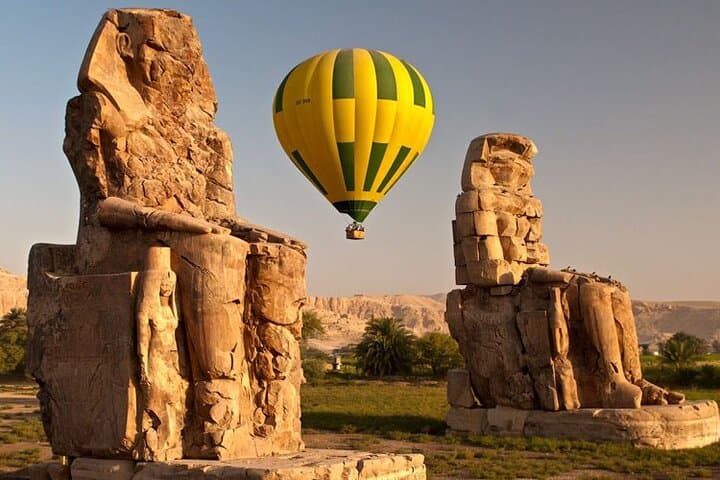
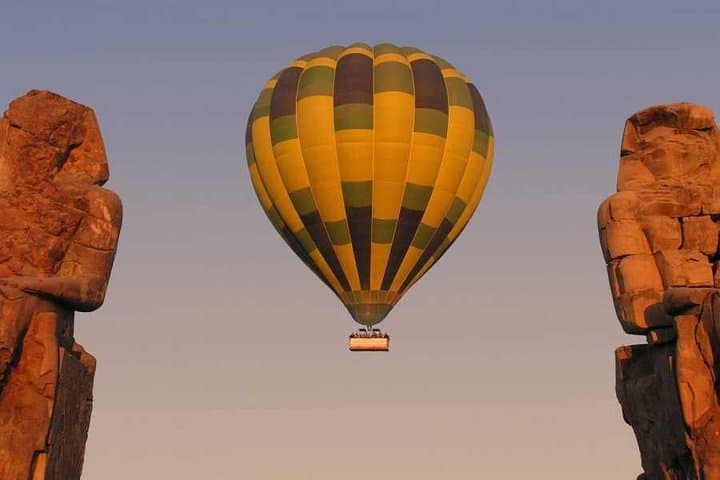

The balloon lifts as the desert exhales and the Nile dares you to look down. Dawn paints Karnak’s columns and Luxor Temple in pale gold while the basket drifts across the wide, sleeping plain of ancient Thebes. Below, palm groves and the river’s slow ribbon cut the landscape into farmland and ruins; above, the pilot trims altitude to give clear views of colossi, mortuary temples and the irregular geometry of tomb-covered hills.
The balloon lifts as the desert exhales and the Nile dares you to look down. Dawn paints Karnak’s columns and Luxor Temple in pale gold while the basket drifts across the wide, sleeping plain of ancient Thebes. Below, palm groves and the river’s slow ribbon cut the landscape into farmland and ruins; above, the pilot trims altitude to give clear views of colossi, mortuary temples and the irregular geometry of tomb-covered hills.
Luxor sits on the eastern bank of the Nile at the heart of Egypt’s pharaonic past. Balloon flights take advantage of cool, stable morning air; pilots will often fly low enough to read hieroglyphs from the sky and high enough to flatten the horizon into a panorama. Geology here is simple—Nile silt plains spilling into limestone hills that hold the Valley of the Kings—yet the contrast between riverine fertility and desert escarpment frames every landmark.
Practically, expect a very early pickup, a short boat transfer to the West Bank launch area, and a 45-minute airborne window within a roughly 90-minute tour. Wear layers—the basket is breezy at altitude—closed-toe shoes, and sunscreen. Bring a camera with charged batteries and a small, fast lens for low-light shots. If you’re prone to motion sickness, take precautions the night before. Operators issue flight certificates and usually assist with hotel transfer; confirm pickup details when you book.
This is accessible aerial sightseeing: little technical skill required, plenty of photographic reward, and an uncommon vantage on one of the world’s greatest archaeological landscapes.