THE ADVENTURE COLLECTIVE® · Independent discovery and booking for outdoor travel

Float over thousands of temples at sunrise on a premium mini-group hot-air balloon flight above Bagan. This three-hour experience pairs intimate skies with a close pilot interaction and sweeping views of the Irrawaddy and ancient monuments.
Float over thousands of temples at sunrise on a premium mini-group hot-air balloon flight above Bagan. This three-hour experience pairs intimate skies with a close pilot interaction and sweeping views of the Irrawaddy and ancient monuments.
You lift off in the cold hush of pre-dawn, the burners breathe fire into fabric and the plain of Bagan slips away beneath you like a map coming alive. Temples poke through morning mist, the Irrawaddy glints as the sun climbs, and the small group in the basket exchanges quiet, reverent smiles as the pilot steers toward a horizon of spires.
Verified experiences and guided adventures in the surrounding area.
You lift off in the cold hush of pre-dawn, the burners breathe fire into fabric and the plain of Bagan slips away beneath you like a map coming alive. Temples poke through morning mist, the Irrawaddy glints as the sun climbs, and the small group in the basket exchanges quiet, reverent smiles as the pilot steers toward a horizon of spires.
Bagan was the heart of the Pagan Kingdom between the 9th and 13th centuries; more than 2,000 temples and pagodas scatter across the dry plains, built from laterite and brick and weathered by monsoon and earthquake. Geologically the region is a flat alluvial plain carved by the Irrawaddy; from the air you read the patterns of river bends, agricultural plots, and centuries of human settlement.
A premium mini-group flight typically runs as a three-hour experience including transfer, inflation, a roughly 45–60 minute airborne window, and a ceremonial landing celebration. Balloons cruise at low-to-moderate altitudes—often 200–400 meters (650–1,300 ft)—where light and shadow reveal temple roofs and river channels. Pilots provide live narration, pointing out architectural highlights and local villages threaded with dirt tracks.
Practical edge: dawn is the only reliable wind window, so expect early pickup and chilly temperatures; dress in layers, wear closed-toe shoes for the ground scramble, and secure cameras. Operators commonly include sparkling wine and a flight certificate; however, check weight, age, and health restrictions in advance. Respect archaeological sites—avoid landing or touching monuments—and plan ground time in Nyaung-U or Old Bagan to follow up the aerial perspective with closer exploration.
easy.
3 hours.
Minimal fitness required; participants should be able to stand for the flight and board a basket step; mobility issues should be discussed with the operator.
The airborne portion is typically 45–60 minutes; the operator's full experience including transfers, safety briefings, inflation and celebration usually totals about three hours.
Licensed operators follow safety checks and experienced pilots run flights, but safety also depends on weather; reputable companies won’t fly in unsafe wind or rain.
Dress in layers for an early start, wear closed-toe shoes, bring a camera, water bottle, and any medications; leave bulky bags on the transfer vehicle.
The dry season (roughly November–April) offers more stable dawn conditions and clearer visibility, while the monsoon months can reduce flight availability.
Bagan served as the capital of the Pagan Kingdom (9th–13th centuries); its landscape preserves one of Southeast Asia’s most concentrated collections of early Buddhist architecture.
Tourism and seismic activity have stressed many monuments; visitors are encouraged to support authorized guides, follow site rules, and avoid climbing or touching fragile structures.
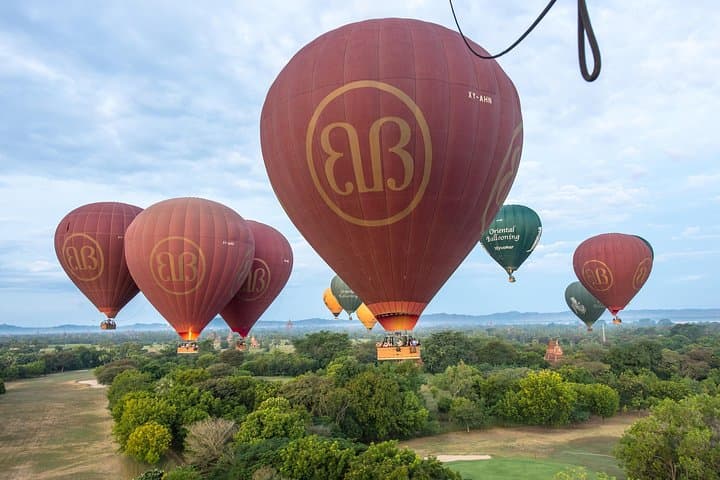
You lift off in the cold hush of pre-dawn, the burners breathe fire into fabric and the plain of Bagan slips away beneath you like a map coming alive. Temples poke through morning mist, the Irrawaddy glints as the sun climbs, and the small group in the basket exchanges quiet, reverent smiles as the pilot steers toward a horizon of spires.
You lift off in the cold hush of pre-dawn, the burners breathe fire into fabric and the plain of Bagan slips away beneath you like a map coming alive. Temples poke through morning mist, the Irrawaddy glints as the sun climbs, and the small group in the basket exchanges quiet, reverent smiles as the pilot steers toward a horizon of spires.
Bagan was the heart of the Pagan Kingdom between the 9th and 13th centuries; more than 2,000 temples and pagodas scatter across the dry plains, built from laterite and brick and weathered by monsoon and earthquake. Geologically the region is a flat alluvial plain carved by the Irrawaddy; from the air you read the patterns of river bends, agricultural plots, and centuries of human settlement.
A premium mini-group flight typically runs as a three-hour experience including transfer, inflation, a roughly 45–60 minute airborne window, and a ceremonial landing celebration. Balloons cruise at low-to-moderate altitudes—often 200–400 meters (650–1,300 ft)—where light and shadow reveal temple roofs and river channels. Pilots provide live narration, pointing out architectural highlights and local villages threaded with dirt tracks.
Practical edge: dawn is the only reliable wind window, so expect early pickup and chilly temperatures; dress in layers, wear closed-toe shoes for the ground scramble, and secure cameras. Operators commonly include sparkling wine and a flight certificate; however, check weight, age, and health restrictions in advance. Respect archaeological sites—avoid landing or touching monuments—and plan ground time in Nyaung-U or Old Bagan to follow up the aerial perspective with closer exploration.