THE ADVENTURE COLLECTIVE® · Independent discovery and booking for outdoor travel

Lift off at sunrise over the Front Range to watch alpenglow sweep across Longs Peak and the Spanish Peaks. This hour-long balloon flight combines panoramic mountain views with a relaxed, early-morning field landing and light breakfast.
Lift off at sunrise over the Front Range to watch alpenglow sweep across Longs Peak and the Spanish Peaks. This hour-long balloon flight combines panoramic mountain views with a relaxed, early-morning field landing and light breakfast.
The burner lights, a low hiss that cuts through the pre-dawn chill, and the balloon begins to lift. Below, the grid of Colorado Springs gives way to sage flats and the serrated outline of the Front Range. As the sun edges over Longs Peak and the Spanish Peaks, alpenglow paints the granite ridges and patches of winter snow in copper tones while the pilot reads the wind and the valley opens for a silent, slow ascent.
Verified experiences and guided adventures in the surrounding area.
The burner lights, a low hiss that cuts through the pre-dawn chill, and the balloon begins to lift. Below, the grid of Colorado Springs gives way to sage flats and the serrated outline of the Front Range. As the sun edges over Longs Peak and the Spanish Peaks, alpenglow paints the granite ridges and patches of winter snow in copper tones while the pilot reads the wind and the valley opens for a silent, slow ascent.
This is classic Front Range country: uplifted sedimentary benches and Precambrian cores pushed skyward by ancient tectonics. Ballooning here follows a long regional tradition of sunrise flights that pair quiet observation with the practicalities of wind and weather. Locals bring a small toast after landing — a nod to early aeronauts — and field crews work quickly to pack up and move on, mindful of private farmland and ranch access.
Expect an hour aloft within a roughly 3–3.5 hour outing including transfers and prep. Temperatures at sunrise can be 10–20°F colder than the city; wind and weather dictate launch and cancellations. There are no bathrooms in the launch field and flights require passengers to be steady on their feet for boarding and a light landing brace.
Practical advice: dress in layers, wear sturdy closed-toe shoes, bring a camera and a small water bottle, and monitor your phone for a pre-dawn weather call from the crew. If the pilot cancels for safety, operators typically offer a refund or reschedule. The experience is as much about reading the sky as it is about the view — the wind is your guide and the landscape will reward an early rise.
moderate.
3–3.5 hours (including transfer and prep).
Should be steady on your feet and able to step in/out of a low basket with a light landing brace; moderate fitness recommended.
Operators typically set a maximum passenger weight (often ~225 lbs) and ask for weight information at booking—contact the operator if you have questions or need accommodations.
If conditions are unsafe, the pilot will cancel; most operators offer a full refund or allow rescheduling to another day.
There are no bathrooms in the field; plan accordingly and use facilities at the meeting hotel before transfer.
Expect a pre-dawn meeting at the hotel lobby; staff will confirm exact pickup times the evening before or by phone early on the day of the flight.
Ballooning in the Front Range stretches back decades as pilots used morning thermals and predictable valley winds to offer scenic flights, and the region’s geology—uplifted Precambrian cores and layered sedimentary benches—creates dramatic perspectives from above.
Operators coordinate landings with local landowners and emphasize packing out equipment and trash; guests should avoid trampling crops and respect private property during landings.
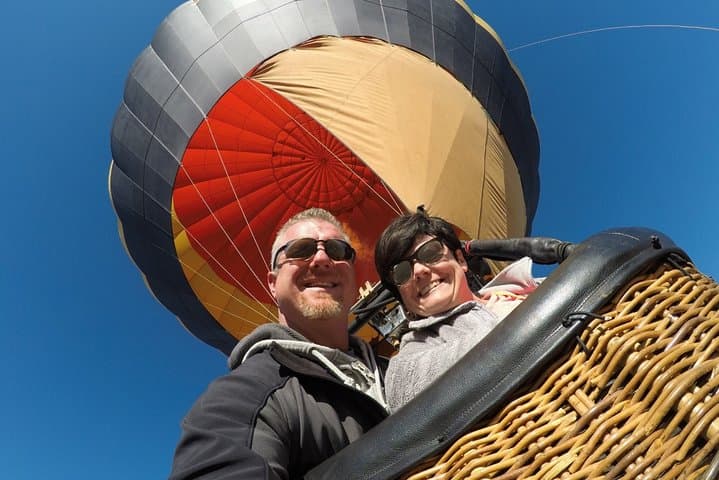
The burner lights, a low hiss that cuts through the pre-dawn chill, and the balloon begins to lift. Below, the grid of Colorado Springs gives way to sage flats and the serrated outline of the Front Range. As the sun edges over Longs Peak and the Spanish Peaks, alpenglow paints the granite ridges and patches of winter snow in copper tones while the pilot reads the wind and the valley opens for a silent, slow ascent.
The burner lights, a low hiss that cuts through the pre-dawn chill, and the balloon begins to lift. Below, the grid of Colorado Springs gives way to sage flats and the serrated outline of the Front Range. As the sun edges over Longs Peak and the Spanish Peaks, alpenglow paints the granite ridges and patches of winter snow in copper tones while the pilot reads the wind and the valley opens for a silent, slow ascent.
This is classic Front Range country: uplifted sedimentary benches and Precambrian cores pushed skyward by ancient tectonics. Ballooning here follows a long regional tradition of sunrise flights that pair quiet observation with the practicalities of wind and weather. Locals bring a small toast after landing — a nod to early aeronauts — and field crews work quickly to pack up and move on, mindful of private farmland and ranch access.
Expect an hour aloft within a roughly 3–3.5 hour outing including transfers and prep. Temperatures at sunrise can be 10–20°F colder than the city; wind and weather dictate launch and cancellations. There are no bathrooms in the launch field and flights require passengers to be steady on their feet for boarding and a light landing brace.
Practical advice: dress in layers, wear sturdy closed-toe shoes, bring a camera and a small water bottle, and monitor your phone for a pre-dawn weather call from the crew. If the pilot cancels for safety, operators typically offer a refund or reschedule. The experience is as much about reading the sky as it is about the view — the wind is your guide and the landscape will reward an early rise.