THE ADVENTURE COLLECTIVE® · Independent discovery and booking for outdoor travel

Float over Luxor at sunrise, then walk through the West Bank’s most iconic tombs and temples with a private Egyptologist. This one-day combo delivers aerial perspective and in-depth history—ideal for first-time visitors who want maximum context in minimal time.
Float over Luxor at sunrise, then walk through the West Bank’s most iconic tombs and temples with a private Egyptologist. This one-day combo delivers aerial perspective and in-depth history—ideal for first-time visitors who want maximum context in minimal time.
Before dawn the desert exhales a cool breath and the balloon envelopes inflate, a slow, deliberate exhale that promises a different view of antiquity. Rising into pink light, the Nile slips below like a dark ribbon and the West Bank’s temples and burial ridges unfold—pylons, cliffs, and fields stitched with palm groves—while the balloon drifts, offering a quiet, aerial reconnaissance of pharaonic geometry.
Verified experiences and guided adventures in the surrounding area.
Operated by Hurghada Tours Plus · Luxor, Luxor Governorate
Before dawn the desert exhales a cool breath and the balloon envelopes inflate, a slow, deliberate exhale that promises a different view of antiquity. Rising into pink light, the Nile slips below like a dark ribbon and the West Bank’s temples and burial ridges unfold—pylons, cliffs, and fields stitched with palm groves—while the balloon drifts, offering a quiet, aerial reconnaissance of pharaonic geometry.
This experience pairs two ways to read Luxor: from the sky and on the ground. Geology here is obvious—limestone cliffs that sheltered mortuary temples, gravely wadis that preserved painted tombs, and the Nile’s alluvial plain that fed millennia of civilization. Culturally, the West Bank has long been the city of the dead, a concentrated landscape of royal burial, ritual architecture, and living villages that still serve as custodians of ancient craft.
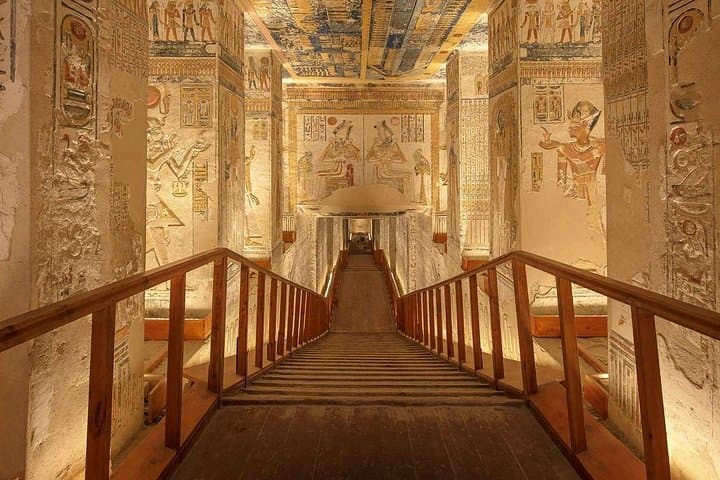
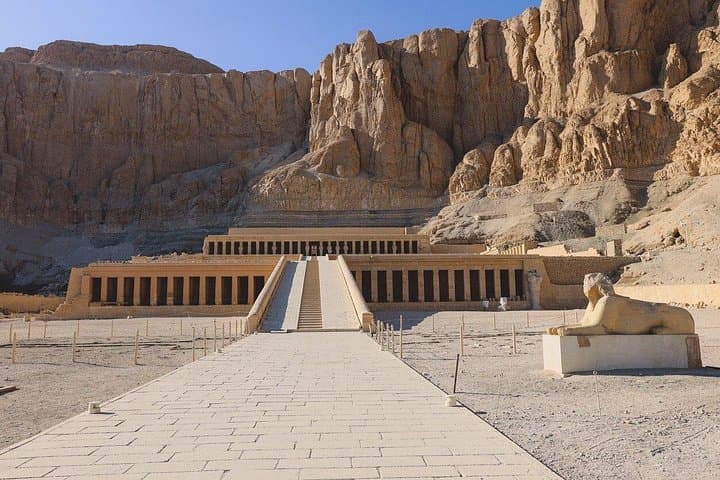
After a roughly 45-minute flight you return to firm earth for a private tour: Valley of the Kings, Hatshepsut’s cliff-hugging mortuary temple, the Valley of the Queens, Medinat Habu, and a photo stop at the Colossi of Memnon. A private Egyptologist shapes the narrative and a comfortable vehicle moves you between sites.
Practicalities: plan for an early start and cooler air at altitude, carry cash for optional tomb tickets and tips, and reserve time for security lines and museum visits. Wear closed-toe shoes for uneven floors and a hat for glare between sites. With minimal walking required at launch and more on the ruins, this is an immersive half- to full-day that balances spectacle with contextual, on-the-ground archaeology.
easy.
6–7 hours.
Suitable for most fitness levels; involves short walks, some stair climbing and standing during tomb visits
Yes; commercial balloon companies in Luxor operate regulated, short-duration flights with trained pilots—however, follow the pilot’s safety briefing and avoid the experience if you have severe mobility or balance issues.
The advertised tour includes private guiding and transfers; standard site admission fees and optional special-tomb tickets (like Nefertari) are typically paid on-site unless explicitly stated otherwise.
Policies vary by operator; infants are often required to sit on laps and some companies have minimum age limits—confirm at booking and with your pickup coordinator.
The full program runs about 6–7 hours from hotel pickup: a ~45-minute balloon flight plus guided visits on the West Bank and return transfer.
The West Bank served as the necropolis for ancient Thebes; pharaohs deliberately placed mortuary temples and tombs against the limestone cliffs to link the dead with the horizon of the living river.
Visitor pressure affects fragile wall paintings and tomb microclimates—stick to marked paths, avoid touching surfaces, and follow guide instructions to reduce impact.
Hurghada Tours Plus operates guided outdoor trips and adventures with an emphasis on safety, stewardship, and memorable experiences.
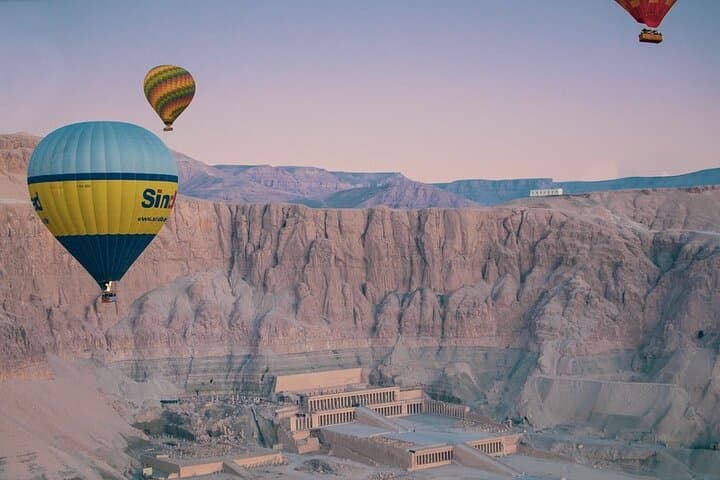

Before dawn the desert exhales a cool breath and the balloon envelopes inflate, a slow, deliberate exhale that promises a different view of antiquity. Rising into pink light, the Nile slips below like a dark ribbon and the West Bank’s temples and burial ridges unfold—pylons, cliffs, and fields stitched with palm groves—while the balloon drifts, offering a quiet, aerial reconnaissance of pharaonic geometry.
Before dawn the desert exhales a cool breath and the balloon envelopes inflate, a slow, deliberate exhale that promises a different view of antiquity. Rising into pink light, the Nile slips below like a dark ribbon and the West Bank’s temples and burial ridges unfold—pylons, cliffs, and fields stitched with palm groves—while the balloon drifts, offering a quiet, aerial reconnaissance of pharaonic geometry.
This experience pairs two ways to read Luxor: from the sky and on the ground. Geology here is obvious—limestone cliffs that sheltered mortuary temples, gravely wadis that preserved painted tombs, and the Nile’s alluvial plain that fed millennia of civilization. Culturally, the West Bank has long been the city of the dead, a concentrated landscape of royal burial, ritual architecture, and living villages that still serve as custodians of ancient craft.
After a roughly 45-minute flight you return to firm earth for a private tour: Valley of the Kings, Hatshepsut’s cliff-hugging mortuary temple, the Valley of the Queens, Medinat Habu, and a photo stop at the Colossi of Memnon. A private Egyptologist shapes the narrative and a comfortable vehicle moves you between sites.
Practicalities: plan for an early start and cooler air at altitude, carry cash for optional tomb tickets and tips, and reserve time for security lines and museum visits. Wear closed-toe shoes for uneven floors and a hat for glare between sites. With minimal walking required at launch and more on the ruins, this is an immersive half- to full-day that balances spectacle with contextual, on-the-ground archaeology.