THE ADVENTURE COLLECTIVE® · Independent discovery and booking for outdoor travel

Float over Luxor at sunrise and spend two days exploring Karnak, Luxor Temple, the Valley of the Kings, Hatshepsut’s temple and the Colossi of Memnon. Early starts, modest walking and unforgettable vistas make this a high-value cultural-adventure combo.
Float over Luxor at sunrise and spend two days exploring Karnak, Luxor Temple, the Valley of the Kings, Hatshepsut’s temple and the Colossi of Memnon. Early starts, modest walking and unforgettable vistas make this a high-value cultural-adventure combo.
You lift off before dawn, the basket humming as the desert light fattens into gold. Below, the Nile threads through rows of palms and the flat-roofed town of Luxor; temples and tombs on the west bank flatten into patterns only visible from the air. The balloon drifts, the wind deciding your slow arc, and the horizon opens to the colossi, pylons and the scattered desert that once guarded a capital.
Verified experiences and guided adventures in the surrounding area.
Operated by DrMo Tours Egypt · Luxor, Luxor Governorate
You lift off before dawn, the basket humming as the desert light fattens into gold. Below, the Nile threads through rows of palms and the flat-roofed town of Luxor; temples and tombs on the west bank flatten into patterns only visible from the air. The balloon drifts, the wind deciding your slow arc, and the horizon opens to the colossi, pylons and the scattered desert that once guarded a capital.
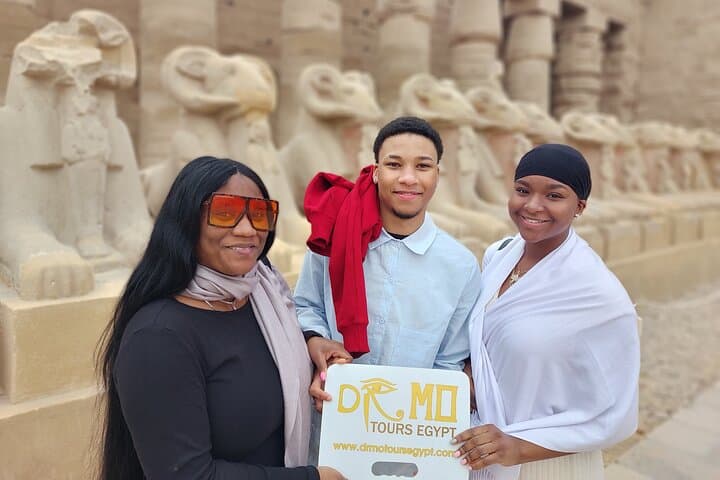
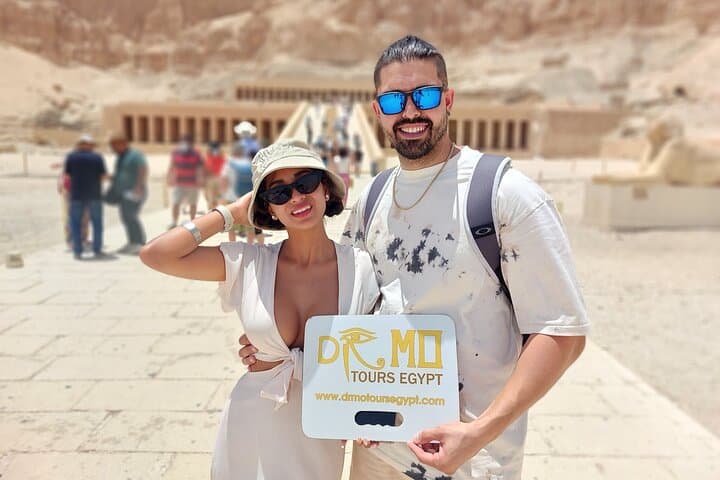
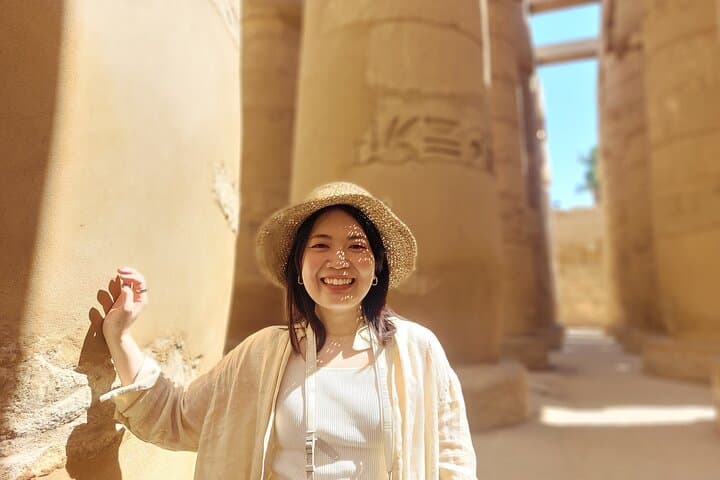
This two-day itinerary pairs the city’s great monuments—Karnak and Luxor Temples on the east bank—with the funerary landscape on the west: the Valley of the Kings, Hatshepsut’s terraced mortuary temple, and the Colossi of Memnon. Luxor sits on the site of ancient Thebes, the New Kingdom’s political and religious heart; its sandstone and limestone façades preserve reliefs of pharaonic rituals and afterlife beliefs. Geologically the valley is a cut in the limestone plateau where tombs were carved into bedrock; culturally it remains a working living city adjacent to an open-air archaeological museum.
Practical guidance: expect early pickups (pre-dawn for the balloon), light breakfasts provided, and motorboat crossings of the Nile for west-bank visits. Balloon flights commonly run 35–60 minutes—confirm weight limits and cancellation policy ahead of time. Temperatures swing sharply: sun protection and layers matter. Wear closed-toe shoes for uneven temple floors and carry a daypack with water, ID for ticketed tombs, and small local currency for optional entry upgrades. Respect site rules: don’t touch painted walls, and keep flash photography to designated areas. This is an accessible yet unforgettable way to combine aerial perspective with on-the-ground archaeology.
easy.
2 days.
Suitable for travelers in average fitness; involves walking on uneven surfaces and short climbs inside sites.
Balloon flights are typically 35–60 minutes depending on conditions; operators may adjust duration for safety and wind patterns.
Basic visits to some tombs are included, but special-access tombs or extra chambers may require additional tickets purchased on site.
Expect a pre-dawn pickup (often 4:00–5:00 AM depending on season) so plan for an early wake-up and quick transfer to the launch area.
The tour is listed as accessible and suitable for most fitness levels, but balloon baskets and some tombs have steps; check wheelchair needs with the operator in advance.
Luxor occupies ancient Thebes, the New Kingdom capital where pharaohs built monumental temples and carved royal tombs into the limestone plateau.
High visitor numbers stress fragile pigments and reliefs—follow site rules, avoid touching surfaces, and use approved walkways to reduce erosion.
DrMo Tours Egypt operates guided outdoor trips and adventures with an emphasis on safety, stewardship, and memorable experiences.
You lift off before dawn, the basket humming as the desert light fattens into gold. Below, the Nile threads through rows of palms and the flat-roofed town of Luxor; temples and tombs on the west bank flatten into patterns only visible from the air. The balloon drifts, the wind deciding your slow arc, and the horizon opens to the colossi, pylons and the scattered desert that once guarded a capital.
You lift off before dawn, the basket humming as the desert light fattens into gold. Below, the Nile threads through rows of palms and the flat-roofed town of Luxor; temples and tombs on the west bank flatten into patterns only visible from the air. The balloon drifts, the wind deciding your slow arc, and the horizon opens to the colossi, pylons and the scattered desert that once guarded a capital.
This two-day itinerary pairs the city’s great monuments—Karnak and Luxor Temples on the east bank—with the funerary landscape on the west: the Valley of the Kings, Hatshepsut’s terraced mortuary temple, and the Colossi of Memnon. Luxor sits on the site of ancient Thebes, the New Kingdom’s political and religious heart; its sandstone and limestone façades preserve reliefs of pharaonic rituals and afterlife beliefs. Geologically the valley is a cut in the limestone plateau where tombs were carved into bedrock; culturally it remains a working living city adjacent to an open-air archaeological museum.
Practical guidance: expect early pickups (pre-dawn for the balloon), light breakfasts provided, and motorboat crossings of the Nile for west-bank visits. Balloon flights commonly run 35–60 minutes—confirm weight limits and cancellation policy ahead of time. Temperatures swing sharply: sun protection and layers matter. Wear closed-toe shoes for uneven temple floors and carry a daypack with water, ID for ticketed tombs, and small local currency for optional entry upgrades. Respect site rules: don’t touch painted walls, and keep flash photography to designated areas. This is an accessible yet unforgettable way to combine aerial perspective with on-the-ground archaeology.