THE ADVENTURE COLLECTIVE® · Independent discovery and booking for outdoor travel

Ride through Cappadocia’s otherworldly valleys at dawn, following quiet trails past fairy chimneys and rock-cut monasteries. This two-hour guided horseback experience balances accessible riding with geological and cultural discovery.
Ride through Cappadocia’s otherworldly valleys at dawn, following quiet trails past fairy chimneys and rock-cut monasteries. This two-hour guided horseback experience balances accessible riding with geological and cultural discovery.
Riders move quietly into a pale dawn as balloons drift overhead and the valleys unwrap into long shadows. Saddle creaks and horse breath mark the rhythm while tuff cones and sculpted spires pass like pages of a living geology book.
Verified experiences and guided adventures in the surrounding area.
Operated by Excursionbazaar.com · Göreme, Nevşehir
Riders move quietly into a pale dawn as balloons drift overhead and the valleys unwrap into long shadows. Saddle creaks and horse breath mark the rhythm while tuff cones and sculpted spires pass like pages of a living geology book.
Cappadocia’s landscape is volcanic tuff shaped by millennia of wind and water; humans carved dwellings and churches into that soft stone from Byzantine times onward. The region around Göreme preserves rock-cut monasteries and hidden cave chapels—Hallacdere Monastery, often seen on riding routes, offers a tangible link to early Christian communities who used these trails as both passage and refuge.
Culturally, local equestrianism is longstanding—the name Cappadocia itself evokes horses—and modern tours aim to connect that tradition to responsible outdoor access. On the trail expect a mix of orchard lanes, dry riverbeds, and narrow singletrack threading between fairy chimneys; the ground is mostly compacted dirt with occasional loose scree.
Practically, the two-hour tour suits riders with basic horseback experience and a moderate fitness level. Guides provide helmets and usually handle horse assignment; expect a short briefing, steady walk-to-trot transitions, and a photo stop at a rock-cut chapel. Morning rides avoid heat and crowds; sunset runs trade cool air for dramatic color on the stone.
Plan for layered clothing, closed-toe shoes, sun protection, and a light daypack with water. Note age and weight limits, and that operators cancel in severe weather. For an approachable way to read Cappadocia’s terrain, a guided horseback tour remains one of the most immersive and practical options.
moderate.
2 hours.
Moderate — comfortable walking and stable in the saddle for short trot sections; good balance helps.
No advanced experience is required; basic comfort on a horse and the ability to follow simple directions is sufficient for the standard two-hour tour.
Minimum age is generally 7 years; maximum rider weight is about 210 pounds (95 kg), but confirm with the operator when booking.
Yes—most tours include hotel pick-up and drop-off within the Cappadocia area; confirm your pickup point during booking.
Operators typically cancel in hazardous weather for safety and offer a full refund if canceled at least 24 hours before departure; check the cancellation policy for specifics.
Cappadocia’s soft volcanic tuff was sculpted by erosion and extensively carved by human communities from Hittite through Byzantine eras, yielding cave churches and underground settlements.
The soft tuff is erosion-prone; stay on trails, avoid touching fragile rock faces, and follow guide instructions to limit equine impact on sensitive areas.
Excursionbazaar.com operates guided outdoor trips and adventures with an emphasis on safety, stewardship, and memorable experiences.
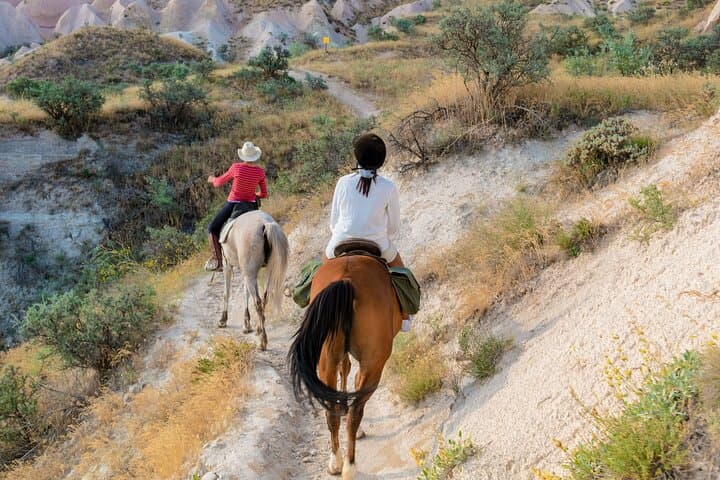
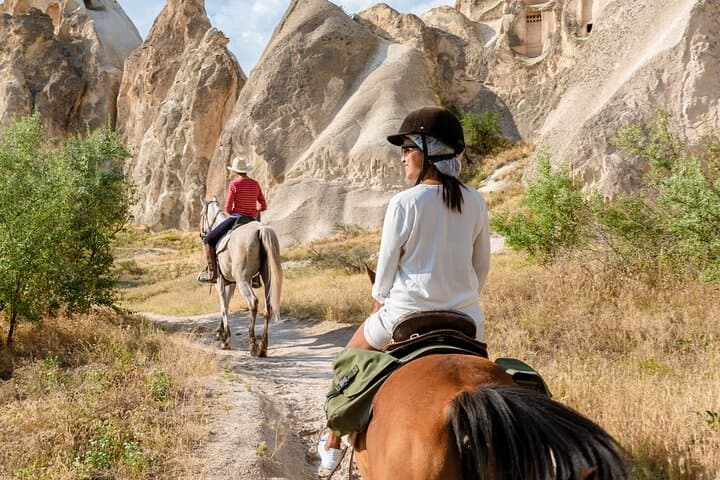
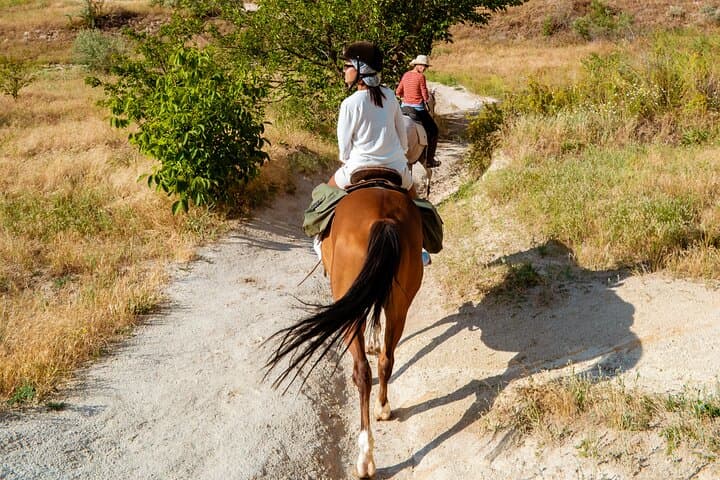
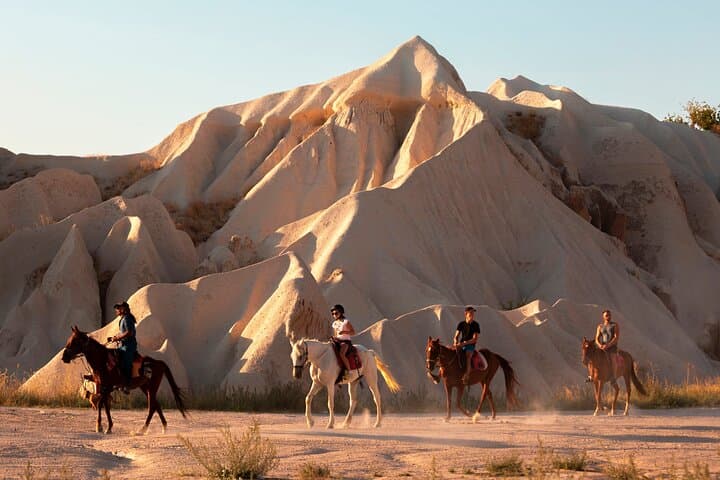
Riders move quietly into a pale dawn as balloons drift overhead and the valleys unwrap into long shadows. Saddle creaks and horse breath mark the rhythm while tuff cones and sculpted spires pass like pages of a living geology book.
Riders move quietly into a pale dawn as balloons drift overhead and the valleys unwrap into long shadows. Saddle creaks and horse breath mark the rhythm while tuff cones and sculpted spires pass like pages of a living geology book.
Cappadocia’s landscape is volcanic tuff shaped by millennia of wind and water; humans carved dwellings and churches into that soft stone from Byzantine times onward. The region around Göreme preserves rock-cut monasteries and hidden cave chapels—Hallacdere Monastery, often seen on riding routes, offers a tangible link to early Christian communities who used these trails as both passage and refuge.
Culturally, local equestrianism is longstanding—the name Cappadocia itself evokes horses—and modern tours aim to connect that tradition to responsible outdoor access. On the trail expect a mix of orchard lanes, dry riverbeds, and narrow singletrack threading between fairy chimneys; the ground is mostly compacted dirt with occasional loose scree.
Practically, the two-hour tour suits riders with basic horseback experience and a moderate fitness level. Guides provide helmets and usually handle horse assignment; expect a short briefing, steady walk-to-trot transitions, and a photo stop at a rock-cut chapel. Morning rides avoid heat and crowds; sunset runs trade cool air for dramatic color on the stone.
Plan for layered clothing, closed-toe shoes, sun protection, and a light daypack with water. Note age and weight limits, and that operators cancel in severe weather. For an approachable way to read Cappadocia’s terrain, a guided horseback tour remains one of the most immersive and practical options.