THE ADVENTURE COLLECTIVE® · Independent discovery and booking for outdoor travel

Experience the sunrise at Pedra do Telégrafo, a short but dramatic coastal hike west of Rio. This guide covers what to expect on the trail, local context, and practical tips to plan your early-morning visit.
Experience the sunrise at Pedra do Telégrafo, a short but dramatic coastal hike west of Rio. This guide covers what to expect on the trail, local context, and practical tips to plan your early-morning visit.
You reach the trailhead before dawn and the world is still soft around you: palms and low Atlantic Forest scrub outline a dark horizon while distant surf keeps time. The Telegraph Stone (Pedra do Telégrafo) perches above the western shore of Rio, a raw slab of rock where early light and long views meet — and where the famously optical-illusion photos are taken.
Verified experiences and guided adventures in the surrounding area.
Operated by NMountain · Rio de Janeiro, Rio de Janeiro
You reach the trailhead before dawn and the world is still soft around you: palms and low Atlantic Forest scrub outline a dark horizon while distant surf keeps time. The Telegraph Stone (Pedra do Telégrafo) perches above the western shore of Rio, a raw slab of rock where early light and long views meet — and where the famously optical-illusion photos are taken.
The route follows historic coastal ridgelines carved from Precambrian gneiss and lateritic soils, crossing patches of shaded forest and exposed rocky outcrops. The area near Grumari and Barra de Guaratiba was long a buffer between city and coast; local fishing communities and ranching traces remain in the landscape. Geologically the stone is a weathered granite outcrop that resists the Atlantic elements, creating the dramatic ledges and cliffs you’ll navigate.
Expect a compact, practical hike: roughly 1–3 km round trip depending on the approach, with about 150–250 m of cumulative elevation gain and some short, steep sections. Terrain alternates packed dirt, loose stone, and bedrock; footwear with grip and a steady step matter more than speed. Photographers and social-media seekers will want to time their position for the sunrise glow and be patient during busy windows.
Practical notes: guides are commonly required or strongly recommended for sunrise walks; total door-to-door time from Copacabana is roughly 1¼–1½ hours by car. Bring water, a headlamp for pre-dawn approaches, sun protection for the exposed summit, and a compact rain layer — weather can change quickly. Respect ropes and safety barriers at the viewpoint and leave no trace: the site’s popularity makes small choices matter.
moderate.
3–4 hours.
You should be comfortable on uneven terrain and short steep sections; a moderate level of cardio and balance is useful.
Most groups complete the ascent and return in about 60 minutes of walking; include transport and staging and plan for 3–4 hours total.
Local operators often require a registered guide for sunrise visits to manage access and safety; check your booking details before arriving.
Yes, but use only designated spots, follow guide instructions, and respect safety ropes; conditions and access can change with weather and local rules.
Sunrise provides the best light and fewer crowds; arrive early to secure a viewpoint and allow time for the pre-dawn approach.
The coastal ridges west of Rio were historically used by small fishing and rural communities; the trail crosses lands that shifted from farmland to protected recreational zones over the 20th century.
High visitor numbers concentrate impact on fragile vegetation and soil; stick to established paths, avoid trampling plants, and pack out all waste to protect the coastal ecosystem.
NMountain operates guided outdoor trips and adventures with an emphasis on safety, stewardship, and memorable experiences.
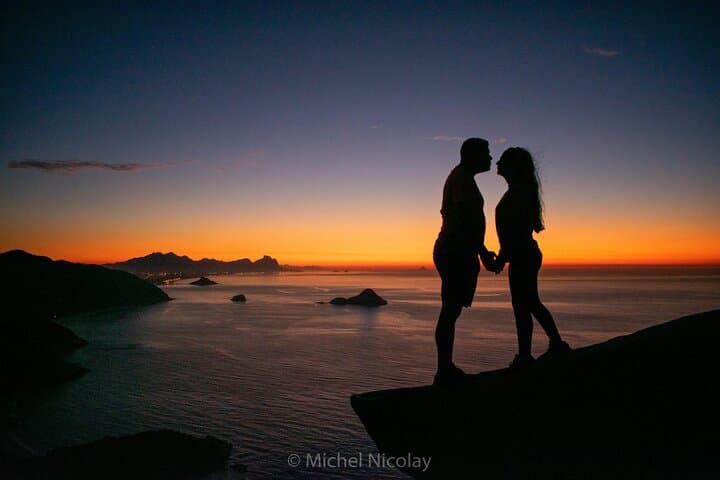
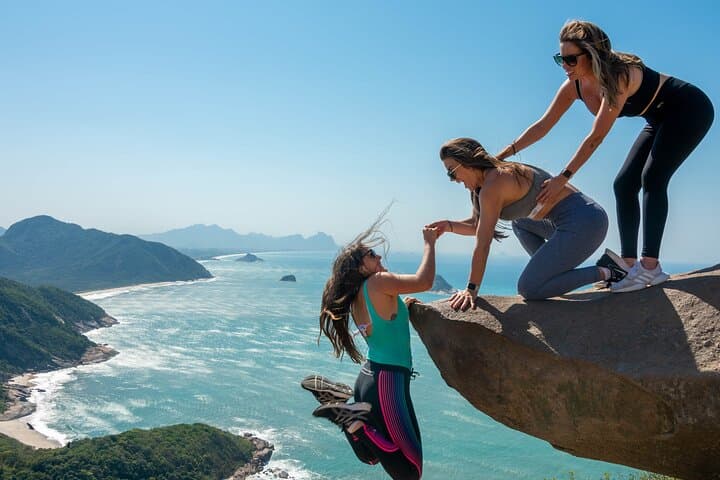
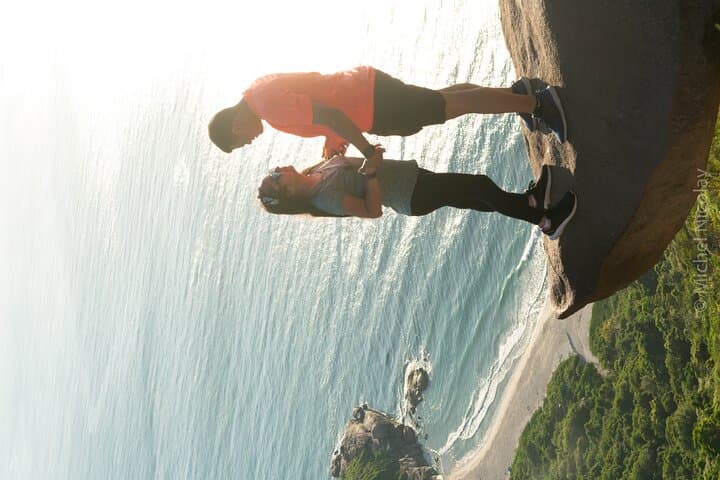

You reach the trailhead before dawn and the world is still soft around you: palms and low Atlantic Forest scrub outline a dark horizon while distant surf keeps time. The Telegraph Stone (Pedra do Telégrafo) perches above the western shore of Rio, a raw slab of rock where early light and long views meet — and where the famously optical-illusion photos are taken.
You reach the trailhead before dawn and the world is still soft around you: palms and low Atlantic Forest scrub outline a dark horizon while distant surf keeps time. The Telegraph Stone (Pedra do Telégrafo) perches above the western shore of Rio, a raw slab of rock where early light and long views meet — and where the famously optical-illusion photos are taken.
The route follows historic coastal ridgelines carved from Precambrian gneiss and lateritic soils, crossing patches of shaded forest and exposed rocky outcrops. The area near Grumari and Barra de Guaratiba was long a buffer between city and coast; local fishing communities and ranching traces remain in the landscape. Geologically the stone is a weathered granite outcrop that resists the Atlantic elements, creating the dramatic ledges and cliffs you’ll navigate.
Expect a compact, practical hike: roughly 1–3 km round trip depending on the approach, with about 150–250 m of cumulative elevation gain and some short, steep sections. Terrain alternates packed dirt, loose stone, and bedrock; footwear with grip and a steady step matter more than speed. Photographers and social-media seekers will want to time their position for the sunrise glow and be patient during busy windows.
Practical notes: guides are commonly required or strongly recommended for sunrise walks; total door-to-door time from Copacabana is roughly 1¼–1½ hours by car. Bring water, a headlamp for pre-dawn approaches, sun protection for the exposed summit, and a compact rain layer — weather can change quickly. Respect ropes and safety barriers at the viewpoint and leave no trace: the site’s popularity makes small choices matter.