THE ADVENTURE COLLECTIVE® · Independent discovery and booking for outdoor travel

Head out before dawn for a brisk hour-long climb to Le Morne, then watch the sun rise over Diamond Rock while you sip coffee at the summit. This private guided hike pairs a sporting ascent with a memorable breakfast and coastal panorama.
Head out before dawn for a brisk hour-long climb to Le Morne, then watch the sun rise over Diamond Rock while you sip coffee at the summit. This private guided hike pairs a sporting ascent with a memorable breakfast and coastal panorama.
The night starts cool and quiet: headlamps pick out the first steps as a small group follows a coach up Le Morne, the island’s slope cutting against a deepening sky. In an hour the trees thin, the wind sharpens, and the horizon loosens into color—Diamond Rock sits offshore like a dark thumb, the sea around it catching the first light. Breakfast arrives at the summit: fresh juice, coffee, fruit, and a moment to watch the sun redraw the coastline.
Verified experiences and guided adventures in the surrounding area.
Operated by Explore Martinique · Le Diamant, Martinique
The night starts cool and quiet: headlamps pick out the first steps as a small group follows a coach up Le Morne, the island’s slope cutting against a deepening sky. In an hour the trees thin, the wind sharpens, and the horizon loosens into color—Diamond Rock sits offshore like a dark thumb, the sea around it catching the first light. Breakfast arrives at the summit: fresh juice, coffee, fruit, and a moment to watch the sun redraw the coastline.
Geology and history shape the view. Martinique is volcanic; the coastline’s black rock and steep ridges are the work of eruptions and erosion. Diamond Rock (Rocher du Diamant) played a curious part in naval history—briefly commissioned as a British “ship” in the early 1800s—and now rises as a landmark and protected marine feature.
Local culture is close at hand: the south coast’s fishing villages and rum estates are visible from the ridge, and guides often weave island lore into the ascent. Expect a steep, well-worn trail with short scramble sections, tropical vegetation, and trade-wind exposure near the top.
Practical guidance: arrive rested, carry a small daypack with at least 1–1.5 liters of water, and wear sturdy shoes with grip for rocky steps. A headlamp is provided but bring a spare if you have one. The full experience runs about three hours door-to-door—night pickup, one-hour ascent, sunrise and breakfast, then a relaxed descent. Because the climb is brisk and the terrain uneven, travelers should have moderate fitness and avoid the outing if they have cardiovascular issues or are pregnant. Early starts reward you with light, quiet, and sweeping sea views that make the effort worth it.
moderate.
3 hours.
Should be in moderate physical condition—able to maintain a steady uphill pace for roughly 60 minutes on uneven terrain.
The ascent to the summit typically takes about 45–60 minutes at a steady pace; guides set the tempo for the group’s fitness level.
Not recommended for pregnant travelers; children may join if fit and experienced on steep trails—confirm age limits with the operator.
Breakfast commonly includes fresh juice, coffee or tea, and seasonal fruit served at the summit by your guide.
The operator may cancel in poor weather for safety; the booking terms indicate all sales are final, so check the provider’s cancellation policy before booking.
Diamond Rock was temporarily fortified in the early 1800s and even commissioned by the British navy; the south coast’s coastline reflects Martinique’s volcanic origins.
The area overlooks sensitive marine habitats and coral reefs; stay on trails, pack out trash, and avoid disturbing seabird nesting or fragile coastal vegetation.
Explore Martinique operates guided outdoor trips and adventures with an emphasis on safety, stewardship, and memorable experiences.
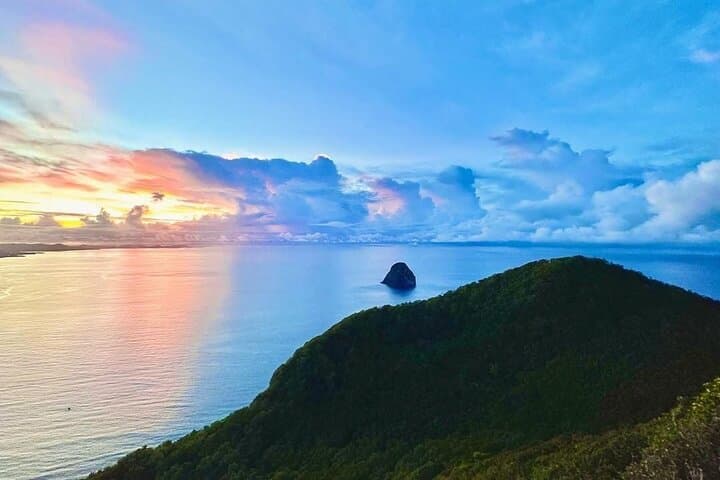
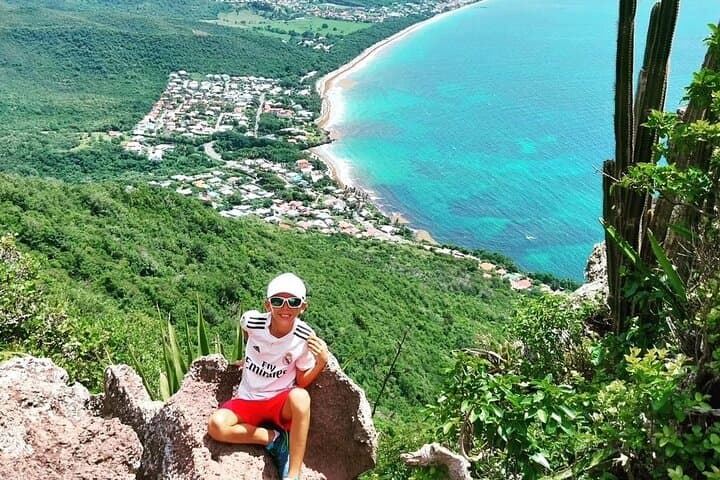
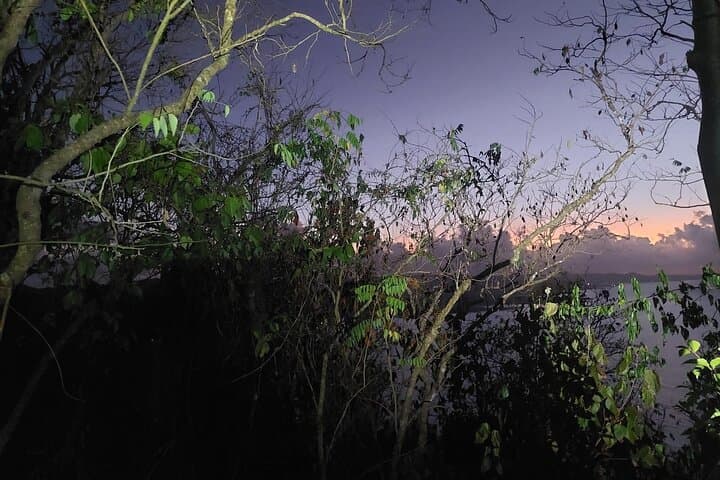
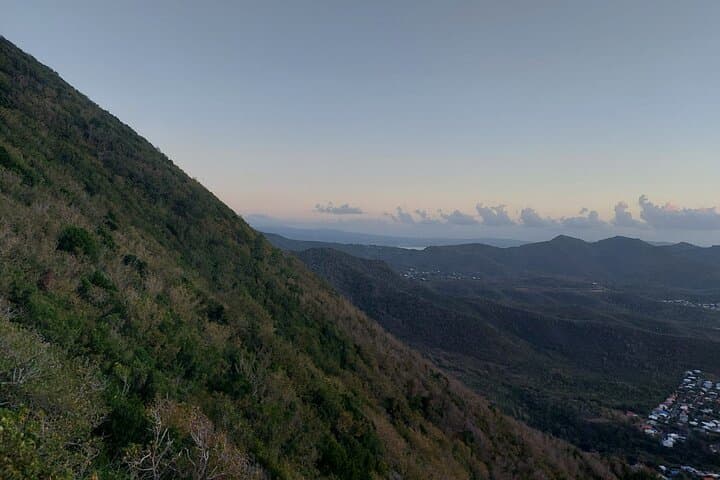
The night starts cool and quiet: headlamps pick out the first steps as a small group follows a coach up Le Morne, the island’s slope cutting against a deepening sky. In an hour the trees thin, the wind sharpens, and the horizon loosens into color—Diamond Rock sits offshore like a dark thumb, the sea around it catching the first light. Breakfast arrives at the summit: fresh juice, coffee, fruit, and a moment to watch the sun redraw the coastline.
The night starts cool and quiet: headlamps pick out the first steps as a small group follows a coach up Le Morne, the island’s slope cutting against a deepening sky. In an hour the trees thin, the wind sharpens, and the horizon loosens into color—Diamond Rock sits offshore like a dark thumb, the sea around it catching the first light. Breakfast arrives at the summit: fresh juice, coffee, fruit, and a moment to watch the sun redraw the coastline.
Geology and history shape the view. Martinique is volcanic; the coastline’s black rock and steep ridges are the work of eruptions and erosion. Diamond Rock (Rocher du Diamant) played a curious part in naval history—briefly commissioned as a British “ship” in the early 1800s—and now rises as a landmark and protected marine feature.
Local culture is close at hand: the south coast’s fishing villages and rum estates are visible from the ridge, and guides often weave island lore into the ascent. Expect a steep, well-worn trail with short scramble sections, tropical vegetation, and trade-wind exposure near the top.
Practical guidance: arrive rested, carry a small daypack with at least 1–1.5 liters of water, and wear sturdy shoes with grip for rocky steps. A headlamp is provided but bring a spare if you have one. The full experience runs about three hours door-to-door—night pickup, one-hour ascent, sunrise and breakfast, then a relaxed descent. Because the climb is brisk and the terrain uneven, travelers should have moderate fitness and avoid the outing if they have cardiovascular issues or are pregnant. Early starts reward you with light, quiet, and sweeping sea views that make the effort worth it.