THE ADVENTURE COLLECTIVE® · Independent discovery and booking for outdoor travel

Climb straight up to the top of Cape Town at first light. Platteklip Gorge’s steep, direct route puts you above the clouds for sunrise views of the peninsula—fast, honest, and unforgettable.
Climb straight up to the top of Cape Town at first light. Platteklip Gorge’s steep, direct route puts you above the clouds for sunrise views of the peninsula—fast, honest, and unforgettable.
Headlamps cut arcs of light across the rock as a small group threads the base of Table Mountain before dawn. Below, Cape Town is a scatter of pinprick lights; above, the plateau is a low, dark roof. The route up Platteklip Gorge quickly reminds you that this is not a stroll—the gorge lunges straight at the sky, gaining roughly 650 meters in under 3 km. By the time the horizon paler and the city begins to breathe, you’ve earned a vantage that can put you above cloud and crowd in the same morning.
Verified experiences and guided adventures in the surrounding area.
Operated by Table Mountain hiking tours · Cape Town, Western Cape
Headlamps cut arcs of light across the rock as a small group threads the base of Table Mountain before dawn. Below, Cape Town is a scatter of pinprick lights; above, the plateau is a low, dark roof. The route up Platteklip Gorge quickly reminds you that this is not a stroll—the gorge lunges straight at the sky, gaining roughly 650 meters in under 3 km. By the time the horizon paler and the city begins to breathe, you’ve earned a vantage that can put you above cloud and crowd in the same morning.
Platteklip—Afrikaans for “flat rock”—has been the most direct route up Table Mountain for generations. The gorge slices through the sandstone and granite of the Cape Fold Belt, a landscape forged by ancient seas and slow tectonic folding. The path zig-zags through shale scree and stepped slabs, passing contour tracks that once guided shepherds and later surveyors. In the final 150 meters the walls close in to about four meters; the route becomes a steep, rocky channel where every foothold matters.
This hike is as much cultural as it is geological. Table Mountain is central to Cape Town’s identity: a navigational landmark for sailors, a meeting ground for Khoi communities, and now a world-class natural attraction that locals still use for morning training runs. Guides on sunrise hikes brings local knowledge—when to pause for light, where to spot the eastern swell of cloud—and they carry a first-aid kit and an extra headlamp for late returns.
Practical side: expect 3–4 hours round trip if you’re reasonably fit; allow more time for photos and summit weather. The trail is steep with rocky, sometimes loose sections—sturdy trail shoes or boots and trekking poles for stability are recommended. Bring at least 1–1.5 liters of water, a windproof layer for the top, sun protection, and snacks. The pickup/meeting point sits at the lower cable car station; if the cableway is closed for maintenance (scheduled closures happen in winter), you must hike down as well, turning a steep ascent into a demanding loop.
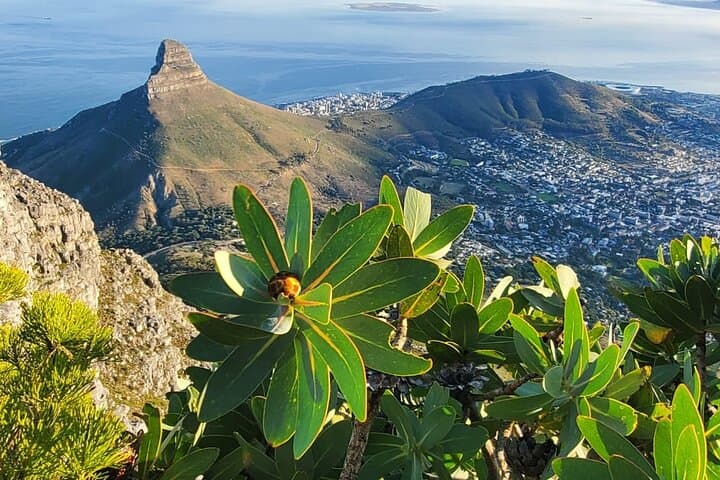
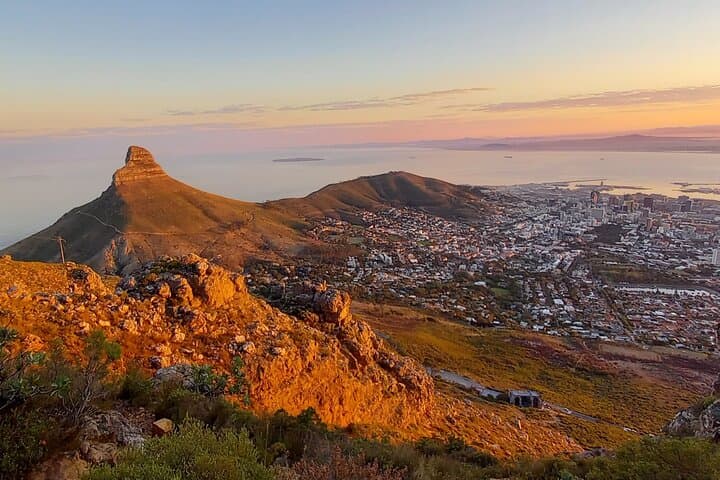
Timing is everything: sunrise provides cooler air, softer light, and far fewer hikers. If cloud rolls in, you may find yourself above a white sea—an eerie, slow-moving ocean that momentarily claims the city below. Respect the mountain: stick to the route, carry out waste, and heed your guide’s call if conditions turn. The reward is immediate—broad panoramas of the peninsula, Table Bay’s shimmer, and the rare, quiet moment when the city wakes beneath you.
challenging.
3–4 hours.
Good cardiovascular fitness and leg strength; comfortable on sustained steep climbs and uneven rock.
Meet at the lower cable car station 15–20 minutes before the listed start; guides fit everyone with safety briefings and headlamps before setting off.
It’s a steep, sustained climb—expect 650 m of elevation gain in under 3 km; pace yourself and take breaks, especially if you’re not used to steep gradients.
Usually yes, but the cableway closes for scheduled maintenance and in bad weather; when it's closed you will need to hike down, which adds time and fatigue.
The hike is weather-dependent; guides may reschedule or refund if conditions are unsafe—wind, heavy rain, or low cloud can make the gorge hazardous.
Bring sun protection, snacks, a warm layer for the summit, and a small first-aid kit; guided tours typically provide a first-aid kit and headlamp.
Not recommended for very young children, pregnant travelers, or those with serious heart or spinal conditions due to steep sections and exposure.
Table Mountain has long been a navigational point for sailors and a gathering site for the indigenous Khoi and early settlers; Platteklip evolved as the most direct human route to the top.
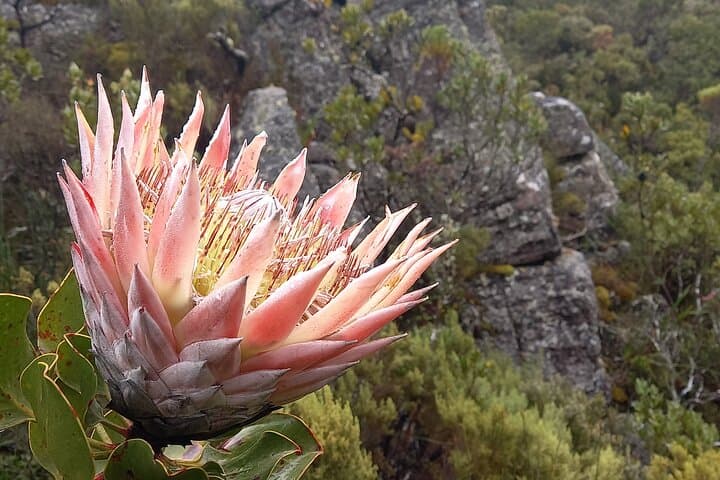
Stick to the trail to protect fragile fynbos and avoid trampling endemic plants; carry out all litter and follow guide instructions to minimize erosion.
Table Mountain hiking tours operates guided outdoor trips and adventures with an emphasis on safety, stewardship, and memorable experiences.
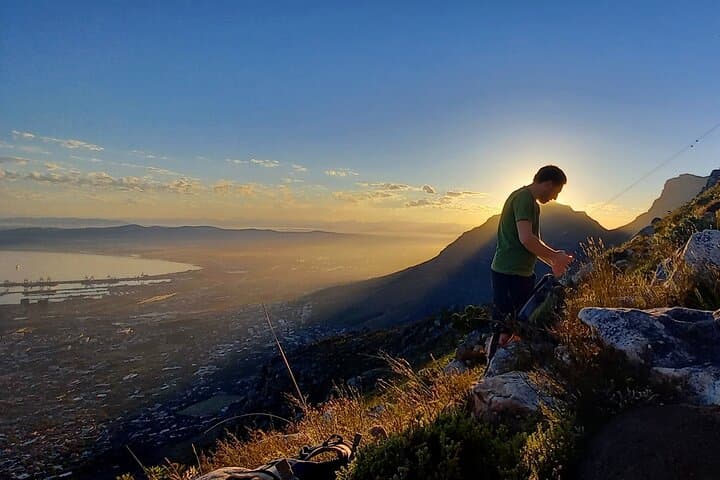
Headlamps cut arcs of light across the rock as a small group threads the base of Table Mountain before dawn. Below, Cape Town is a scatter of pinprick lights; above, the plateau is a low, dark roof. The route up Platteklip Gorge quickly reminds you that this is not a stroll—the gorge lunges straight at the sky, gaining roughly 650 meters in under 3 km. By the time the horizon paler and the city begins to breathe, you’ve earned a vantage that can put you above cloud and crowd in the same morning.
Headlamps cut arcs of light across the rock as a small group threads the base of Table Mountain before dawn. Below, Cape Town is a scatter of pinprick lights; above, the plateau is a low, dark roof. The route up Platteklip Gorge quickly reminds you that this is not a stroll—the gorge lunges straight at the sky, gaining roughly 650 meters in under 3 km. By the time the horizon paler and the city begins to breathe, you’ve earned a vantage that can put you above cloud and crowd in the same morning.
Platteklip—Afrikaans for “flat rock”—has been the most direct route up Table Mountain for generations. The gorge slices through the sandstone and granite of the Cape Fold Belt, a landscape forged by ancient seas and slow tectonic folding. The path zig-zags through shale scree and stepped slabs, passing contour tracks that once guided shepherds and later surveyors. In the final 150 meters the walls close in to about four meters; the route becomes a steep, rocky channel where every foothold matters.
This hike is as much cultural as it is geological. Table Mountain is central to Cape Town’s identity: a navigational landmark for sailors, a meeting ground for Khoi communities, and now a world-class natural attraction that locals still use for morning training runs. Guides on sunrise hikes brings local knowledge—when to pause for light, where to spot the eastern swell of cloud—and they carry a first-aid kit and an extra headlamp for late returns.
Practical side: expect 3–4 hours round trip if you’re reasonably fit; allow more time for photos and summit weather. The trail is steep with rocky, sometimes loose sections—sturdy trail shoes or boots and trekking poles for stability are recommended. Bring at least 1–1.5 liters of water, a windproof layer for the top, sun protection, and snacks. The pickup/meeting point sits at the lower cable car station; if the cableway is closed for maintenance (scheduled closures happen in winter), you must hike down as well, turning a steep ascent into a demanding loop.
Timing is everything: sunrise provides cooler air, softer light, and far fewer hikers. If cloud rolls in, you may find yourself above a white sea—an eerie, slow-moving ocean that momentarily claims the city below. Respect the mountain: stick to the route, carry out waste, and heed your guide’s call if conditions turn. The reward is immediate—broad panoramas of the peninsula, Table Bay’s shimmer, and the rare, quiet moment when the city wakes beneath you.