THE ADVENTURE COLLECTIVE® · Independent discovery and booking for outdoor travel

A private dawn drive from Aswan to Abu Simbel turns a long desert road into an encounter with colossal stone and living history. Expect early pickup, a knowledgeable Egyptologist guide, and a day spent at the relocated temples rescued from Lake Nasser.
A private dawn drive from Aswan to Abu Simbel turns a long desert road into an encounter with colossal stone and living history. Expect early pickup, a knowledgeable Egyptologist guide, and a day spent at the relocated temples rescued from Lake Nasser.
Before dawn the road unspools south from Aswan—flat desert, a thin ribbon of asphalt, and the Nile holding the light. By the time the sun levers above the horizon, the rock-cut façade of Ramses II looms out of burnt sandstone, four colossal figures staring down the valley as if the desert itself had decided to keep watch.
Verified experiences and guided adventures in the surrounding area.
Operated by Special trips · Abu Simbel, Aswan Governorate
Before dawn the road unspools south from Aswan—flat desert, a thin ribbon of asphalt, and the Nile holding the light. By the time the sun levers above the horizon, the rock-cut façade of Ramses II looms out of burnt sandstone, four colossal figures staring down the valley as if the desert itself had decided to keep watch.
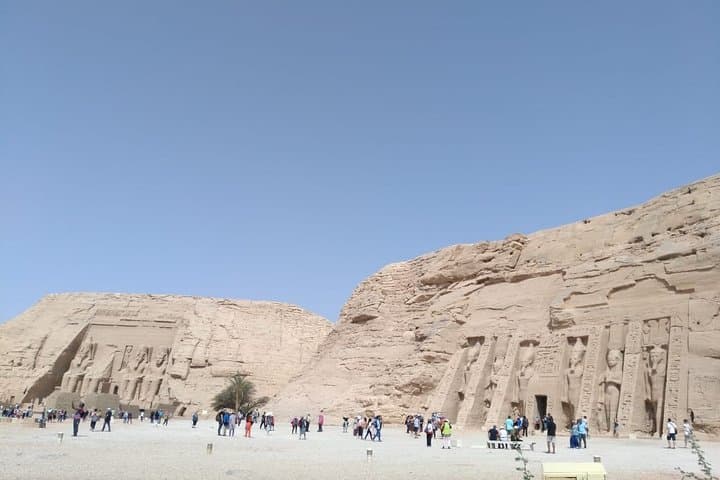
Abu Simbel’s twin temples were carved in the 13th century BCE and later moved, stone by numbered stone, to higher ground in the 1960s when Lake Nasser rose. The great temple honors Ramses II and the smaller Temple of Hathor celebrates Nefertari; both showcase New Kingdom iconography and precise solar alignments that still draw curiosity today. Geologically, the site is set into Nubian sandstone; culturally, it sits on the edge of Nubian communities and the vast man-made lake that reshaped southern Egypt.
On a private car tour from Aswan expect roughly three hours each way in an air‑conditioned vehicle, an Egyptologist guide, bottled water, and about three hours at the site. Admission is not included in all packages—bring your passport and small cash for tickets and tips. Wear sun‑protective layers, sturdy shoes for stone steps, and plan the morning visit to avoid peak heat. Cameras are welcome but be respectful of fragile reliefs and follow signage.
This is a long but highly accessible day: culturally dense, visually dramatic, and anchored by a story of engineering and international conservation that saved these monuments from the rising waters.
easy.
9–10 hours.
Minimal fitness required for walking on stone steps and uneven surfaces; must tolerate long vehicle transfer.
Not always—according to the itinerary admission is listed as not included, so confirm with the operator and bring cash or card for onsite ticketing.
The drive is approximately three hours each way (roughly 280–300 km) on a paved highway; expect a full 9–10 hour day with stops.
The itinerary is suitable for most ages and the operator lists wheelchair accessibility, but the site has steps and uneven surfaces—check in advance for specific mobility needs.
The inner sanctum alignment occurs around February 22 and October 22 each year, when sunlight penetrates to illuminate the statues—these dates draw larger crowds and require planning.
The temples date to the reign of Ramesses II and were relocated in the 1960s during an international salvage operation led by UNESCO when the Aswan High Dam created Lake Nasser.
The relocation is a landmark of cultural conservation; visitors are asked to follow paths, avoid touching reliefs, and limit flash photography where directed to reduce wear.
Special trips operates guided outdoor trips and adventures with an emphasis on safety, stewardship, and memorable experiences.
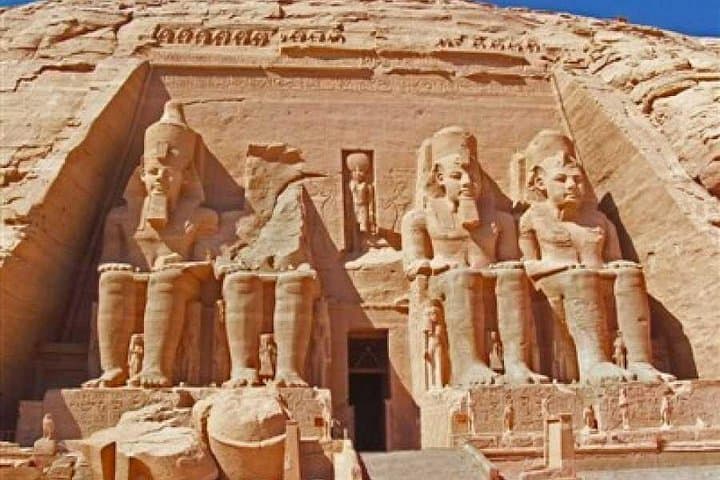
Before dawn the road unspools south from Aswan—flat desert, a thin ribbon of asphalt, and the Nile holding the light. By the time the sun levers above the horizon, the rock-cut façade of Ramses II looms out of burnt sandstone, four colossal figures staring down the valley as if the desert itself had decided to keep watch.
Before dawn the road unspools south from Aswan—flat desert, a thin ribbon of asphalt, and the Nile holding the light. By the time the sun levers above the horizon, the rock-cut façade of Ramses II looms out of burnt sandstone, four colossal figures staring down the valley as if the desert itself had decided to keep watch.
Abu Simbel’s twin temples were carved in the 13th century BCE and later moved, stone by numbered stone, to higher ground in the 1960s when Lake Nasser rose. The great temple honors Ramses II and the smaller Temple of Hathor celebrates Nefertari; both showcase New Kingdom iconography and precise solar alignments that still draw curiosity today. Geologically, the site is set into Nubian sandstone; culturally, it sits on the edge of Nubian communities and the vast man-made lake that reshaped southern Egypt.
On a private car tour from Aswan expect roughly three hours each way in an air‑conditioned vehicle, an Egyptologist guide, bottled water, and about three hours at the site. Admission is not included in all packages—bring your passport and small cash for tickets and tips. Wear sun‑protective layers, sturdy shoes for stone steps, and plan the morning visit to avoid peak heat. Cameras are welcome but be respectful of fragile reliefs and follow signage.
This is a long but highly accessible day: culturally dense, visually dramatic, and anchored by a story of engineering and international conservation that saved these monuments from the rising waters.