THE ADVENTURE COLLECTIVE® · Independent discovery and booking for outdoor travel

Catch the first light over Angkor Wat from the seat of a bicycle, then pedal quiet back roads and jungle trails to Bayon and Ta Prohm. This guided sunrise ride pairs active exploration with local culture and a included breakfast.
Catch the first light over Angkor Wat from the seat of a bicycle, then pedal quiet back roads and jungle trails to Bayon and Ta Prohm. This guided sunrise ride pairs active exploration with local culture and a included breakfast.
Before the sun clears the horizon, the spires of Angkor Wat sit black against an indigo sky, their reflection trembling in shallow pools as your small group assembles and adjusts helmets. The morning air is cool and the bicycles hum softly as you pedal toward the best viewpoint; within minutes golden light begins to pry open carved lintels and bas-reliefs carved eight centuries ago.
Verified experiences and guided adventures in the surrounding area.
Operated by Asia Backroads Travel · Siem Reap, Siem Reap Province
Before the sun clears the horizon, the spires of Angkor Wat sit black against an indigo sky, their reflection trembling in shallow pools as your small group assembles and adjusts helmets. The morning air is cool and the bicycles hum softly as you pedal toward the best viewpoint; within minutes golden light begins to pry open carved lintels and bas-reliefs carved eight centuries ago.
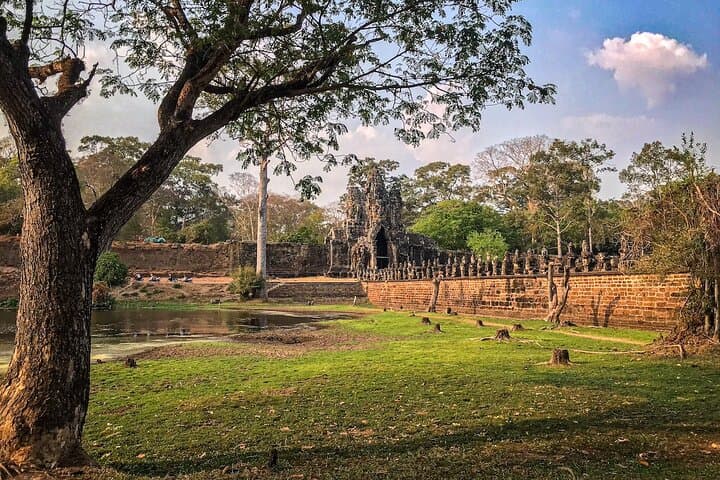
Angkor’s core was raised in the 12th century under King Suryavarman II and built from sandstone and laterite—materials that age into the textured, root-entwined ruins you’ll ride past. The landscape alternates between broad moats, rice paddies, and shaded back roads, and the route threads modern village life with enduring religious heritage: monks, markets, and wooden stilt houses carry on around ancient stone gates.
Expect a mix of compact dirt trails and paved village lanes, with occasional rutted stretches where tree roots and dunes test your balance. Your guide brings context—pointing out Bayon’s many faces, Ta Prohm’s strangler figs, and the quiet of lesser-visited courtyards—while a support vehicle follows for comfort and gear.
Practicalities: the full outing runs about nine hours, beginning pre-dawn and returning mid-afternoon. Bring a daypack with water, sun protection, and modest clothing for temple respect; a breakfast stop and bottled water are included, but you’ll need an Angkor Archaeological Park pass. Ride at a steady pace—this is an active cultural day rather than a race—and leave space for slow photo breaks. Keep to marked paths, follow your guide’s requests around fragile carvings, and you’ll finish with a deeper sense of how living communities and monumental ruins share this landscape.
moderate.
9 hours.
Suitable for travelers with moderate fitness who can pedal for multi-hour stretches with occasional breaks
No — the Angkor Archaeological Park pass is not included; buy a pass before the tour at the official ticket center or online where available.
Pickup is before dawn to reach sunrise viewpoints; the full experience is roughly nine hours with hotel return mid-afternoon.
Riders should have basic cycling skills and endurance for several hours; children may join if confident cyclists—check operator age policies when booking.
Tours can be cancelled for heavy rain; light tropical showers are common in the wet season but often pass quickly—bring a lightweight rain shell.
Angkor Wat was built in the early 12th century by King Suryavarman II and later transitioned from a Hindu to a Buddhist site, reflecting Cambodia’s layered religious history.
High visitor numbers stress fragile stone and temple ecosystems—stay on pathways, avoid touching carvings, and use refillable water bottles to reduce plastic waste.
Asia Backroads Travel operates guided outdoor trips and adventures with an emphasis on safety, stewardship, and memorable experiences.

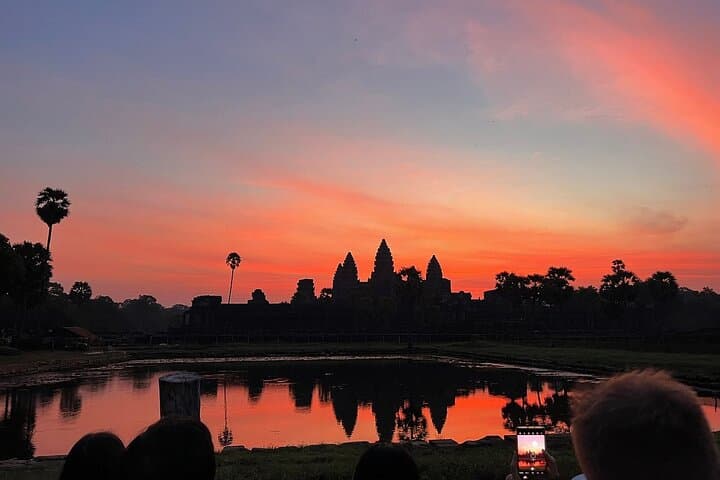

Before the sun clears the horizon, the spires of Angkor Wat sit black against an indigo sky, their reflection trembling in shallow pools as your small group assembles and adjusts helmets. The morning air is cool and the bicycles hum softly as you pedal toward the best viewpoint; within minutes golden light begins to pry open carved lintels and bas-reliefs carved eight centuries ago.
Before the sun clears the horizon, the spires of Angkor Wat sit black against an indigo sky, their reflection trembling in shallow pools as your small group assembles and adjusts helmets. The morning air is cool and the bicycles hum softly as you pedal toward the best viewpoint; within minutes golden light begins to pry open carved lintels and bas-reliefs carved eight centuries ago.
Angkor’s core was raised in the 12th century under King Suryavarman II and built from sandstone and laterite—materials that age into the textured, root-entwined ruins you’ll ride past. The landscape alternates between broad moats, rice paddies, and shaded back roads, and the route threads modern village life with enduring religious heritage: monks, markets, and wooden stilt houses carry on around ancient stone gates.
Expect a mix of compact dirt trails and paved village lanes, with occasional rutted stretches where tree roots and dunes test your balance. Your guide brings context—pointing out Bayon’s many faces, Ta Prohm’s strangler figs, and the quiet of lesser-visited courtyards—while a support vehicle follows for comfort and gear.
Practicalities: the full outing runs about nine hours, beginning pre-dawn and returning mid-afternoon. Bring a daypack with water, sun protection, and modest clothing for temple respect; a breakfast stop and bottled water are included, but you’ll need an Angkor Archaeological Park pass. Ride at a steady pace—this is an active cultural day rather than a race—and leave space for slow photo breaks. Keep to marked paths, follow your guide’s requests around fragile carvings, and you’ll finish with a deeper sense of how living communities and monumental ruins share this landscape.