THE ADVENTURE COLLECTIVE® · Independent discovery and booking for outdoor travel

Ascend Mount Sinai in pre-dawn darkness, watch sunrise from a 2,285 m summit, then visit the 6th-century St. Catherine Monastery — a full-day blend of strenuous hiking, geology and living history.
Ascend Mount Sinai in pre-dawn darkness, watch sunrise from a 2,285 m summit, then visit the 6th-century St. Catherine Monastery — a full-day blend of strenuous hiking, geology and living history.
Before the bus eases out of Sharm El Sheikh the desert is a black sea; you move through it with headlights cutting paths and guides who know the mountain’s moods. By 2:00 a.m. you step onto the slope of Jebel Musa and follow a trail that tightens into a stepped ascent—700 carved steps that rise to 2,285 meters where the chapel waits like a small lantern at the summit.
Verified experiences and guided adventures in the surrounding area.
Operated by Luxor Private Day Tours · Saint Catherine, South Sinai
Before the bus eases out of Sharm El Sheikh the desert is a black sea; you move through it with headlights cutting paths and guides who know the mountain’s moods. By 2:00 a.m. you step onto the slope of Jebel Musa and follow a trail that tightens into a stepped ascent—700 carved steps that rise to 2,285 meters where the chapel waits like a small lantern at the summit.
This is both a physical climb and a cultural route. Mount Sinai is identified in Judeo-Christian-Islamic tradition as the place Moses received the Ten Commandments; the route threads through limestone that records millions of years of Mediterranean seabed uplift and wind-polished ridgelines. Below the peak sits St. Catherine’s Monastery, founded in the 6th century and home to an extraordinary library of early Christian manuscripts and icons — a quiet, sun-baked counterpoint to the pre-dawn exertion.
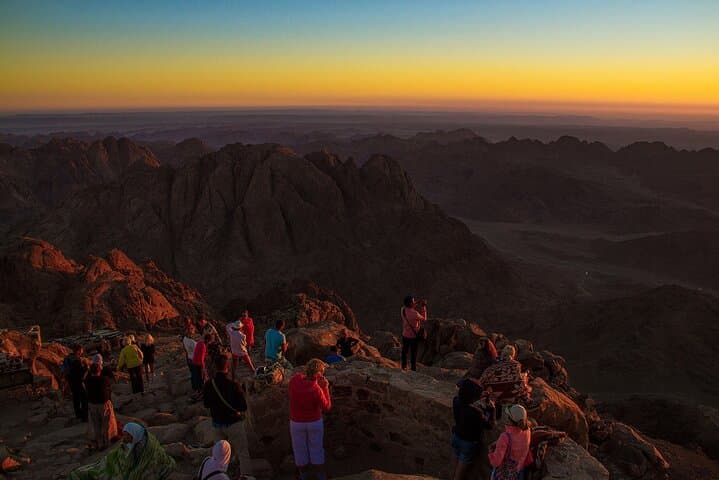
Expect cold air on the ridge, the sun spilling slow and gold over ochre ridgelines, and the monastery’s courtyards filled with centuries of pilgrimage hush. Practicalities: the trip is a late-evening pickup and a three-hour drive each way from Sharm el Sheikh, with a steep 2–3 hour uphill on uneven stone steps; camels are available for parts of the route at extra cost. Bring layered clothing for the summit chill, a reliable headlamp, at least 1.5–2 liters of water, and sturdy boots. Allow time after descent to visit the monastery’s library and the “Burning Bush” site before the return drive; this excursion pairs natural drama with deep history in a compact, demanding day.
moderate.
8–9 hours.
Suitable for those who can sustain 2–3 hours of uphill walking on stone steps and handle basic altitude change.
The standard route uses about 700 stone steps with a 2–3 hour ascent from the trailhead; expect similar time to descend depending on pace.
Yes — camel rides are offered for parts of the ascent at an additional cost, but they may not cover the last steep steps to the summit.
The climb is physically demanding and involves long stair sections; it’s not suitable for visitors with serious mobility limits or very young children, though parts can be easier by camel.
At ~2,285 m most people handle the elevation without severe symptoms, but light headaches or breathlessness can occur—ascend at a steady pace, stay hydrated, and inform your guide if you feel unwell.
Jebel Musa is long associated with the biblical Sinai; nearby St. Catherine Monastery was established in the 6th century and has been in continuous operation since.
The Sinai’s fragile desert and archaeological sites require low-impact visitation — stick to trails, carry out waste, and respect monastery rules to limit erosion and cultural wear.
Luxor Private Day Tours operates guided outdoor trips and adventures with an emphasis on safety, stewardship, and memorable experiences.


Before the bus eases out of Sharm El Sheikh the desert is a black sea; you move through it with headlights cutting paths and guides who know the mountain’s moods. By 2:00 a.m. you step onto the slope of Jebel Musa and follow a trail that tightens into a stepped ascent—700 carved steps that rise to 2,285 meters where the chapel waits like a small lantern at the summit.
Before the bus eases out of Sharm El Sheikh the desert is a black sea; you move through it with headlights cutting paths and guides who know the mountain’s moods. By 2:00 a.m. you step onto the slope of Jebel Musa and follow a trail that tightens into a stepped ascent—700 carved steps that rise to 2,285 meters where the chapel waits like a small lantern at the summit.
This is both a physical climb and a cultural route. Mount Sinai is identified in Judeo-Christian-Islamic tradition as the place Moses received the Ten Commandments; the route threads through limestone that records millions of years of Mediterranean seabed uplift and wind-polished ridgelines. Below the peak sits St. Catherine’s Monastery, founded in the 6th century and home to an extraordinary library of early Christian manuscripts and icons — a quiet, sun-baked counterpoint to the pre-dawn exertion.
Expect cold air on the ridge, the sun spilling slow and gold over ochre ridgelines, and the monastery’s courtyards filled with centuries of pilgrimage hush. Practicalities: the trip is a late-evening pickup and a three-hour drive each way from Sharm el Sheikh, with a steep 2–3 hour uphill on uneven stone steps; camels are available for parts of the route at extra cost. Bring layered clothing for the summit chill, a reliable headlamp, at least 1.5–2 liters of water, and sturdy boots. Allow time after descent to visit the monastery’s library and the “Burning Bush” site before the return drive; this excursion pairs natural drama with deep history in a compact, demanding day.