THE ADVENTURE COLLECTIVE® · Independent discovery and booking for outdoor travel

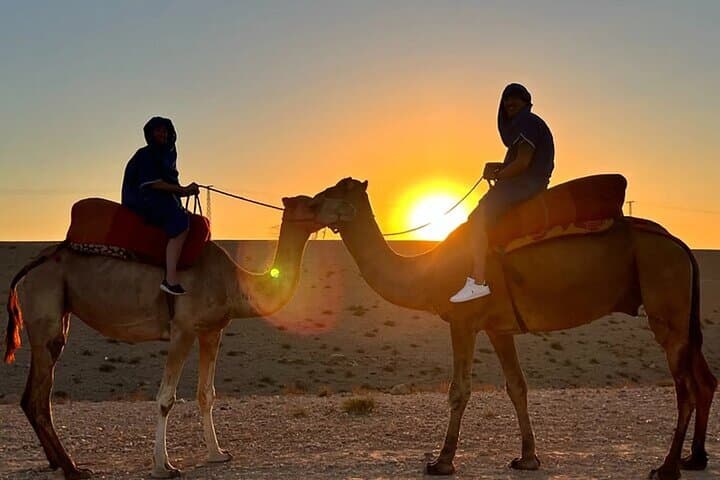
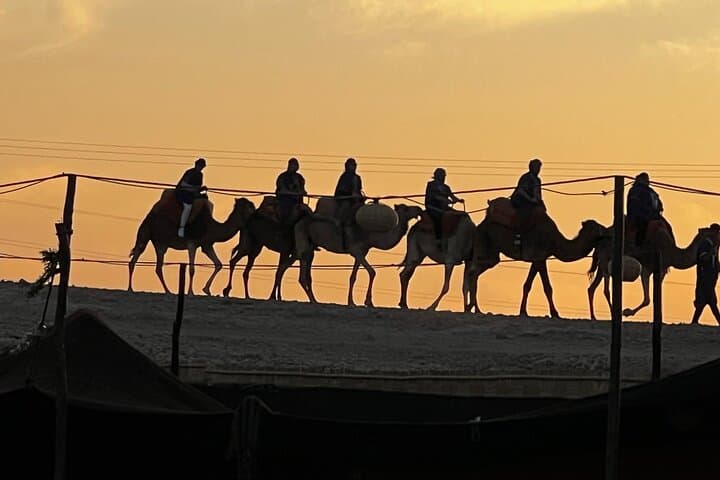
Ride a camel at dawn across Agafay’s stony plains, watch light spill over the Atlas foothills, and enjoy a traditional breakfast in a desert camp. This accessible half-day trip blends easy adventure with local hospitality just outside Marrakech.
Ride a camel at dawn across Agafay’s stony plains, watch light spill over the Atlas foothills, and enjoy a traditional breakfast in a desert camp. This accessible half-day trip blends easy adventure with local hospitality just outside Marrakech.
Before dawn a pale strip of light slides over low, stony hills and the Agafay plain exhales the cool, mineral scent of crushed stone. You climb a wooden saddle, feel the camel shift like an ancient ship, and the desert begins to move beneath you — a quiet, tumbling rhythm that opens the day.
Verified experiences and guided adventures in the surrounding area.
Operated by MARRAKECH BEST TRIPS · Marrakech, Marrakesh-Safi
Before dawn a pale strip of light slides over low, stony hills and the Agafay plain exhales the cool, mineral scent of crushed stone. You climb a wooden saddle, feel the camel shift like an ancient ship, and the desert begins to move beneath you — a quiet, tumbling rhythm that opens the day.
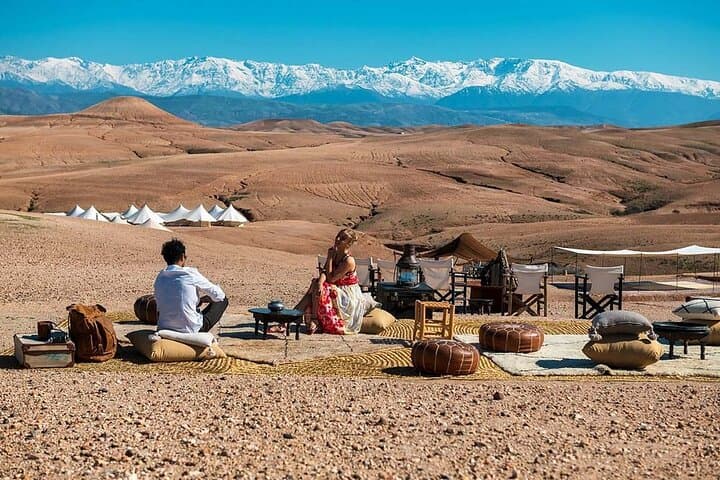
Agafay is not sand dunes but a moonlike expanse of dark limestone and scattered scrub carved by millennia of wind and infrequent rains. The area has long been used by Berber and nomadic groups as grazing land and a stopover between Marrakech and the High Atlas foothills. Modern camps here blend Tuareg-blue robes, low tents and Moroccan mint tea — a hospitality born of desert practicality.
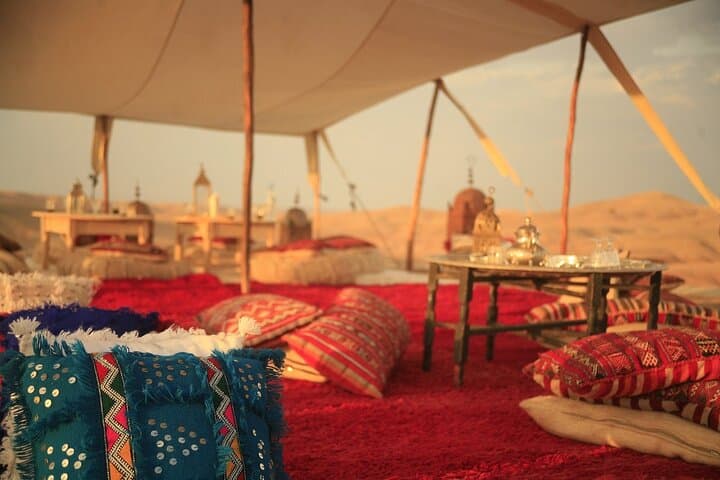
Expect wide views toward the Atlas Mountains, the occasional carved boulder, and a sky that lightens fast once the sun clears the ridge. Guides often dress visitors in traditional attire for photos and serve a breakfast of local breads, olives, eggs and tea at a low-camp table.
Practical notes: the experience lasts around five hours including hotel transfer; riding is gentle but not advised for those with spinal or heart conditions. Wear closed-toe shoes, sun protection and light layers — mornings are cool and the sun climbs quickly. Cameras with neck straps are useful; phone reception is spotty at the camp but good along the way. Respect handlers, tip in local currency, and avoid leaving litter: the rocky ground recovers slowly. A morning in Agafay is low-effort but high on landscape — an accessible way to see Morocco’s dry frontier before the city wakes.
easy.
5 hours.
Suitable for most fitness levels; riders should be able to mount a camel with minimal assistance and sit for short periods.
The full experience is approximately five hours including hotel pickup and return, with around 60–90 minutes in the desert for riding and breakfast.
Children can ride but must be supervised; operators often provide infant seats or additional handlers — check age limits when booking.
Basic local breakfasts are provided; inform the operator of allergies or special diets at booking so they can try to accommodate requests.
Full refund is typically available if you cancel at least 24 hours before departure; confirm the provider’s terms at booking and for last-minute weather changes.
Agafay’s stony plain sits on trade and grazing routes used by Berber and nomadic groups for centuries; today camps highlight local crafts and traditional tea service.
This fragile, low-vegetation landscape recovers slowly from trampling; stick to established tracks, avoid single-use plastics and support operators who employ local residents.
MARRAKECH BEST TRIPS operates guided outdoor trips and adventures with an emphasis on safety, stewardship, and memorable experiences.
Before dawn a pale strip of light slides over low, stony hills and the Agafay plain exhales the cool, mineral scent of crushed stone. You climb a wooden saddle, feel the camel shift like an ancient ship, and the desert begins to move beneath you — a quiet, tumbling rhythm that opens the day.
Before dawn a pale strip of light slides over low, stony hills and the Agafay plain exhales the cool, mineral scent of crushed stone. You climb a wooden saddle, feel the camel shift like an ancient ship, and the desert begins to move beneath you — a quiet, tumbling rhythm that opens the day.
Agafay is not sand dunes but a moonlike expanse of dark limestone and scattered scrub carved by millennia of wind and infrequent rains. The area has long been used by Berber and nomadic groups as grazing land and a stopover between Marrakech and the High Atlas foothills. Modern camps here blend Tuareg-blue robes, low tents and Moroccan mint tea — a hospitality born of desert practicality.
Expect wide views toward the Atlas Mountains, the occasional carved boulder, and a sky that lightens fast once the sun clears the ridge. Guides often dress visitors in traditional attire for photos and serve a breakfast of local breads, olives, eggs and tea at a low-camp table.
Practical notes: the experience lasts around five hours including hotel transfer; riding is gentle but not advised for those with spinal or heart conditions. Wear closed-toe shoes, sun protection and light layers — mornings are cool and the sun climbs quickly. Cameras with neck straps are useful; phone reception is spotty at the camp but good along the way. Respect handlers, tip in local currency, and avoid leaving litter: the rocky ground recovers slowly. A morning in Agafay is low-effort but high on landscape — an accessible way to see Morocco’s dry frontier before the city wakes.